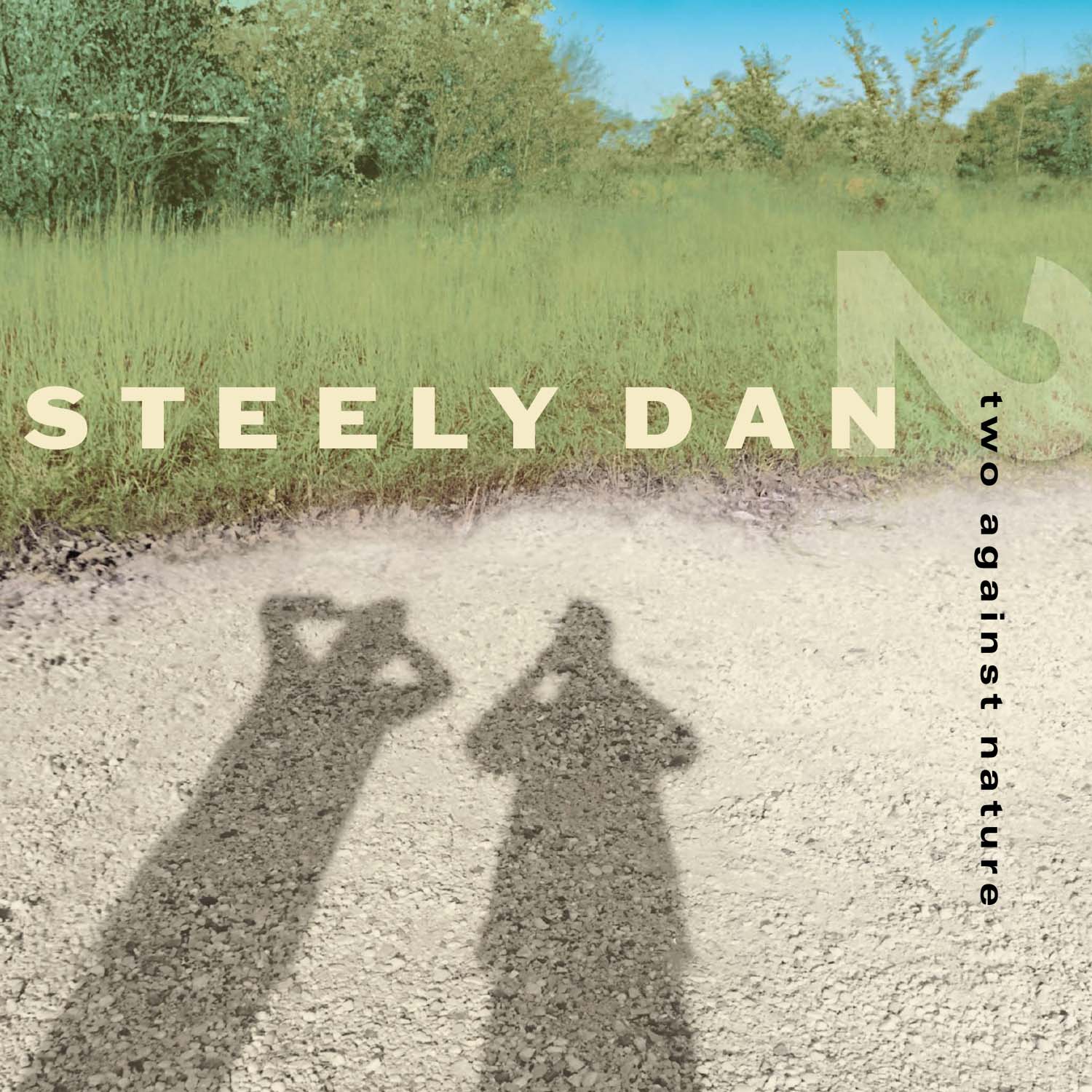
Steely Dan begin another chapter
The opening of Two Against Nature is concentrated: a precisely placed rhythm, interlocking instrumental parts and Donald Fagen’s voice inside a story whose narrator deserves some caution. Released in 2000, the album marked Steely Dan’s return after a long interval between studio records. Walter Becker and Fagen draw on a recognisable musical language while inviting a large, changing group of studio players to develop its details. Across nine songs, there is ample opportunity to discover movement beneath the carefully ordered surface.
The record was made between 1997 and 1999. Documented studios include River Sound and Clinton Recording in New York, Hyperbolic Sound on Maui and Electric Lady. Becker and Fagen produced together. Roger Nichols, Elliot Scheiner, Dave Russell and Phil Burnett are among the credited engineers, with Nichols also responsible for senior technical duties and Pro Tools work. This extended production history belongs to the album’s identity. It is the result of carefully assembled studio work across several years and locations rather than a document of one uninterrupted session.
The songs connect accessible musical forms with characters whose desires and self-images contain awkward fractures. “Gaslighting Abbie,” “Janie Runaway” and “Cousin Dupree” point towards different narrative situations. Fagen can deliver a claim almost casually, making it more questionable in the process. The music supports that ambiguity. An appealing rhythm and an attractive harmony do not necessarily endorse the words carried above them. Listening closely to the distance between a comfortable musical surface and an uncomfortable story reveals a central part of the album’s construction.
Two Against Nature received the Grammy for Album of the Year. That recognition is not required as advance knowledge to find a way into the record. More revealing is the consistency of its outlook across songs that call for different personnel. A first hearing can follow the voices and narratives. On the next, attention can turn to the smaller instrumental decisions that prepare a change, illuminate a refrain or give the end of a song a new direction. The album’s detail remains closely connected to the songs it serves.

Thirty-one contributors with carefully allocated roles
The personnel for this edition are documented in unusual track-level detail. Alongside Becker and Fagen, the credits identify numerous additional players, amounting to 31 named contributors. That number should not suggest one large ensemble performing throughout. Differences between songs are especially informative. Becker takes bass, guitar or lead-guitar roles according to the track, while Fagen contributes several keyboard instruments in addition to vocals. The complete personnel overview keeps those roles attached to their documented tracks rather than presenting a generic all-star line-up for every performance.
Six drummers share the nine songs. Ricky Lawson plays on “Gaslighting Abbie”; Michael White appears on “What A Shame About Me” and “Jack Of Speed”; Keith Carlock plays the title track. Leroy Clouden contributes to “Janie Runaway,” “Almost Gothic” and “Cousin Dupree,” Vinnie Colaiuta to “Negative Girl,” and Sonny Emory to “West Of Hollywood.” These assignments offer a particularly concrete listening route. A shared musical outlook can be followed through different rhythmic contributions without losing sight of the record’s overall continuity.
Michael Leonhart plays trumpet and also Wurlitzer on the title track, with horn arrangements and direction of the horn section among his documented responsibilities. Chris Potter supplies tenor-saxophone solos on “Gaslighting Abbie” and “West Of Hollywood,” plus an alto-saxophone solo on “Janie Runaway.” Roger Rosenberg, Lawrence Feldman, Lou Marini, Dave Tofani, Ken Hitchcock and Jim Pugh extend the palette. Bass clarinet, clarinet, several saxophones and trombone provide distinctions that are more specific than the general description of a horn section might suggest.
Other contributions include Tom Barney on bass, Ted Baker on keyboards and guitar parts from Jon Herington, Hugh McCracken, Dean Parks and Paul Jackson Jr. Gordon Gottlieb, Daniel Sadownick and Will Lee contribute percussion; Steve Shapiro and Dave Schenk play vibraphone. Carolyn Leonhart, Cynthia Calhoun and Michael Harvey provide documented backing vocals. Amy Helm has a particularly concise and clearly identified contribution on “Cousin Dupree”: whistling. Details of this kind show how precisely tasks are distributed within the extensive studio personnel.

Nine songs and an expansive final view
“Gaslighting Abbie” and “What A Shame About Me” occupy side A of the 45 RPM edition. They establish the relationship between narrative voice and carefully organised accompaniment. On a return visit, following the instruments behind the vocal lines reveals exchanges among horns, guitars and keyboards as elements of the song’s structure. The accompaniment is more than an unchanging background. It helps determine which line comes forward and when a piece moves from its verbal narrative into an instrumental continuation.
Side B contains “Two Against Nature,” “Janie Runaway” and “Almost Gothic.” The documented contributions already indicate different emphases: Carlock’s drums and Leonhart’s Wurlitzer on the title track, Potter’s alto saxophone on “Janie Runaway,” and Herington’s acoustic guitar alongside McCracken’s guitar on “Almost Gothic.” The songs share an interest in carefully balanced colours but reach them by different means. A small change of personnel can alter a song’s character more decisively than simply increasing the size of the group.
“Jack Of Speed” and “Cousin Dupree” share side C. No horn section is credited on “Cousin Dupree”; guitars, keyboards, rhythm section, backing vocals and Helm’s whistling establish its setting. That distinction becomes clearer after following the horn colours elsewhere on the record. The album can thus also be heard as a sequence of personnel decisions. Its unity comes from a shared compositional and production approach, while the practical work is redistributed from one song to the next. The credits provide useful signposts for hearing those differences.
The final side brings together “Negative Girl” and “West Of Hollywood.” Among the contributors to “Negative Girl” are Colaiuta on drums, Parks and Jackson on guitars and Schenk on vibraphone. “West Of Hollywood” opens the conclusion to Potter’s tenor saxophone and allows the instrumental course more room to unfold. At over eight minutes, it is the longest selection. The ending therefore rewards particular attention: an album full of compact decisions permits a longer continuation in which the soloist can broaden the musical perspective once more.
The 45 RPM edition and its analogue and digital history
Analogue Productions releases the album as AAPP 141-45, comprising two 180-gram LPs playing at 45 RPM. Scott Hull handled mastering and cutting at Masterdisk. The documented edition carries “MASTERDISK SH” in its runouts. Quality Record Pressings manufactures the records, and the package includes a Stoughton tip-on gatefold jacket. The nine songs retain their original sequence across four sides, without additional material drawn from other releases. These specifications identify the edition being offered rather than every version of the album.
Its production chain deserves a precise description. According to the label, the recordings were made on analogue multitrack tape and mixed at 24-bit/96 kHz. The production therefore includes a digital stage. This edition is not described as an entirely analogue AAA release. That is a factual feature of its making, not a retrospective judgement on the music. It helps distinguish the product accurately from recordings created through different processes and from releases with different technical histories.
Playing the complete programme requires three side changes. The distribution establishes clear sections: two songs on A, three on B, two on C and two on D. In particular, “Negative Girl” and “West Of Hollywood” receive their own concluding space. Mastering, pressing plant and format describe the manufacture of this edition; they do not imply a personal comparison between different pressings. The relevant experience remains the actual record on the listener’s system and the way the full programme develops from beginning to end.
Two Against Nature combines Becker and Fagen’s distinctive language with individual contributions from an extensive studio ensemble. Following those details reveals many smaller musical journeys within the nine songs. This 45 RPM edition provides a clearly documented route into that chapter of Steely Dan: the complete programme, specific personnel assignments and an openly described production history in which analogue recording and digital mixing belong together. Its most useful invitation is to return to a familiar song and attend to a part that previously remained just outside the foreground.
You order from Michael 45 in Germany. We arrange the US import and dispatch from Hilden.
Artist page: All titles by Steely Dan
Customer question: Buying Analogue Productions records in Europe
Musicians
Participants and documented credit status. Track references correspond to the tracklist.
- Donald FagenExisting illustration · date unconfirmedvocals, arrangements, electric piano, clavinet, piano, organParticipation: Vocals on all tracks; arrangements: A1, A2; Electric Piano: B1, C2; Electric Piano, arrangements: B2, B3, C1; Electric Piano, Clavinet: A1; Electric Piano, Piano: A2; Organ: D2
- Amy HelmwhistlingParticipation: Whistling: C2
- Carolyn Leonhartbacking vocalsParticipation: Backing Vocals: A1, A2, B1, B2, B3, C2, D1, D2
- Chris PotterLater portrait reference: 2008alto saxophone, soloist, tenor saxophoneParticipation: Alto Saxophone, Soloist: B2; Tenor Saxophone, Soloist: A1, D2
- Cynthia Calhounbacking vocalsParticipation: Backing Vocals: A1, A2, B1, C1, D1, D2
- Daniel Sadownicktimbales, percussionParticipation: Timbales, Percussion: B1
- Dave SchenkvibraphoneParticipation: Vibraphone: D1
- Dave Tofanisaxophone, tenor saxophoneParticipation: Saxophone: B1; Tenor Saxophone: A1
- Dean ParksguitarParticipation: Guitar: D1
- Gordon GottliebpercussionParticipation: Percussion: A2, B1, B3, C1, D2
- Hugh McCrackenPortrait reference: 1981guitarParticipation: Guitar: B3
- Jim PughtromboneParticipation: Trombone: A1, A2, B1, B3, C1
- Jon HeringtonLater portrait reference · date unconfirmedacoustic guitar, rhythm guitarParticipation: Acoustic Guitar: B3; Rhythm Guitar: B1, C2, D2
- Keith CarlockLater portrait reference: 2015drumsParticipation: Drums: B1
- Ken HitchcockclarinetParticipation: Clarinet: B1
- Lawrence Feldmanclarinet, alto saxophone, saxophone, tenor saxophoneParticipation: Clarinet: A1; Clarinet, Alto Saxophone: B3; Saxophone: B1; Tenor Saxophone: B2, C1
- Leroy CloudendrumsParticipation: Drums: B2, B3, C2
- Lou Marinialto saxophone, tenor saxophoneParticipation: Alto Saxophone: B2, C1; Tenor Saxophone: A2
- Michael Harveybacking vocalsParticipation: Backing Vocals: A1, A2, B1, B3, C1, D2
- Michael LeonhartLater portrait reference: 2022arrangements, electric piano, trumpetParticipation: arrangements: A1; Electric Piano, Trumpet, arrangements: B1; Trumpet: A1, A2, B2, B3, C1
- Michael WhitedrumsParticipation: Drums: A2, C1
- Paul Jackson Jr.guitarParticipation: Guitar: D1
- Ricky LawsondrumsParticipation: Drums: A1
- Roger Rosenbergbaritone saxophone, bass clarinetParticipation: Baritone Saxophone: A2, C1; Bass Clarinet: A1, B1, B2, B3
- Sonny EmorydrumsParticipation: Drums: D2
- Steve ShapirovibraphoneParticipation: Vibraphone: B1
- Ted Bakerelectric piano, pianoParticipation: Electric Piano: B2, B3, C2, D1; Piano, Electric Piano: D2
- Tom BarneybassParticipation: Bass: A1, D1, D2
- Vinnie ColaiutaLater portrait reference: 2009drumsParticipation: Drums: D1
- Walter BeckerExisting illustration · date unconfirmedarrangements, bass, guitar, lead guitarParticipation: arrangements: A1; Bass: B3; Bass, Guitar: A2, B2, C1, C2; Bass, Lead Guitar: B1; Guitar: A1; Lead Guitar: D2
- Will LeepercussionParticipation: Percussion: C1


1997–1999: River Sound, Clinton Recording, Hyperbolic Sound, Electric Lady. Becker/Fagen: producers. Roger Nichols, Elliot Scheiner, Dave Russell, Phil Burnett: engineering; Nichols also senior technical/Pro Tools duties. Michael Leonhart: horn direction/copying. 31 contributors, six drummers. Analogue multitrack recording, mixed 24/96; not AAA. Scott Hull/Masterdisk: mastering and cutting.
Also on SACD: Two Against Nature
How Michael hears this edition
Listening impression · paraphrased from the video
Michael discusses Two Against Nature and Everything Must Go together, praising the dynamics, detail, soundstage and quiet vinyl of the AP 45 RPM editions and preferring them to the Record Store Day editions compared. This passage is a joint assessment of both releases.
🎧 Review video: New Analogue Production: 2 Great Steely Dan! + Thoughts on AP vs. MoFi
This video is hosted by YouTube (Google). It only loads once you switch on “Functional” in the cookie settings.

Reviews
There are no reviews yet.