

His own name above an unusual ensemble
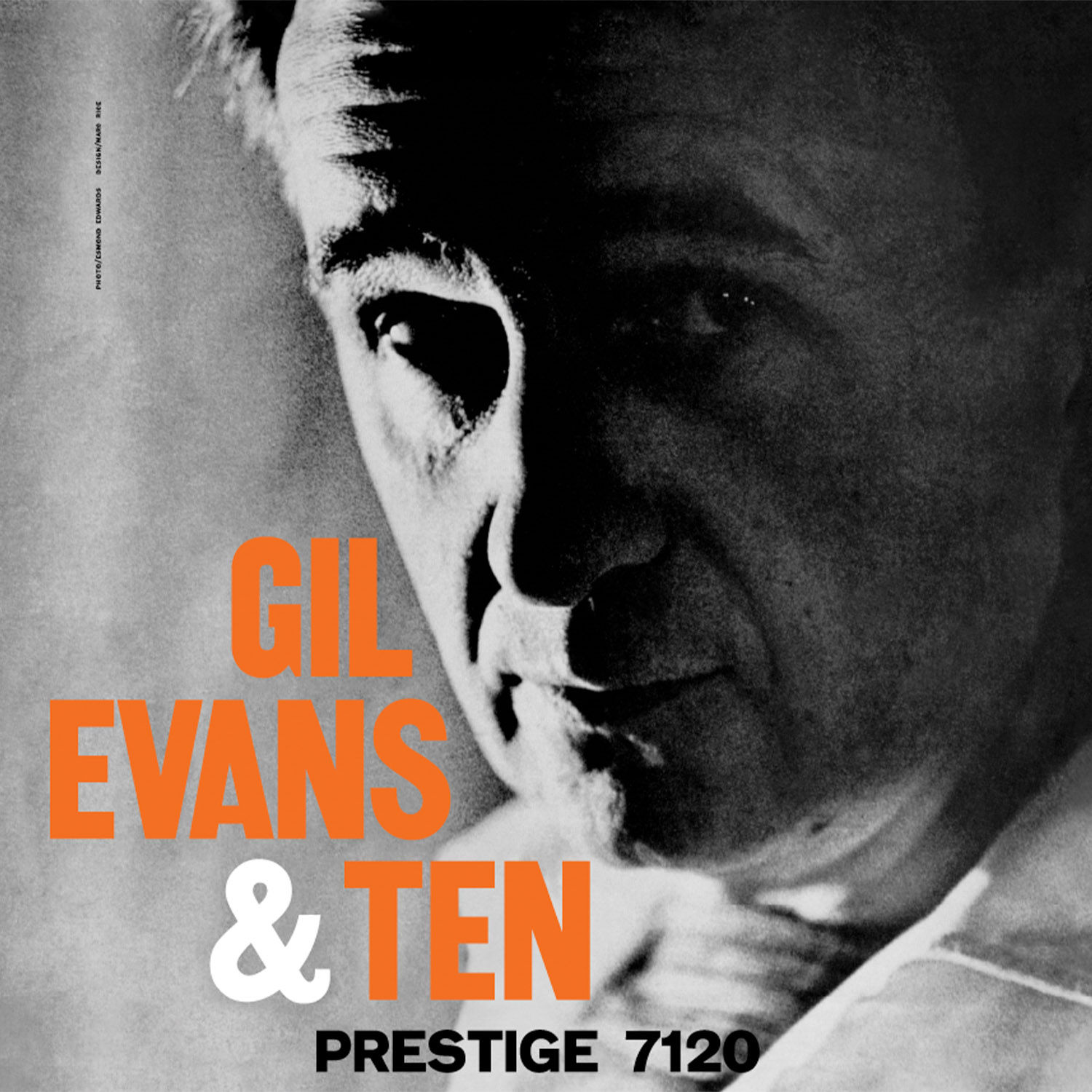
On Gil Evans & Ten, the celebrated arranger becomes a bandleader with his own name above the programme. Recorded in 1957, the music forms his first album as a leader. The title also provides a compact description of the ensemble: Evans at the piano and ten other musicians, chosen to create a surprisingly broad palette. This is not a standard big band with a few chairs removed. The instrumentation follows an independent conception of colour, weight and transparency. The presence of bassoon and French horn immediately suggests combinations beyond the familiar division between a saxophone section and brass.
Evans is closely associated with the ability to combine individual instruments so that a third quality emerges between them. A low voice can illuminate a melody from underneath; a narrow upper line can open a dense chord. This album allows that way of thinking to be followed within a manageable ensemble. The music does not require constant grand gestures to suggest orchestral possibilities. The contrast between an individual soloist and a mixed instrumental texture becomes significant in itself. Evans’ piano belongs inside that design, rather than sitting outside it as a merely functional accompaniment to the arranged instruments.
The recording history leads to Rudy Van Gelder’s studio in Hackensack, with Bob Weinstock producing. Sessions took place during September and October 1957. Sources differ over certain individual dates, and the precise year of first release is not reported consistently either. The secure chronological anchor is the 1957 recording, rather than an artificially definitive release date. The original Prestige catalogue number is PRLP 7120. The material later appeared under the title Big Stuff as well. That alternative title belongs to the same album, not to an additional, otherwise unfamiliar programme of Evans recordings.

Steve Lacy, Lee Konitz and the art of combining voices
Steve Lacy’s soprano saxophone is one of the ensemble’s most distinctive elements. Its high register broadens the possibilities of a group whose unusual lower colours are equally important. Lee Konitz plays alto saxophone and also appears in the original credits under the name Zeke Tolin. Jimmy Cleveland contributes trombone, Bart Varsalona bass trombone, Willie Ruff French horn and Dave Kurtzer bassoon. With these voices, Evans can construct lines and chords whose colour cannot be explained by register alone. The instrumentation is itself a musical decision, even before an individual soloist begins to find a personal route through the material.
Jake Koven is among the trumpeters, while John Carisi and Louis Mucci alternate in the first trumpet position according to the session and track. There is a corresponding change between drummers Jo Jones and Nick Stabulas. Paul Chambers plays double bass. The complete album personnel therefore includes more than eleven names, even though “Evans and ten” describes an eleven-piece ensemble. The combined credits should not be read as a claim that everyone plays simultaneously. Carisi and Jo Jones are listed for “Remember”; Mucci and Stabulas appear on the remaining selections. Those distinctions are retained in the musician section.
Such precision also helps explain the music. Evans is working with particular voices, not interchangeable instrumental labels. Konitz and Lacy contribute different contours; the low winds can ground an arrangement without making it cumbersome. Chambers connects this orchestral palette to the mobility of a jazz rhythm section. Arrangement and improvisation consequently need not compete for ownership of the performance. A solo grows from surroundings whose colours have already created expectations. For an inquisitive listener, this record offers an especially inviting way to understand arranging as an active musical process, rather than as a finished frame placed around the real action.

From Irving Berlin to “Jambangle”
The programme opens with Irving Berlin’s “Remember”, followed on the first side by “Ella Speed” and Leonard Bernstein’s “Big Stuff”. That selection already reaches beyond a narrowly defined repertoire. A song from American popular entertainment, a piece associated with blues tradition and music from a different compositional background are brought together by Evans’ approach. Their coherence does not depend on arranging away every distinction. Instead, a personal orchestral language accommodates quite different material. The melodies remain points of reference while their surroundings provide fresh ways of considering their shapes, implications and expressive possibilities.
Side two begins with Richard Rodgers and Lorenz Hart’s “Nobody’s Heart”. “Just One of Those Things” brings Cole Porter into the programme, while “If You Could See Me Now” connects it to Tadd Dameron and Carl Sigman. Evans’ own “Jambangle” closes the record. The selection can be understood as a conversation between standards, blues, a modern jazz song and original composition. A familiar theme does not limit imagination. Its recognisability can make changes of instrumental colour, emphasis and accompaniment particularly apparent, allowing the listener to follow both the melody and the decisions made around it.
The seven pieces are divided into three tracks on side A and four on side B. It is a concentrated programme that remains easy to navigate as an LP. One can follow individual instruments, the transitions between solo and ensemble, or the changing use of the lower voices. None of that dictates a particular personal listening response in advance. The instrumentation does, however, provide concrete points of entry. Listeners who mainly know Evans through his work with other leaders can encounter his imagination from another angle here, through the repertoire and ensemble placed directly under his own name.
Prestige Stereo in a carefully prepared vinyl edition
This Analogue Productions release belongs to the Prestige Stereo series and carries the catalogue number APRJ 7120. Kevin Gray is responsible for the cut, Quality Record Pressings for manufacture and Gary Salstrom for plating. The current edition is specified as a 180-gram LP running at 33⅓ rpm, presented in a tip-on jacket. Older 200-gram descriptions refer to earlier production periods. They should not displace the current specification. For a collector, such distinctions are useful: the original album, a particular reissue programme and an individual pressing run are connected, but they are not identical categories.
The publisher particularly emphasises this vinyl edition’s stereo presentation. That should not be expanded into a claim that the album had never existed in stereo in any format: an earlier SACD already included a stereo version. The relevant distinction concerns its presentation on vinyl. Similarly, the later title Big Stuff does not identify different recording sessions. Careful descriptions help separate alternative titles, recording history and format. This edition’s interest comes from its documented manufacture and the music it presents, rather than from making the broadest possible claim about a supposed first appearance.
On a record shelf, Gil Evans & Ten forms an appealing connection between small-group jazz and orchestral imagination. It portrays a leader whose identity depends less on the size of the ensemble than on the selection of its voices and the relationships between them. French horn, bassoon, soprano saxophone, low trombone and the flexible foundation around Paul Chambers create an unusually individual combination. Anyone interested in arranging as an art in its own right will find concrete musical relationships to explore. Seven pieces and eleven simultaneous players provide a compact framework for ideas with considerably wider implications.
You order from Michael 45 in Germany. We arrange the US import and ship from Hilden.
Customer question: Buying Analogue Productions records in Europe
Series: Analogue Productions Prestige – all 50 records, musicians and session paths
Musicians
Participants and documented credit status. Track references correspond to the tracklist.
- Gil EvansPortrait: 1960spiano, arrangements, bandleaderParticipation: Album personnel
- Steve LacyPortrait: 1965soprano saxophoneParticipation: Album personnel
- Lee KonitzPortrait: 1965alto saxophoneParticipation: Album personnel
- Jimmy ClevelandPortrait: 1965tromboneParticipation: Album personnel
- Bart Varsalonabass tromboneParticipation: Album personnel
- Willie RuffFrench hornParticipation: Album personnel
- Dave KurtzerbassoonParticipation: Album personnel
- Jake Kovensecond trumpetParticipation: Album personnel
- Paul ChambersPortrait: 1958double bassParticipation: Album personnel
- John Carisifirst trumpetParticipation: A1
- Jo JonesPortrait: 1959drumsParticipation: A1
- Louis Muccifirst trumpetParticipation: A2–B4
- Nick StabulasdrumsParticipation: A2–B4


John Carisi and Jo Jones play on “Remember”; the remaining titles credit Louis Mucci and Nick Stabulas. Lee Konitz appears on the original sleeve as “Zeke Tolin.” Sources disagree on the first session date and some individual date assignments.

Reviews
There are no reviews yet.