
Before the name became an entire musical world
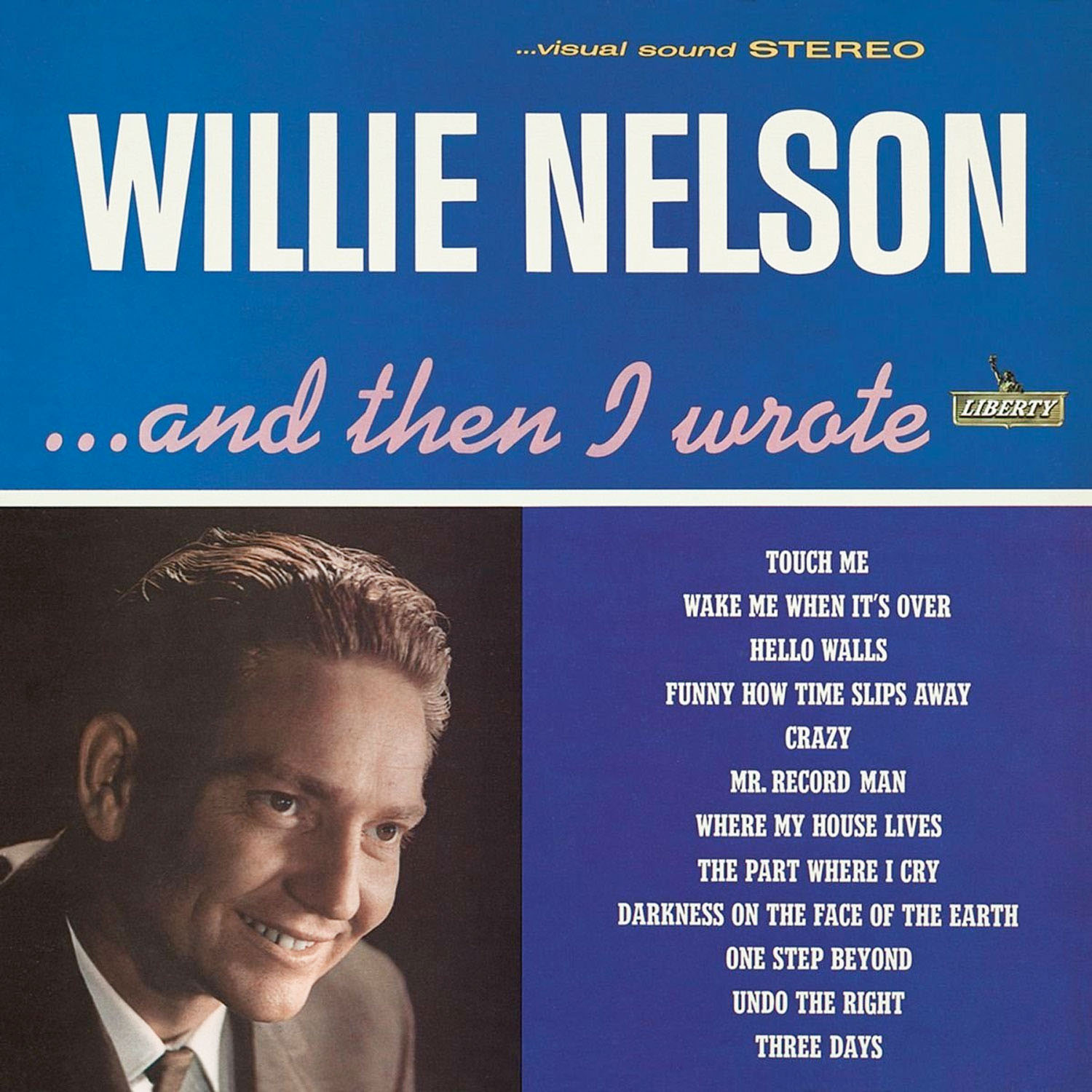
…And Then I Wrote introduces Willie Nelson with a remarkably simple proposition: here is someone singing the songs he has written. For a debut, that might initially seem unexceptional. Yet the twelve titles include Hello Walls, Funny How Time Slips Away and Crazy – songs whose identities extend well beyond any single voice. Released in 1962, the album returns us to a particularly revealing moment. A writer whose work could already travel independently presents himself as the interpreter of a complete programme. Familiar titles become parts of an early self-portrait rather than isolated landmarks seen through the rest of his career.
That return matters because the later image of Nelson is so powerful. There is no need to forget the subsequent decades, but it helps not to impose their completed expectations on this record. …And Then I Wrote belongs to the studio setting of his debut: Joe Allison produced it, and recording took place in Nashville and Los Angeles. The album documents a specific beginning as an album artist, rather than a deliberate preview of everything that would follow. Looking only for recognisable signs of the later Willie Nelson can obscure how much individuality is already present in the choice and ordering of these songs.
Nelson has a writing credit on all twelve selections, with Hank Cochran sharing the credit for Undo The Right. That small qualification makes the album’s premise more precise, not less compelling. This is a programme from Nelson’s own writing world, but that is no reason to erase a documented collaborator. The title gathers the songs together with understated confidence. They do not require an extended explanation of why they belong on one record: their common authorship and the presence of their writer’s voice establish the connection. For a listener today, that direct relationship is one of the attractions of this early chapter.

Guitars, studio musicians and a clear point of view
Nelson is credited with vocals and acoustic guitar. Billy Strange, Roy Nichols and Johnny Western are the documented guitarists, Earl Palmer is credited on drums and B. J. Baker on backing vocals. These album credits establish participation, but do not provide a complete allocation of every musician to every song. They should not be converted into a claim that one fixed sextet plays all twelve recordings. Nor does the absence of further precise instrumental credits prove that other instruments were never used. The list describes the personnel that can be documented, allowing the music to remain more complex than an incomplete set of labels.
The prominence of guitars nevertheless offers a useful way into the record. In this setting a vocal melody can be supported, answered or carried forward by a brief instrumental transition. The governing question remains the song’s own: how can a story become clear in only a few minutes? Nelson’s debut largely consists of concise forms. That requires decisions about which turn of phrase should register immediately, where an idea returns and how a verse reaches its emotional centre. The players work within those demands. Their credits identify contributors to the songs, rather than promising a separate display of studio expertise detached from the material.
Allison’s production and the recording work of Ralph Valentine and Selby Coffeen belong in the separate technical credits. Along with the two recording cities, they establish the professional background of this early LP. They also make it an interesting historical document. The journey from a written song to a released album passes through several people and different responsibilities. Nelson remains its centre, but a debut requires more than the existence of strong compositions. Personnel, form and sequencing also have to be decided. It is rewarding to keep authorship and the actual studio realisation in view together, allowing each to explain something about the other without treating them as identical.

Twelve songs forming an early body of work
Touch Me opens the programme, followed by Wake Me When It’s Over and Hello Walls. This first group already offers different ways of addressing a situation: seeking closeness, wishing a difficult moment would pass, directing words towards an empty surrounding. The second side of this 45 RPM edition contains Funny How Time Slips Away, Crazy and The Part Where I Cry. Their sequence resembles a concentrated collection of situations in which a song can begin immediately. Nelson’s subjects need little preliminary explanation. Even their titles suggest how close everyday language can come to a dramatic turning point when placed inside a song.
The second record continues with Mr. Record Man, Three Days and One Step Beyond. Undo The Right, Darkness On The Face Of The Earth and Where My House Lives provide the final group. Part of the pleasure lies in allowing the best-known songs to coexist with the less frequently mentioned ones. Heard as an album, …And Then I Wrote places several expressions of the same authorship alongside one another. A famous song becomes one part of a larger context. It may open the door, but its neighbours also shape the impression that emerges of Nelson’s early writing and the range of situations that interested him.
The short recordings make the programme manageable without making it slight. Twelve songs can offer twelve different ways of bringing an emotional situation into focus. For listeners who met Nelson through later albums, this record is consequently more than a biographical preliminary. It works as a self-contained songbook: an early collection of melodies and situations performed by the musician who helped create them. Knowing other interpretations adds another point of comparison. Coming to them without that background leaves a debut whose own sequence supplies good reasons to pay equal attention to the less celebrated titles. Its continuing interest does not depend entirely on hindsight.
The debut as an Analogue Productions double LP
This reissue carries catalogue number AAPP 133-45 and spreads the album across two 180-gram LPs at 45 RPM. Analogue Productions released the stereo edition in 2021. Matthew Lutthans cut it at The Mastering Lab from the original analogue tapes, using the documented tube chain at Blue Heaven in Salina. Quality Record Pressings manufactured the records, and the packaging is identified as a Stoughton jacket. These concrete production details locate the edition within the album’s release history without confusing it with other earlier or later pressings. They are the useful basis for identifying what is actually being offered.
Three songs per side create four short, clearly defined sections. That changes the physical routine compared with a conventional single LP: the listener turns a side more often and changes records after the second side. The higher rotational speed gives the cutting process different working conditions, but does not by itself prove any particular sonic result. The verifiable information is the documented route through original tapes, a named cutting engineer and a named pressing plant. Those facts belong beside the actual side sequence when choosing an edition. The album remains the same work, while this format asks for a deliberate succession of shorter listening intervals.
You order from Michael 45 in Germany. We arrange the US import and dispatch from Hilden.
For anyone looking to buy this album on vinyl, these details identify the edition described here. …And Then I Wrote is especially appealing in a collection that gives songwriting and interpretation equal weight. The early album connects them directly: Nelson sings his own repertoire, and familiar classics stand beside songs that hindsight can too easily pass over. This 45 RPM edition does not turn it into a different debut. It offers a clearly identified version across four sides, with a documented manufacturing history. The central reason to explore it remains the encounter with a writer at the beginning of his album career – and with twelve songs independent enough to keep that beginning interesting long after its original moment.
Customer question: Buying Analogue Productions records in Europe
Musicians
Participants and documented credit status. Track references correspond to the tracklist.
- Willie NelsonLater portrait: 1973vocals, acoustic guitarParticipation: Album credits · track assignment unconfirmed
- Billy StrangeguitarParticipation: Album credits · track assignment unconfirmed
- Roy NicholsguitarParticipation: Album credits · track assignment unconfirmed
- Johnny WesternguitarParticipation: Album credits · track assignment unconfirmed
- Earl PalmerdrumsParticipation: Album credits · track assignment unconfirmed
- B. J. Bakerbacking vocalsParticipation: Album credits · track assignment unconfirmed

Produced by Joe Allison. Recording: Ralph Valentine and Selby Coffeen. Liner notes: Charlie Williams. Photography: Murray Garrett and Gene Howard. This edition mastered by Matthew Lutthans (2021). All songs written by Willie Nelson; Undo The Right co-written with Hank Cochran.

Reviews
There are no reviews yet.