A band that learned its freedom on the road
Countdown to Ecstasy catches Steely Dan at a distinctive point in their history. When their second album appeared on ABC in July 1973, Donald Fagen and Walter Becker were still members of a regularly performing group. These songs were written for musicians who travelled and played together; recording fitted around the demands of touring. That background does not explain every note, but it provides an important starting point. Carefully constructed compositions meet the working instincts of an established band. The later method of selecting different studio players for individual requirements is beginning to emerge, without yet replacing that central unit.
Fagen sings every lead vocal. After a debut featuring different singers, his voice gives the group a more consistent narrative centre. He can make a line sound casually delivered while allowing an uncomfortable implication to remain underneath it. Becker plays bass, Jeff “Skunk” Baxter and Denny Dias share the guitar work, and Jim Hodder contributes drums and backing vocals. Those five musicians carry the eight Becker–Fagen compositions. Guests enter where a particular sound or musical function is needed, extending the band’s character without removing it.
Producer Gary Katz and engineer Roger Nichols worked with the group at The Village Recorder in Los Angeles. The opening pair already demonstrates the album’s breadth. “Bodhisattva” sets out with forward-moving guitar energy; “Razor Boy” changes the emphasis and brings in double bassist Ray Brown from a different musical tradition. It is worth listening beyond the featured solos. The way a bass supports a refrain, a guitar phrase answers the singer or a drum transition prepares another section is part of the record’s storytelling too.
Across these eight tracks, musical ideas receive more space than a succession of compact radio songs might suggest. That makes Countdown to Ecstasy a rewarding introduction for listeners who do not want to know Steely Dan solely through their later studio landmarks. Their fascination with arrangement is already present, as is the oblique literary quality of the writing. At the same time, the physical idea of a band remains tangible: musicians exchange phrases, sustain a rhythm together and allow individual voices to emerge from a shared structure.

Guitars, a double bass and precisely placed details
Baxter and Dias are not interchangeable guitarists. The documented credits associate both with solos on “Bodhisattva”; Baxter also takes solos in “Razor Boy”, “The Boston Rag”, “My Old School” and “Pearl of the Quarter”, while Dias is identified on “Your Gold Teeth” and “King of the World”. Those assignments offer a useful starting point for another listen. Instead of treating every guitar line as part of one general Steely Dan sound, follow the phrasing, attack and shape of each passage. Baxter’s pedal steel adds another expressive possibility to the group’s instrumentation.
Victor Feldman is credited with vibraphone, marimba and percussion. His involvement is one of those details that opens an additional layer when the personnel list is read attentively. Rhythm is not created by drums and bass alone: a single attack, a change of colour or a small embellishment can help define a transition. The available album credits do not consistently assign Feldman’s individual instruments to particular tracks, however. They are therefore retained as album-level information. A careful account need not turn every audible accent into an allegedly certain identification.
Ray Brown’s double bass can be placed specifically on “Razor Boy”. Rick Derringer supplies slide guitar on “Show Biz Kids”, with his contribution recorded at Caribou Ranch in Colorado. “My Old School” adds saxophonists Lanny Morgan, Bill Perkins, Ernie Watts and Johnny Rotella, working within Jimmie Haskell’s horn arrangement. These names show how purposefully Becker and Fagen selected additional players. The horns form a voice within the arrangement, rather than simply making an already completed chorus sound larger.
The vocal picture also extends beyond Fagen. Sherlie Matthews, Myrna Matthews and Patricia Hall appear on “Show Biz Kids” and “My Old School”. David Palmer, Royce Jones, James Rolleston and Michael Fennelly are credited with backing vocals too, without secure assignments for every individual track. Ben Benay is named on acoustic guitar. The personnel section keeps those distinctions intact: confirmed track credits sit alongside assignments that remain unspecified. With guests used this thoughtfully, reducing the record’s contributors to its five central band members would leave out part of its character.

Eight stories between memory and an imagined ending
“My Old School” draws on Becker and Fagen’s time at Bard College and memories associated with a raid in 1969. Knowing that background locates the song in a particular past. Yet it works as more than an anecdote set to music. Vocal lines, horn responses and guitar passages establish a dramatic sequence of their own. One can follow the remembered circumstances or begin with the musical exchanges; either approach leads further into the same song. The biographical context adds another perspective without providing a complete explanation of the finished recording.
“Show Biz Kids” adopts a different narrative tone. Its recurring figures and voices can be followed as elements within a deliberately revolving scene. Derringer’s slide guitar and the backing vocals give that scene definition. “Pearl of the Quarter”, which predates the debut album, opens another perspective again. Even this small group of songs demonstrates why the record resists a single description of its mood. Becker and Fagen write characters, situations and viewpoints that cannot simply be treated as one continuous confession by their authors.
The album ends with the post-apocalyptic perspective of “King of the World”. Before it, “The Boston Rag” and “Your Gold Teeth” have introduced other kinds of movement and tension. Heard as a whole, the sequence does not travel towards one final explanatory message. The pieces retain their independence while Fagen’s voice and the group’s musical language connect them. That is a good reason to give the less frequently singled-out tracks their proper attention: they change the setting in which the familiar songs are encountered.
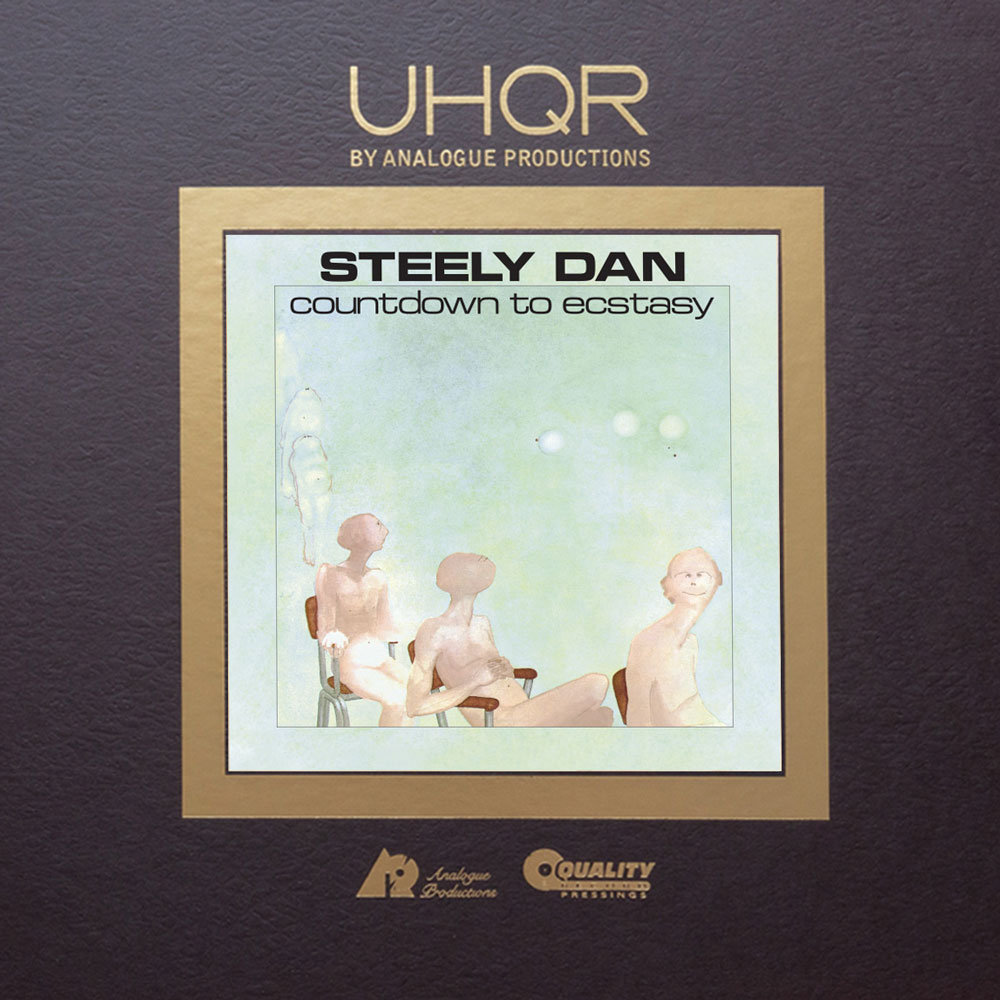
Even the album’s name points towards an unrealised story. Baxter associated “Countdown to Ecstasy” with an abandoned rock-opera project; no song bearing that title appears on the record. Dorothy White’s cover artwork and Ed Caraeff’s photography also belong to its original identity. For a collector, the relationship between music, images and the moment of creation is part of the attraction. The album does not document a final Steely Dan formula. It preserves a productive stage in which a touring band, ambitious songwriters and an expanding studio imagination meet on one recording.
The UHQR edition across four sides
This edition is Analogue Productions UHQR AUHQR 0010-45: two stereo LPs running at 45 RPM, pressed on 200-gram Clarity Vinyl at Quality Record Pressings. The announced edition comprises 20,000 copies. Bernie Grundman handled mastering from the original master tapes according to the publisher. A Stoughton tip-on gatefold and the UHQR box form part of the presentation. These specifications belong to this vinyl release; the album’s separately available SACD is a distinct edition using a different playback format.
Each side contains two tracks. “Bodhisattva” and “Razor Boy” occupy A; “The Boston Rag” and “Your Gold Teeth” are on B; “Show Biz Kids” and “My Old School” are on C; “Pearl of the Quarter” and “King of the World” complete D. The higher rotational speed therefore divides the album into four shorter listening sections. That provides room for the cut, while also requiring more side changes. Whether that pattern suits the listener is a practical preference. Speed alone does not replace an assessment of mastering, pressing and the playback system.
For the collection, precise edition identification is especially useful. The catalogue number describes this UHQR release, rather than every pressing of Countdown to Ecstasy. Documented copies include different cutting or replacement-disc variants; no particular variant is promised for the physical stock copy here. The defining published combination remains Grundman’s mastering, QRP manufacture, Clarity Vinyl and the complete eight-track programme. For listeners interested in following the band’s carefully developed musical transitions, it offers an elaborately presented vinyl edition with an unambiguous four-side sequence.
You order from Michael 45 in Germany. We arrange the US import and dispatch from Hilden.
Also on SACD: Countdown To Ecstasy
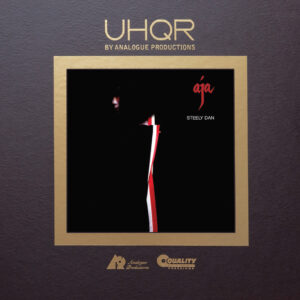
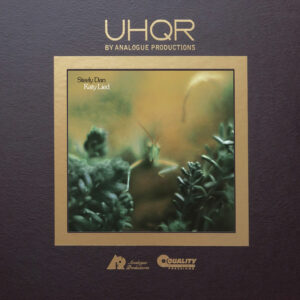
More by Steely Dan: Gaucho · Katy Lied
Artist page: All titles by Steely Dan
Customer question: Collecting UHQR records: limited editions of great albums
Series: UHQR – all 31 editions with pressing run and mastering
Musicians
Participants and documented credit status. Track references correspond to the tracklist.
- Donald Fagenpiano, electric piano, ARP Pro Soloist synthesizer, lead vocalsParticipation: album personnel
- Walter Beckerelectric bass, harmonica (C1), backing vocalsParticipation: album personnel
- Jeff “Skunk” Baxterguitar, pedal steelParticipation: album personnel; solos A1,A2,B1,C2,D1
- Denny DiasguitarParticipation: album personnel; solos A1,B2,D2
- Jim Hodderdrums, percussion, backing vocalsParticipation: album personnel
- Victor Feldmanvibraphone, marimba, percussionParticipation: individual tracks not specified
- Ray Browndouble bassParticipation: A2
- Rick Derringerslide guitarParticipation: C1
- Ben Benayacoustic guitarParticipation: individual tracks not specified
- Lanny MorgansaxophoneParticipation: C2
- Bill PerkinssaxophoneParticipation: C2
- Ernie WattssaxophoneParticipation: C2
- Johnny RotellasaxophoneParticipation: C2
- Sherlie Matthewsbacking vocalsParticipation: C1, C2
- Myrna Matthewsbacking vocalsParticipation: C1, C2
- Patricia Hallbacking vocalsParticipation: C1, C2
- David Palmerbacking vocalsParticipation: individual tracks not specified
- Royce Jonesbacking vocalsParticipation: individual tracks not specified
- James Rollestonbacking vocalsParticipation: individual tracks not specified
- Michael Fennellybacking vocalsParticipation: individual tracks not specified


Recorded in 1973 at The Village Recorder, Los Angeles; Rick Derringer’s slide guitar for Show Biz Kids: Caribou Ranch, Colorado. Producer: Gary Katz; engineer: Roger Nichols. My Old School horn arrangement: Jimmie Haskell. All compositions: Walter Becker and Donald Fagen. Cover art: Dorothy White; photography: Ed Caraeff. UHQR mastering: Bernie Grundman; pressed at Quality Record Pressings.
How Michael hears this edition
Listening impression · paraphrased from the video
Compared with the white-label promo, Michael praises the UHQR’s vocal positioning and natural presentation of the instruments. He finds that this mastering brings out the smooth, flowing character of the music particularly well.
🎧 Review video: The 10 Best Audiophile Reissues Of 2022!
This video is hosted by YouTube (Google). It only loads once you switch on “Functional” in the cookie settings.

Reviews
There are no reviews yet.