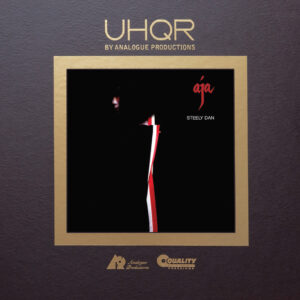
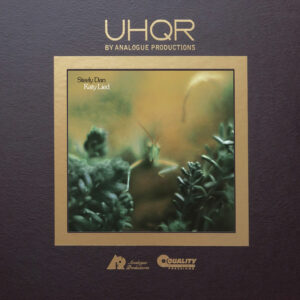
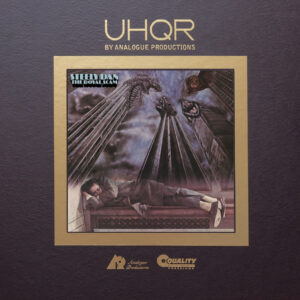
Steely Dan, when a songwriting partnership became a band
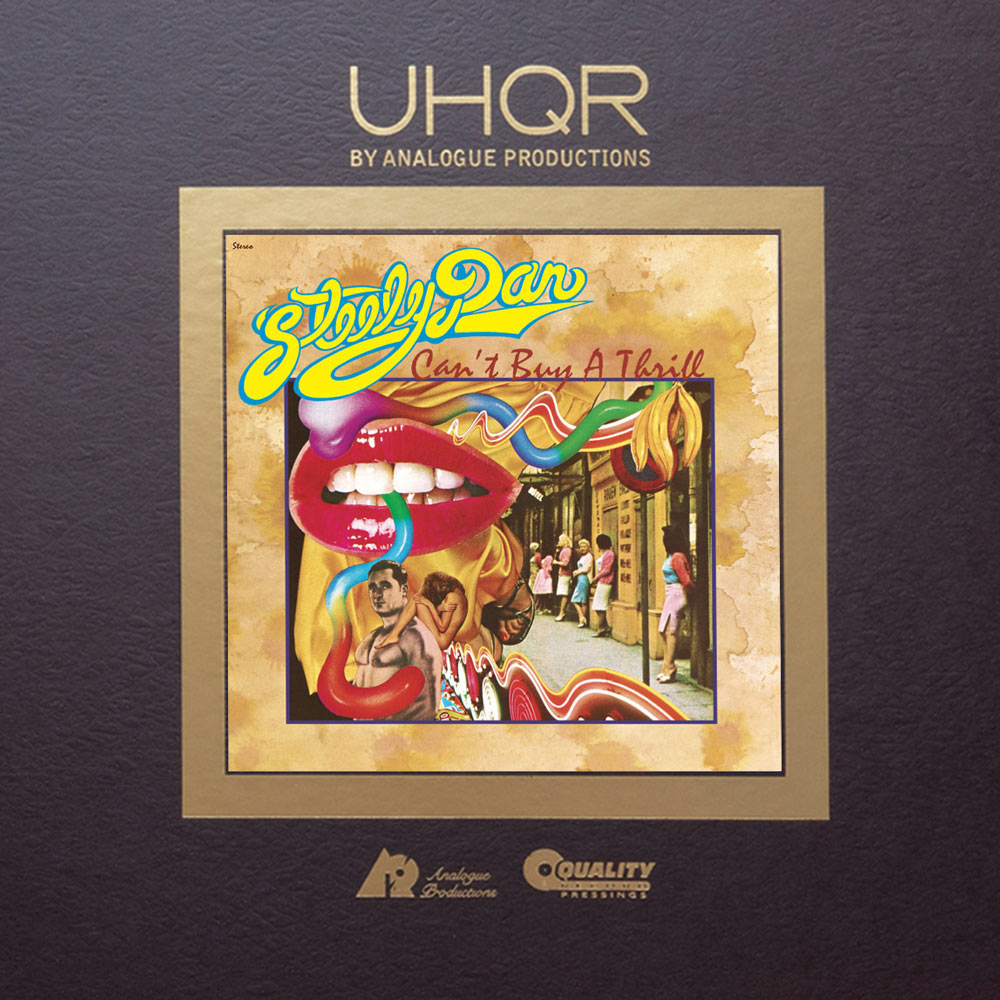
Can’t Buy a Thrill is a debut with more than one face. Donald Fagen and Walter Becker write the songs, but in 1972 the microphones are shared by a band with several lead voices and clearly identifiable individual players. Alongside Fagen and Becker are guitarists Denny Dias and Jeff “Skunk” Baxter, drummer Jim Hodder and singer David Palmer. For listeners who associate Steely Dan chiefly with their later, elaborately changing studio line-ups, this is an especially revealing starting point. The familiar writing partnership is present, while the group around it takes a different form.
Becker and Fagen met at Bard College in 1967. Attempts to place their songs in New York were followed by a move to Los Angeles, where producer Gary Katz brought them to ABC as writers. The first album was recorded at the Village Recorder in August 1972 and released by ABC Records that November. Roger Nichols engineered it, assisted by Tim Weston. The work of two songwriters thus became an album shaped by the voices and instruments of a wider cast of participants.
Palmer makes the difference from the later familiar picture particularly clear. He sings “Dirty Work” and “Brooklyn”, while Hodder takes the lead on “Midnite Cruiser”. Fagen’s voice is therefore not the only perspective through which the Becker-Fagen songs are presented. Palmer belonged to this early phase, parting company with the group the following year. His singing remains an essential element of the debut and should not be written out of its history simply because later records followed a different course.
The UHQR edition devotes considerable physical care to this early album. Before considering Clarity Vinyl and 45 RPM, however, it is worth approaching the record as a musical programme. Ten songs reveal different ways of turning the same writing partnership into a band. Changes of lead singer, distinct guitar contributions, and additional horn and backing-vocal parts give the first Steely Dan line-up its particular interest.

From “Do It Again” to “Turn That Heartbeat Over Again”
“Do It Again” opens the album, with Denny Dias providing the distinctive electric-sitar solo and Fagen contributing keyboards and lead vocals. The word electric matters here: the credit does not describe a traditional acoustic sitar. The opening song already demonstrates how a particular instrumental colour can become integral to a carefully constructed piece. Its identity depends on more than melody; it also reflects the choices about which musician supplies each voice.
“Dirty Work” immediately brings Palmer to the foreground. Jerome Richardson is associated with its tenor-saxophone solo and Snooky Young with flugelhorn. Elliott Randall appears as lead guitarist on “Kings”, with backing vocals from Clydie King, Sherlie Matthews and Venetta Fields. “Midnite Cruiser” then shifts the lead vocal to Hodder. This sequence invites the listener to notice the personnel changes as part of the music. An album can establish a common language without every song being delivered by the same singer.
Randall returns as lead guitarist on “Reelin’ in the Years”. The celebrated guitar contribution on that track should consequently not be assigned automatically to one of the two regular band guitarists. Baxter, for his part, is also credited with pedal steel, including on “Fire in the Hole”. Such distinctions make the credits worth reading. Instead of treating the entire record as one general guitar sound, individual contributions can be connected with specific songs and rediscovered on the next hearing.
“Brooklyn (Owes the Charmer Under Me)”, “Change of the Guard” and “Turn That Heartbeat Over Again” make up the fourth side of this UHQR. All ten compositions are by Becker and Fagen. The closing sequence helps restore a sense of the album as a collection of individual songs extending beyond its best-known opening selections. Following the whole programme reveals a band bringing contrasting voices and colours into a recognisable shared songwriting identity.

The musicians behind the debut
Fagen is credited with piano, electric piano, organ and vocals; Becker with electric bass and vocals. Dias and Baxter contribute different guitar colours, while Hodder supplies drums, percussion and his lead vocal on “Midnite Cruiser”. Palmer has his own role as a singer within the band. Album credits should not be read as a statement that every listed instrument appears on every song. They describe participation in the project as a whole; where particular contributions can securely be assigned to a track, the more precise information is useful.
Guests extend that core line-up. Alongside Randall, Richardson and Young, Victor Feldman is credited with percussion. King, Matthews and Fields supply backing voices, including on “Kings” and “Brooklyn”. The debut therefore already involves a relationship between a band and additional invited specialists. It is possible to recognise a connection with the later Steely Dan story without pretending that the working methods of 1972 were identical to those of a subsequent album.
One rewarding way to revisit the record is to concentrate on changes. How does a song’s perspective alter when another singer takes over? What role does a guitar solo play within the piece, and how does the accompaniment carry the music onwards afterwards? Where does an additional horn make a brief but defining contribution? These questions do not require a predetermined judgement about the recording. They direct attention to what a strong cast of musicians can do: turn written songs into individual musical events.
For collectors, the debut also provides a starting point from which later albums can be reconsidered. Fagen and Becker remain the songwriting axis, while personnel and production practices change. Can’t Buy a Thrill preserves the early band phase and voices that would not occupy the same position later. It is therefore more than the first item in a discography. It forms a chapter of its own, one that subsequent achievements cannot simply replace.
UHQR: four sides and a precisely identified edition
The edition offered here carries catalogue number AUHQR 0009-45. The album is spread across two 45 RPM records pressed on 200-gram Clarity Vinyl. Bernie Grundman cut the lacquers, with Analogue Productions specifying the original master tape as the source. Pressing took place at Quality Record Pressings, and plating is credited to Stan Bishop. These are the specifications of the UHQR, distinct from the separately available SACD and other vinyl reissues of the same album.
The side layout is deliberately concise. Side A contains “Do It Again” and “Dirty Work”; B holds “Kings”, “Midnite Cruiser” and “Only a Fool Would Say That”. Side C pairs “Reelin’ in the Years” with “Fire in the Hole”, while D contains the three closing songs. At the same groove radius, 45 RPM means greater groove speed beneath the stylus, and spreading the programme over four sides provides more cutting area per minute of music. The audible result also depends on mastering, pressing and playback. The format itself does not replace a listening comparison.
The collector’s presentation includes a numbered tip-on gatefold, the UHQR slipcase and a booklet with new notes by Donald Fagen, prepared with the assistance of Fred Kaplan. Images of the tape boxes add another perspective on the recording’s history. The stated edition is 20,000 copies. For someone interested in spending serious time with the album, this accompanying material is a meaningful part of the release rather than simply a larger container around the same songs.
There are more side changes than with a single 33⅓ RPM LP. Choosing this version means deliberately selecting the elaborate UHQR format and its particular production. The musical centre remains the 1972 debut: a writing partnership, an early band line-up and ten songs carried by different voices. That relationship between album history and an accurately identified edition is a more useful collecting reason than an indiscriminate promise to surpass every other version.
It also leaves room for different listening priorities. A familiar single LP may suit one evening, while the four-side edition invites a more deliberate sequence on another. The value of understanding the format is that the choice becomes informed by what is actually offered, with the music and its participants remaining at the centre of the decision.
You order from Michael 45 in Germany. We arrange the US import and dispatch from Hilden.
Also in another edition: Can’t Buy A Thrill
More by Steely Dan: Countdown To Ecstasy · Gaucho
Artist page: All titles by Steely Dan
Customer question: Collecting UHQR records: limited editions of great albums
Series: UHQR – all 31 editions with pressing run and mastering
Musicians
Participants and documented credit status. Track references correspond to the tracklist.
- Donald Fagenpiano, electric piano, YC-30 organ, vocalsParticipation: album personnel
- Walter Beckerelectric bass, vocalsParticipation: album personnel
- Jeff “Skunk” Baxterguitar, pedal steelParticipation: album personnel
- Denny Diasguitar, electric sitarParticipation: album personnel
- Jim Hodderdrums, percussion, vocalsParticipation: album personnel; lead vocals B2
- David PalmervocalsParticipation: lead vocals A2, D1
- Elliott Randalllead guitarParticipation: B1, C1
- Victor FeldmanpercussionParticipation: individual tracks not specified
- Jerome Richardsontenor saxophoneParticipation: A2
- Snooky YoungflugelhornParticipation: A2
- Clydie Kingbacking vocalsParticipation: B1, D1
- Sherlie Matthewsbacking vocalsParticipation: B1, D1
- Venetta Fieldsbacking vocalsParticipation: B1, D1


Recorded August 1972, The Village Recorder, Los Angeles. Producer: Gary Katz; engineer: Roger Nichols, assisted by Tim Weston. UHQR lacquer cutting: Bernie Grundman; plating: Stan Bishop; pressed at Quality Record Pressings. All compositions by Walter Becker and Donald Fagen. Album credits do not imply that every instrument appears on every track.
How Michael hears this edition
Listening impression · paraphrased from the video
Compared with the white-label promo, Michael hears more warmth, dynamics, soundstage and detail. He is particularly surprised that the UHQR sounds even fresher to him. This is his judgment on his system; he separately acknowledges the original’s collectible value.
🎧 Review video: The 10 Best Audiophile Reissues Of 2022!
This video is hosted by YouTube (Google). It only loads once you switch on “Functional” in the cookie settings.

4dd –
Great release
Ralf Doerner –
Ein muss in jedem Plattenschrank !!! Perfekte Weiterentwicklung !!!!! Muss man haben 🥰