A familiar song, a different kind of closeness
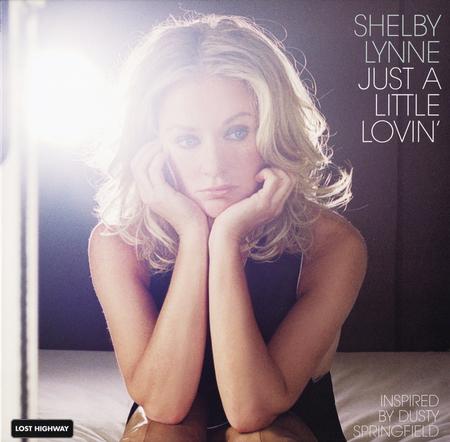
Shelby Lynne’s Just A Little Lovin’ begins with a decision to work at close range. Nine songs associated with Dusty Springfield meet one composition of Lynne’s own. That combination could have become a nostalgic revue, arranging familiar melodies for maximum recognition. Lynne approaches the material as songs that still have something to say. Their history remains part of a listener’s memory, but it does not have to dictate each new gesture. The tension between recognition and independence gives the project its interest. You may already know where a melody goes while still wanting to discover what this particular singer will make of its journey.
Recorded in January 2007 at Capitol Studios’ Studio A, the album was released on January 29, 2008. Phil Ramone produced it, with Al Schmitt responsible for recording. Those credits establish an experienced setting for a singer who does not require an elaborate musical disguise. The personnel brings together guitars, keyboards, bass and drums. Even before listening, that relatively contained instrumental world suggests room for the voice to become more than one element inside a large arrangement. The important relationships are between a syllable and a pause, singing and accompaniment, a well-known song and the new person telling its story.
The title Just A Little Lovin’ offers an appropriate sense of scale. A small gesture can change an entire situation. Applied to listening, it encourages attention to the shape of a line instead of anticipation of the next spectacular effect. Lynne’s connection with these songs extends beyond the fact that Springfield recorded them. The selection asks how longing, uncertainty and affection can be expressed again without re-enacting an already famous performance. For listeners drawn to vocal records because of these subtle changes of perspective, this is an inviting programme with a clear focus. Familiarity opens the door; interpretation supplies the reason to stay.

A small ensemble with substantial responsibility
The credits place Dean Parks on acoustic and electric guitars, Rob Mathes on keyboards and Kevin Axt on bass and double bass alongside Lynne. Gregg Field and Curt Bisquera are credited on drums; reliable individual song assignments are not available for every participant. The personnel list should therefore not be taken to mean that every instrument appears on every track. It describes the group of musicians from which the album’s different shades emerge. Lynne herself is credited with acoustic and electric guitar and backing vocals as well as singing. Her presence belongs to the instrumental conception as well as to the front of the record.
That arrangement is appealing because the accompaniment has two responsibilities. It must support familiar material while leaving space for a different emphasis. A guitar part can clarify a harmonic relationship without filling every opening. Bass and drums can provide direction without forcing the voice into an ostentatiously displayed grid. That makes the relationship between singer and ensemble especially interesting to follow: when does the ensemble lead, when does it answer, and when does it leave the next step to the singer? On a project built around interpretation, that distribution of responsibility matters as much as the number of names on the sleeve.
Ramone’s production and Schmitt’s recording work are part of the same context, though their roles are distinct from those of the performing musicians. This was a professional studio project; a feeling of immediacy should not be confused with an absence of considered choices. A restrained presentation also requires decisions about distance, balance and musical emphasis. The album invites those decisions to serve the songs rather than becoming a separate technical spectacle. Its interest lies in the possibility of keeping the music central even under close attention. A familiar melody does not need a large cast to claim its space; it needs an accompaniment that understands what space is for.

Ten songs between memory and a personal voice
The first side moves from the title track through Anyone Who Had A Heart to You Don’t Have To Say You Love Me, I Only Want To Be With You and The Look Of Love. Even this sequence brings together several forms of the love song: desire, vulnerability, reassurance and seduction are close neighbours. The titles naturally invite comparison, but merely checking them against earlier versions would narrow the experience. Another question is how these five songs work beside one another, and what kind of narrating voice their sequence allows to emerge. An album can give well-known individual pieces a different shared setting.
Side two continues with Breakfast In Bed, Willie And Laura Mae Jones and I Don’t Want To Hear It Anymore. Lynne’s own Pretend then enters the programme before How Can I Be Sure closes it. The original composition matters to the concept. It does not place the singer outside the inherited repertoire; it places her authorship within the same conversation. That makes the selection more than a salute to an admired predecessor. A musician is showing the language she recognises in older songs and allowing it to stand beside her own. The connection depends on musical judgement rather than on the simple fact of a shared theme.
The compact format reinforces that approach. Ten tracks across two sides form a defined journey, without appended alternate versions or bonus material. Turning the record separates two equally sized groups and gives the second half a fresh beginning. Just A Little Lovin’ makes particular sense in a collection where singer-songwriter records, soul and classic pop already share space. Dusty Springfield provides the point of reference; Shelby Lynne determines the perspective. Both remain important. The listener is not asked to forget the songs’ history, but neither is that history expected to do all the interpretative work. This is an album to follow, not simply a list to recognise.
This edition: one LP, 200 grams, 33⅓ RPM
The edition described here carries catalogue number AAPP 041. It is the single 200-gram LP playing at 33⅓ RPM, and should not be confused with the similarly numbered AAPP 041-45 double LP. That distinction is essential when choosing a copy: a familiar album and programme can exist in materially different vinyl editions. This Analogue Productions reissue was released in 2012 and manufactured at Quality Record Pressings. Doug Sax handled mastering at The Mastering Lab in Ojai, while Gary Salstrom is credited for the metalwork. Those details identify a specific release rather than a generic version of the title.
An informative preparation step is documented for this album. The individual analogue song reels were assembled into side masters, providing the source for cutting through The Mastering Lab’s tube chain. This is specific information about Just A Little Lovin’, not a general claim about how unrelated albums were produced. Similarly, a restricted number of records made from each stamper does not establish an equivalent limit for the entire edition. The useful facts concern tape preparation, cutting and the pressing plant. They explain the manufacture of this LP without attempting to guarantee an identical listening result on every system or to turn production details into unsupported superlatives.
You order from Michael 45 in Germany. We arrange the US import and dispatch from Hilden.
For anyone looking to buy this album on vinyl, these details identify the edition described here. With five songs on each side, this version retains a straightforward, continuous album structure. It suits listeners who want Lynne’s engagement with the Springfield repertoire as a complete programme and are specifically looking for the 33⅓ RPM single LP. The documented production complements the music’s appeal rather than replacing it. At the centre are ten songs and a singer who treats familiar material as a personal artistic responsibility. That is also why the catalogue number deserves careful attention: it connects the album you want with the actual pressing being described. Here, the essential combination is Shelby Lynne, AAPP 041 and one full album across two sides.
Customer question: Buying Analogue Productions records in Europe
Musicians
Participants and documented credit status. Track references correspond to the tracklist.
- Shelby LynnePortrait reference: 2008vocals, acoustic guitar, electric guitar, backing vocalsParticipation: Album credits · track assignment unconfirmed
- Dean Parksacoustic guitar, electric guitarParticipation: Album credits · track assignment unconfirmed
- Rob MatheskeyboardsParticipation: Album credits · track assignment unconfirmed
- Kevin Axtelectric bass, double bassParticipation: Album credits · track assignment unconfirmed
- Gregg FieldEarlier portrait: 1982drumsParticipation: Album credits · track assignment unconfirmed
- Curt BisqueradrumsParticipation: Album credits · track assignment unconfirmed


Produced by Phil Ramone. Recording and mixing: Al Schmitt; assistant: Steve Genewick. Production coordination: Jill Dell’Abate. Original mastering and this LP’s cutting: Doug Sax, The Mastering Lab, Ojai. Metalwork: Gary Salstrom. Photography: Randee St. Nicholas; design: Karen Naff. Album personnel includes original-release credits; individual track assignments remain unconfirmed.
How Michael hears this edition
Listening impression · paraphrased from the video
Michael highlights Shelby Lynne’s precisely centred voice. He uses Just a Little Lovin’ to align his speakers and explicitly says this spatial quality is present on both the 33⅓ and 45 RPM editions.

Reviews
There are no reviews yet.