

Two young voices with a shared musical purpose
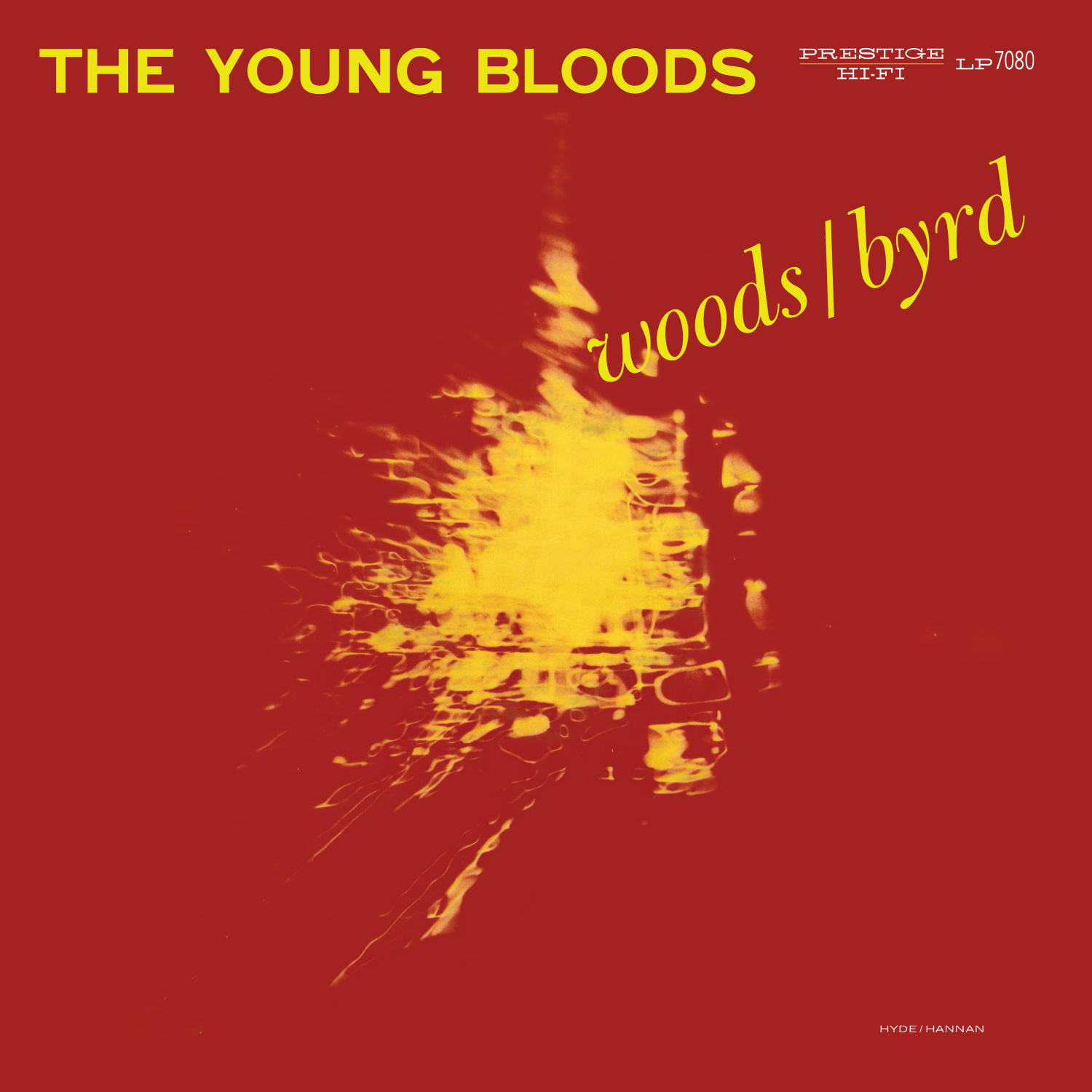
On The Young Bloods, Phil Woods and Donald Byrd meet as co-leaders. Alto saxophone and trumpet stand together at the front of a quintet assembled at Rudy Van Gelder’s Hackensack studio on November 2, 1956. Prestige released the recording in 1957 as PRLP 7080. Woods was twenty-five and Byrd twenty-four. The title suits this moment in their careers: two musicians whose names would later be associated with quite different chapters of jazz history are developing their individual identities within a shared musical language.
The album belongs to the lively exchange between bebop and hard bop in the middle of the 1950s. Charlie Parker’s influence is explicitly represented in the repertoire, but Woods is far more than a knowledgeable interpreter of that tradition. He wrote four of the six pieces. His contribution therefore helps determine the album’s musical shape, while Byrd brings his own sound and phrasing to the second horn part. The joint billing does not erase these different responsibilities. It draws attention to the relationship between composition and instrumental dialogue, and to the way a common repertoire can accommodate two clearly recognisable voices.
Woods and Byrd had already met in the studio. In June 1956, both participated in Woods’ more expansively scored Pairing Off at Van Gelder’s. For The Young Bloods, the front line remains deliberately compact: one alto and one trumpet. That makes comparison unusually direct. The listener can follow the way the two present a theme together and then develop individual lines away from it. There is no need to approach the session as a contest between soloists. Its attraction lies in two young musicians sharing enough musical ground for the differences between them to become meaningful.

Woods, Byrd and a less frequently recorded pianist
The alto saxophone and trumpet differ in the very beginning of a note. A reed’s response and a trumpet’s attack give a shared melody different contours. With no additional horns in this quintet, those details are particularly rewarding to follow. When do the two voices act as one? When does one move into the foreground? How does the weight of a phrase change as it passes from one instrument to another? The group is small enough to make these questions accessible, while offering more than a single melodic perspective.
At the piano is Al Haig, a figure directly connected with bebop’s early history. His work with Charlie Parker and Dizzy Gillespie linked him to the music that helped shape the younger horn players. The label specifically draws attention to his presence because he was recording relatively infrequently during this period. That makes his contribution a substantial part of the album’s interest for a collection. Behind the two names on the cover lies an opportunity to hear an important pianist within a clearly defined small-group setting of the mid-1950s, rather than treating his credit as incidental accompaniment.
Bassist Teddy Kotick and drummer Charlie Persip complete the band. All five musicians appear on all six tracks. Unlike some Prestige compilations, the album does not switch bassists or drummers between material from separate sessions. This continuity provides a useful framework for following the rhythm section’s responses to Woods and Byrd. Kotick’s lines establish direction, Persip shapes the movement of time, and Haig’s piano mediates between harmonic structure and the soloists’ changing ideas. The music can be approached as a conversation involving the entire quintet, with the two horns drawing energy and definition from the three musicians behind them.

Four Woods originals between Parker and “Lover Man”
The opening piece is Charlie Parker’s Dewey Square. It is neither the album’s title track nor a newly written dedication: it is an actual Parker composition, placing a musical point of reference at the beginning of the programme. Keeping the theme in mind makes it rewarding to follow the particular identities of alto and trumpet as the performance develops. A language’s origins need not prevent an individual musician from speaking through it. The relationship between an inherited vocabulary and a personal voice is one of the enduring attractions of this kind of session.
Dupeltook and Once More, both written by Phil Woods, follow. On the second side, House of Chan and In Walked George continue the emphasis on his own material. Four originals among six selections give the album a different character from an all-standards date. Woods is responsible not only for his solos but also for much of the music the quintet has been given to work with. Listeners who know him principally as a technically accomplished alto player therefore encounter the composer as well. The themes are part of the band’s shared work, rather than brief preliminaries to the next improvisation.
Lover Man closes the programme. Written by Jimmy Davis, Ram Ramirez and James Sherman, it returns a familiar song to the centre after the four Woods pieces. A closing performance of this kind invites attention to the shape of a phrase rather than simply to the number of notes. How much weight does a sustained tone receive? Where is the melody held together, and where does it leave room for a personal turn? These are questions that can be asked of both horns while also opening the ear to the role of Haig’s accompaniment.
The published running order is not the order documented by the session matrices. Dewey Square and Dupeltook, which open the LP, appear last in that sequence. The album’s assembly thus creates its own route through the material. Collectors may also enjoy the connection with George Wallington’s Jazz for the Carriage Trade, recorded in January of the same year with Woods, Byrd and Kotick. Three recurring musicians appear there under a different leader and with a different rhythm section. A few months later, The Young Bloods gives their continuing association a focused identity of its own.
A 33⅓ RPM LP from the Prestige Mono Series
This Analogue Productions edition carries catalogue number APRJ 7080 and presents the album on one mono LP at 33⅓ RPM. Kevin Gray handled the mastering and lacquer cutting at Cohearent Audio; the label identifies the analogue masters as the source. The currently listed 180-gram edition is pressed at Quality Record Pressings. Recording, remastering and manufacture remain distinct parts of its history: Rudy Van Gelder recorded the quintet in 1956, while Gray prepared this later vinyl edition.
The package includes a high-gloss Stoughton tip-on jacket, retaining the familiar presentation of a classic Prestige LP. Earlier 200-gram versions belong to the series’ publication history; they do not establish a promise of that weight or of early numbering for a current copy. The edition described here is the presently listed 180-gram mono LP under the catalogue number above. Its physical presentation and documented production details give collectors a clear basis for identifying the format being offered.
At 33⅓ RPM, the programme remains in two continuous halves of three tracks each. Woods’ originals extend across both sides, with Parker at the opening and Lover Man at the close. It is a natural arrangement for following the quintet through a complete album: one side change, six uninterrupted performances, and time to become familiar with the musical relationships inside the group. You order from Michael 45 in Germany. We arrange the US import and dispatch from Hilden.
Customer question: Buying Analogue Productions records in Europe
Series: Analogue Productions Prestige – all 50 records, musicians and session paths
Musicians
Participants and documented credit status. Track references correspond to the tracklist.
- Phil Woodsalto saxophoneParticipation: A1, A2, A3, B1, B2, B3
- Teddy Kotickdouble bassParticipation: A1, A2, A3, B1, B2, B3
- Charlie PersipdrumsParticipation: A1, A2, A3, B1, B2, B3
- Al HaigpianoParticipation: A1, A2, A3, B1, B2, B3
- Donald ByrdtrumpetParticipation: A1, A2, A3, B1, B2, B3


The quintet plays on all six tracks; recorded November 2, 1956 in Hackensack.

Reviews
There are no reviews yet.