

A familiar voice in a different present
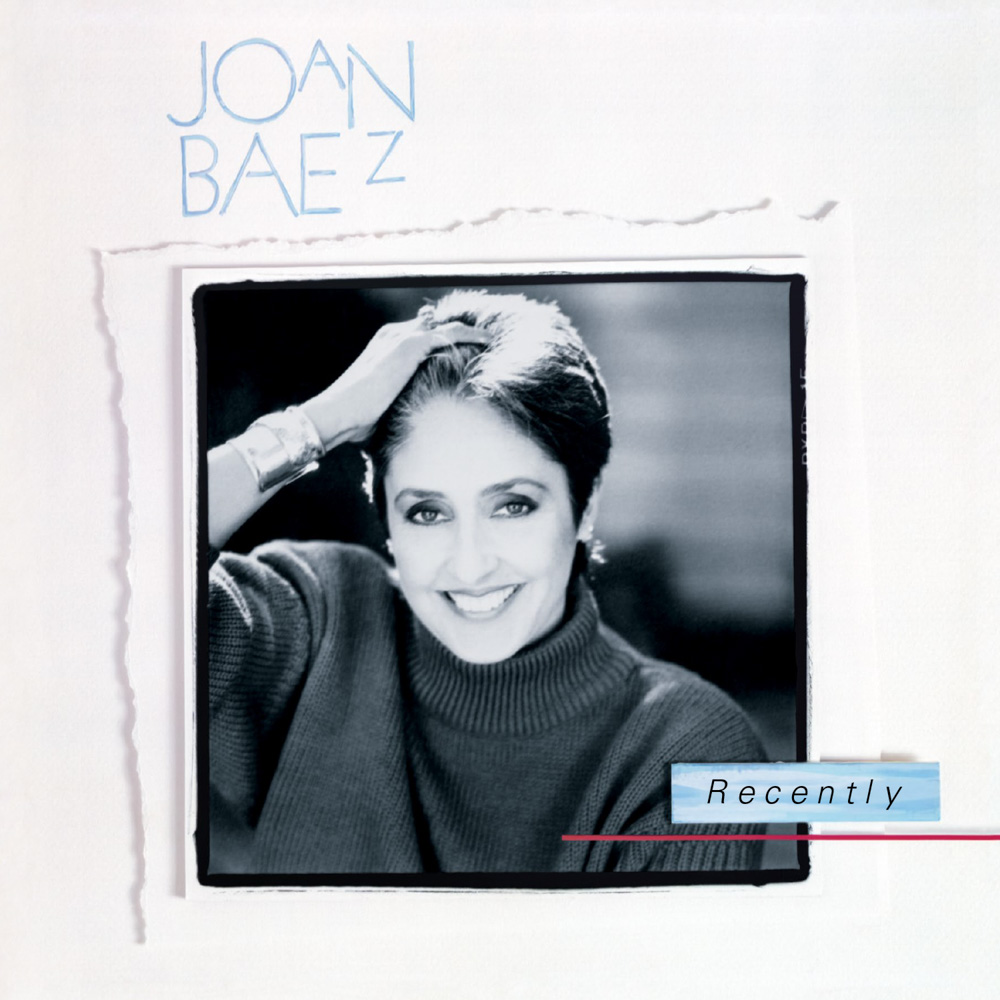
By 1987 Joan Baez was an artist with a substantial history. Recently, however, does not treat that history as a museum display. It places her voice within the present of its making: alongside songs by Mark Knopfler, Johnny Clegg, Peter Gabriel and U2, between her own compositions and an expansive spiritual. These nine selections speak different musical languages while sharing a central concern: how can a singer address vulnerability, solidarity and political responsibility without allowing large ideas to obscure individual people? Baez approaches that question through her choice of material and the attention she gives to the words themselves.
Producer Alan Abrahams surrounds her with a versatile studio ensemble. Acoustic and electric instruments, keyboards, percussion and choral voices all belong to this record’s musical setting. Listeners who associate Baez primarily with a single guitar therefore encounter a broader environment here. Her voice remains the point of reference, but it need not carry every element of movement on its own. The arrangements leave room for additional colours and a rhythmic foundation that belongs recognisably to the production’s period. That is part of the album’s interest: it does not attempt to recreate an early folk recording, but presents an experienced singer engaging with the repertoire and studio possibilities of the eighties.
“Brothers in Arms” opens the programme. Knopfler’s song places intimacy and violence in relation to one another, giving the album a serious, reflective horizon. It is followed immediately by “Recently”, one of Baez’s own compositions. The juxtaposition is revealing. Borrowed and original material are not placed in separate compartments; they are treated as equally valid means of telling a story. For music lovers, this makes Recently more than a collection of familiar names printed on a sleeve. It is a deliberately assembled programme in which a distinctive interpreter brings different writers into conversation, allowing the sequence to express something beyond the individual songs.

Nine songs between intimacy and public life
The first side moves from “Brothers in Arms” through the title song to “Asimbonanga”. Johnny Clegg’s composition and Peter Gabriel’s later “Biko” connect the album with resistance to apartheid. Their musical starting points differ, and Baez does not reduce them to interchangeable protest language. Instead, her selection shows how solidarity can involve carrying another songwriter’s work to a different audience. Such connections are integral to the record’s structure. Its political songs stand beside more personal material, rather than outside it. Public responsibility and private feeling become related forms of attention, each giving the other a different context within the unfolding programme.
Jimmy Webb’s “The Moon Is a Harsh Mistress” introduces another kind of writing: concentrated, rich in imagery and responsive to a singer’s treatment of individual turns of phrase. It is followed by “James & the Gang”, the second Baez original alongside “Recently”. These two compositions ensure that she appears here as more than a transmitter of other people’s words. At the same time, they do not push the surrounding repertoire into a supporting role. The album’s progression grows from relationships: a writer with a particular imaginative language, a personal composition, a politically engaged song. Each selection subtly changes the perspective from which its neighbours can be understood.
On the second side, “Let Us Break Bread Together / Freedom” occupies nearly nine minutes. That allocation of space alone shows that the programme was not conceived solely as a string of compact, detachable songs. “MLK” then brings U2 into the selection; “Do Right Woman, Do Right Man”, by Chips Moman and Dan Penn, adds another inflection before “Biko” provides the conclusion. This route matters to the album as a whole. Community, dignity and responsibility remain more than abstract descriptive terms: they are explored through different songwriting traditions. Each LP side consequently has its own movement, while both remain recognisable parts of a considered larger sequence.

The people around the voice
The credits for Recently describe a production with a carefully distributed range of resources. Abraham Laboriel is credited with bass and guitarrón. Alex Acuña and John Robinson are listed for drums and percussion. This establishes a considerably broader rhythmic foundation than the idea of a simple guitar accompaniment would suggest. The album credits examined here do not, however, document a precise assignment of every instrument to individual tracks. It would therefore be misleading to turn the personnel list into supposedly exact song-by-song line-ups. Its value begins with making the actual participants visible and acknowledging the variety of musical experience they brought to the project.
The guitar credits include Caleb Quaye, Fred Tackett and Paul Jackson Jr. alongside Joan Baez. Cesar Cancino, John Hobbs and Laythan Armor appear among the keyboard players, with Armor also specifically credited on piano. Tony Wilkins receives a Hammond B-3 credit. The L.A. Choir, directed by Donald Taylor, adds a further collective presence. These names are part of the record’s identity. They show why an account mentioning only Baez and several celebrated songwriters would leave out something essential. A studio production of this kind also depends on musicians whose contributions sustain a song’s transitions, harmonic surroundings and rhythmic assurance, whether or not their names appear prominently on the front cover.
Charlie Paakkari, Joe Chiccarelli and Peter Doell are credited for engineering; the edition credits consulted identify Capitol Studios for recording and mixing. Here, too, separate responsibilities deserve to remain distinct. Production and engineering credits refer to different work from the later preparation of a vinyl master. The two should not be collapsed into a single claim. A rewarding approach to the album is to follow the relationship between voice and accompaniment first, then consider individual instrumental colours. This keeps interpretation at the centre, rather than assuming that a substantial personnel list must mean every arrangement is continuously occupied by every available player.
The Analogue Productions edition at 33⅓ rpm
This edition carries catalogue number AAPF 112 and presents the nine tracks on one stereo LP running at 33⅓ rpm. Kevin Gray cut the master at Cohearent Audio from the original tapes; plating is credited to Gary Salstrom, and the record was pressed at Quality Record Pressings. A Stoughton tip-on jacket forms part of the presentation. These are specific attributes of this release, rather than a general description of every version of the album. For collectors, the distinction is useful: the original 1987 production, the later mastering work and the manufacture of this LP are connected stages, but they are not the same event.
The supplier’s vinyl-weight information is inconsistent. The current product heading specifies 180 grams, while the descriptive copy still contains a 200-gram statement. A particular weight should therefore not be guaranteed without checking the supplied copy itself. This unresolved detail does not change the documented identity of the Analogue Productions release, Kevin Gray’s cutting credit or its manufacture at QRP. It illustrates why catalogue numbers and specific production credits can be more useful when identifying an audiophile reissue than an unexamined line retained from older sales copy. Clear information serves the record better than a specification presented with greater certainty than the evidence permits.
The 33⅓ format suits the album’s arrangement: five tracks on the first side and four on the second, including the extended spiritual medley. It preserves the relationship within each side and requires a single side change during that sequence. This is a practical description of how the programme unfolds, rather than a blanket sound-quality judgement against other formats. You order from Michael 45 in Germany. We arrange the US import and dispatch from Hilden. Within a collection, Recently offers a distinct view of Joan Baez: an experienced voice turning in 1987 towards different songs, new studio collaborators and the concerns of her own time, while retaining her close attention to people and to the meaning carried by words.
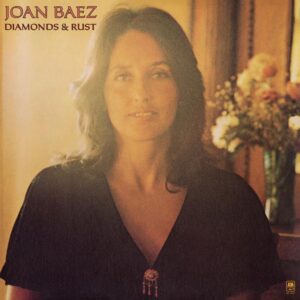
More by Joan Baez: Diamonds & Rust
Customer question: Buying Analogue Productions records in Europe
Musicians
Participants and documented credit status. Track references correspond to the tracklist.
- Joan BaezPortrait: 1987vocals, guitarParticipation: Album personnel; track assignments unconfirmed
- Abraham LaborielPortrait: 2008 · later portrait referencebass, guitarrónParticipation: Album personnel; track assignments unconfirmed
- Alex AcuñaPortrait: 2010 · later portrait referencedrums, percussionParticipation: Album personnel; track assignments unconfirmed
- John Robinsondrums, percussionParticipation: Album personnel; track assignments unconfirmed
- Caleb QuayeguitarParticipation: Album personnel; track assignments unconfirmed
- Fred TackettguitarParticipation: Album personnel; track assignments unconfirmed
- Paul Jackson Jr.guitarParticipation: Album personnel; track assignments unconfirmed
- Cesar Cancinokeyboards, synthesizerParticipation: Album personnel; track assignments unconfirmed
- John Hobbskeyboards, synthesizerParticipation: Album personnel; track assignments unconfirmed
- Laythan Armorkeyboards, synthesizer, pianoParticipation: Album personnel; track assignments unconfirmed
- Tony WilkinsHammond B-3Participation: Album credits; track assignments unconfirmed
- Donald Taylorchoir direction (L.A. Choir)Participation: Album credits; track assignments unconfirmed
- L.A. ChoirchoirParticipation: Album credits; track assignments unconfirmed


Album recording personnel. Listing multiple instruments does not imply that each is played on every track.

Reviews
There are no reviews yet.