Kansas City, by way of Las Vegas
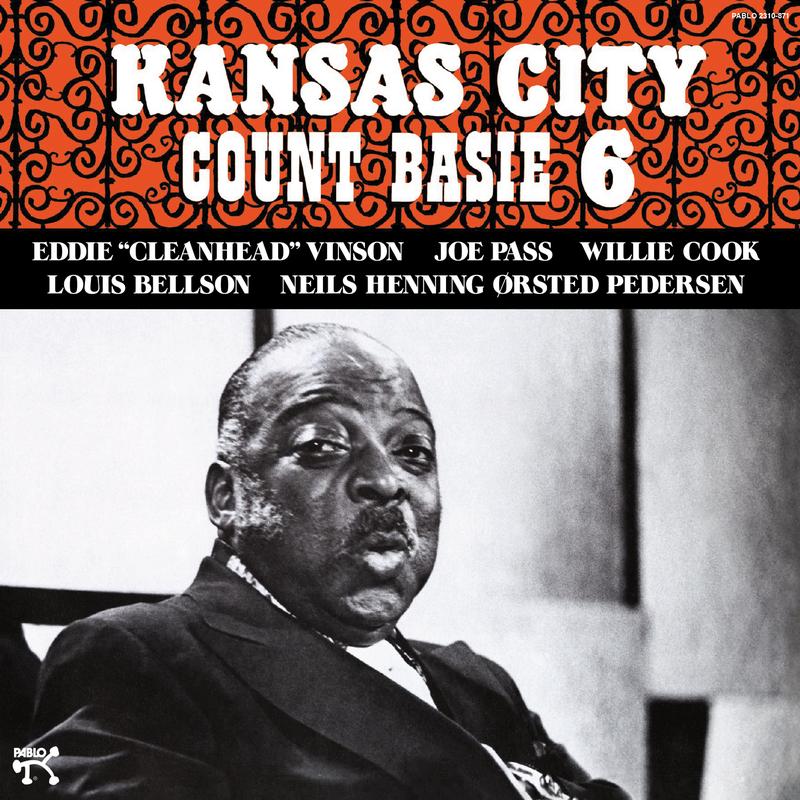
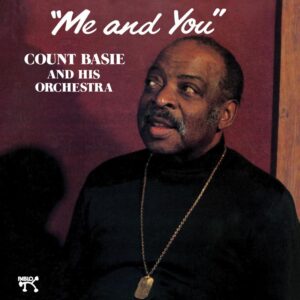
The title points towards Count Basie’s musical roots, but the recording was made in Nevada. On November 1, 1981, his sextet assembled at Las Vegas Recording Studio. Basie was 77. His connection with Kansas City reached back to Bennie Moten’s band in the late 1920s and the subsequent formation of his own orchestra. This session returns to that heritage through a much smaller group.
Around the piano are Willie Cook on trumpet, Eddie “Cleanhead” Vinson on alto saxophone and vocals, Joe Pass on guitar, Niels-Henning Ørsted Pedersen on bass and Louie Bellson on drums. Their experience comes from several different bands and musical partnerships. Two horns and a flexible rhythm section give Basie a setting quite distinct from the larger instrumental sections of his orchestra, with room for individual voices to emerge.

The blues finds a singer
“Wee Baby” connects the session directly with the blues-singing tradition. Vinson takes the vocal, making his role in the sextet broader than the saxophone credit alone suggests. Also known as “Wee Baby Blues”, the song was written by Pete Johnson and Big Joe Turner. It points towards the relationship between piano, rhythm and forceful singing that forms part of Kansas City jazz history.
Other selections include “Walking the Blues”, “Blues for Little Jazz”, “Vegas Drag” and “St. Louis Blues”. Even their titles suggest several routes into the blues. “Vegas Drag” gives the actual recording location its own place within the repertoire. The city named on the sleeve consequently describes a musical inheritance, while the six musicians explore it together somewhere else, at a much later point in their careers.

Basie in a smaller circle
A useful first listening route is the change between Vinson’s singing and the instrumental passages. What does Basie place beneath a vocal phrase, and how does his accompaniment change behind a horn? In this compact ensemble, the piano can be followed while another musician carries the solo. A short response may reveal as much about the musical relationship as a more extended line.
Pass, Ørsted Pedersen and Bellson form the rhythmic core with Basie. Try concentrating on guitar and bass while trumpet or alto saxophone occupy the foreground. Where do they reinforce the pulse together, and where do their lines take different directions? Following these relationships opens another view of a session that brings distinct musical personalities into the same small group, with the blues providing shared ground.
About this edition
The Analogue Productions release listed as “Count Basie 6 – Kansas City” carries catalogue number AAPJ 197. It is a 180-gram single LP at 33⅓ RPM from the label’s Pablo series. Matthew Lutthans mastered the album at The Mastering Lab, with the publisher specifying the original analogue master tape as the source. Pressing is by Quality Record Pressings, and the jacket is a Stoughton Printing tip-on. This identifies the particular sextet album also catalogued under the title “Kansas City 6”.
Michael 45 holds the goods in Germany and ships from Hilden, so customers in Germany and across the EU can avoid a personal US import and its customs wait.
🎧 Review video: 6 Rock, Blues, Jazz Records for Beginners and Pros
https://www.youtube.com/watch?v=lucYP_obV1c
Customer question: Buying Analogue Productions records in Europe
Series: Pablo – all 30 records, musicians and the session book
Musicians
Documented selection of participating musicians. Personnel may vary by track; this list does not claim to be complete.
| Name | Instrument / role |
|---|---|
| Count Basie | Piano |
| Eddie Vinson | Alto saxophone |
| Willie Cook | Trumpet |
| Joe Pass | Guitar |
| Niels-Henning Ørsted Pedersen | Double bass |

Reviews
There are no reviews yet.