
A club date waits twenty-five years
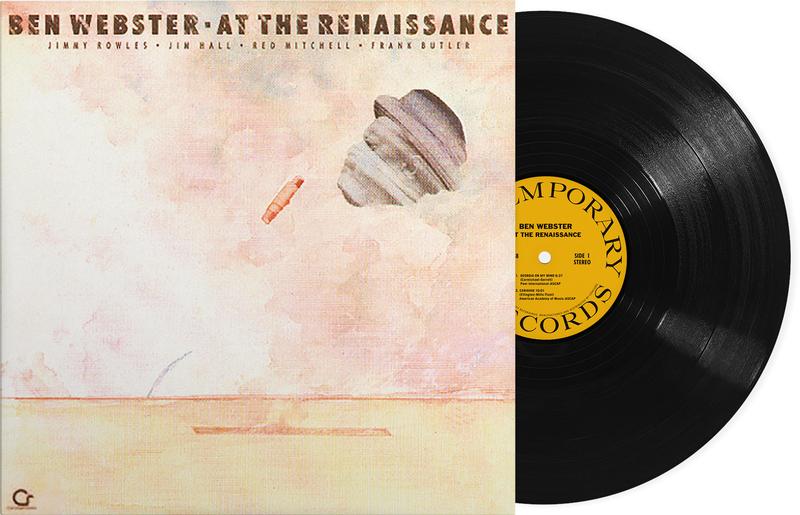
On 14 October 1960, Ben Webster played with his quintet at the Renaissance in Hollywood. Howard Holzer recorded the performance on location, with Lester Koenig producing. The first LP drawn from the evening did not appear until 1985. A quarter of a century separated performance and publication, and both Webster and Koenig had died in the intervening years. At the Renaissance is therefore a concert record and a later opening of the Contemporary archive, bringing one evening's music to listeners under very different circumstances.
The sleeve retains evidence of that long journey. Koenig's notes are dated February 1972, while Ed Michel's additional text comes from August 1985. The available documentation does not securely explain why the record had remained unreleased after the earlier notes were written. There is no need to invent an archive mystery to make the story interesting. The musician, original producer and later album production already belong to distinct stages in the history of one eventual release.

Jim Hall beside Webster
The quintet placed Jimmy Rowles on piano, Jim Hall on guitar, Red Mitchell on bass and Frank Butler on drums alongside Webster's tenor. Hall had worked in Los Angeles with Chico Hamilton and Jimmy Giuffre. Rowles was an experienced accompanist to singers and had already recorded with Webster in other settings. The personnel connects the saxophonist with players whose work frequently required close attention to the particular musical situation and to the phrasing of the person beside them.
Piano and guitar provide two harmonic instruments around the tenor. That suggests a rewarding listening route: follow Hall's contributions, then return to Rowles' piano while Webster shapes the melody. Mitchell and Butler are equally individual partners. “Renaissance Blues”, named after the club, is credited to all five musicians together. Its writing credit makes visible something easily obscured by a celebrated bandleader's name: the music on this club recording was carried by a complete ensemble, with shared responsibilities beyond the featured horn.

Carmichael songs and an Ellington connection
“Georgia on My Mind” opens the album and “Stardust” closes it, both leading back to Hoagy Carmichael. Between them, “Caravan” brings a piece from the Ellington circle into the programme, recalling Webster's own place in Duke Ellington's orchestra. W. C. Handy's “Ole Miss Blues” and Cole Porter's “What Is This Thing Called Love” complete the selection alongside the collective blues. These songs connect the five players with different parts of the repertoire and different experiences in their working lives.
“Caravan” and “Stardust” each last around ten minutes or more, allowing the performances to extend well beyond a simple statement of their melodies. Yet the LP does not contain everything recorded that evening. Session discographies list eight titles; this edition includes six. “Gone with the Wind” and “Mop Mop” are absent. Earlier releases used different combinations, including an Analogue Productions edition with “Mop Mop” in place of “Renaissance Blues”. An identical album title therefore does not necessarily identify an identical programme.
Six performances on one record
ACONC 388 belongs to Craft's Contemporary Records Acoustic Sounds Series. It is a single 180-gram LP, manufactured at Quality Record Pressings and housed in a tip-on jacket. Bernie Grundman cut the lacquers. Craft specifies original master tapes and an AAA chain, and also describes the historical performance as a direct-to-two-track analogue recording without overdubs. That provides a specific account of the original recording method, rather than a general claim based merely on the age of the music.
With “Renaissance Blues” included, this reissue follows the six-track selection familiar from the later OJC LP. It is neither the original four-track release of 1985 nor the complete eight-track CD. It also offers a connection with Helen Humes' Songs I Like to Sing!: Webster had participated in those Contemporary sessions only weeks before this club date. Hearing the two records together places the same musician in contrasting roles and makes the network around the label more tangible than a catalogue of unrelated album titles.
You order from Michael 45 in Germany. We arrange the US import and dispatch from Hilden.
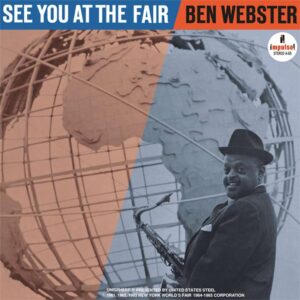
More by Ben Webster: Gentle Ben · See You at the Fair
Series: Contemporary – all 24 records: sunny jazz from Los Angeles
Musicians
Personnel for this album version are documented. Track-specific participation is shown in the final column.
| Name | Instrument / role | Participation |
|---|---|---|
| Ben Webster | tenor saxophone, bandleader | Album personnel |
| Jimmy Rowles | piano | Album personnel |
| Jim Hall | guitar | Album personnel |
| Red Mitchell | double bass | Album personnel |
| Frank Butler | drums | Album personnel |



Reviews
There are no reviews yet.