

Seven pieces in one continuous sequence
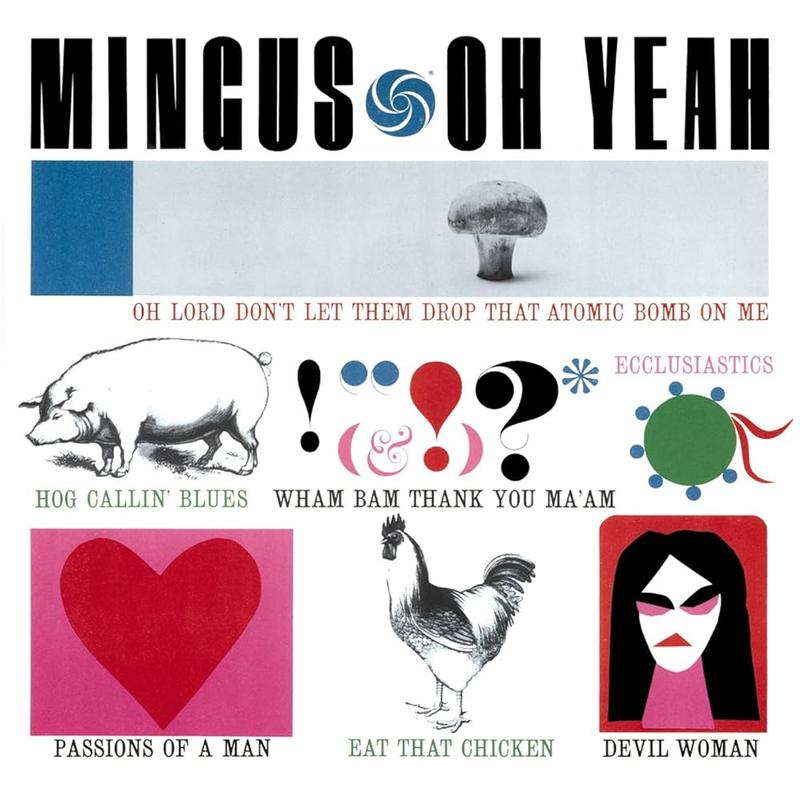
Charles Mingus’ Oh Yeah is an album in which change is part of the experience. Blues, vocal interventions, gospel references and experimental passages exist close together. Analogue Productions’ hybrid SACD offers the seven selections in their original album order without side changes. That suits music built around movement between different states. Following the entire sequence reveals Mingus as composer, pianist and singer: an unusual combination for a musician whose name is so closely connected with the double bass.
The recording took place at Atlantic Studios in New York on November 6, 1961, and was released in 1962. Nesuhi Ertegun produced, with Tom Dowd and Phil Iehle handling the recording. Mingus does not play bass on this album; Doug Watkins takes that role. Moving to the piano creates a different starting point for the interaction. Mingus’ ideas still shape the music, but responsibilities within the group are redistributed. Those specific roles help make this session particularly interesting to hear and understand.

Doug Watkins holds the foundation
Watkins forms the rhythm section with drummer Dannie Richmond. Booker Ervin plays tenor saxophone and Jimmy Knepper trombone. Roland Kirk expands the instrumental range with tenor saxophone, manzello, stritch, flute and siren, while Mingus supplies piano and vocals. Six musicians bring an unusually broad range of expressive possibilities together. The personnel cannot explain every decision, but they give the ear a useful orientation. Behind the changing activity are individual players with distinct contributions to make.
Watkins deserves particular attention. Because Mingus’ name so readily suggests bass, the actual bassist’s role can easily be overlooked. Here, another musician holds the lower register together. Listen to how that foundation interacts with Richmond’s drums and Mingus’ piano, then allow attention to move towards the horns. What initially seems like a dense stream of sound becomes a network of musical relationships. Each complete play offers another opportunity to become familiar with those relationships and with the personalities behind them.

Humour beside unease
The sequence begins with “Hog Callin’ Blues” and “Devil Woman.” “Wham Bam Thank You Ma’am” leads to “Ecclusiastics,” followed by “Oh Lord Don’t Let Them Drop That Atomic Bomb On Me,” “Eat That Chicken” and “Passions Of A Man.” All seven compositions are by Mingus. Their titles move from comic directness to the threat of atomic destruction. The album allows these different perspectives to coexist, drawing part of its energy from their proximity rather than resolving them into one mood.
Mingus’ singing broadens the idea of how a bandleader can participate within his own ensemble. On “Devil Woman” and “Eat That Chicken,” his voice becomes an explicit part of the performance. The closing “Passions Of A Man” introduces an experimental perspective. Hearing the uninterrupted disc sequence helps these shifts register as elements of one album. This is music using its forms to express something personal. It can challenge expectations while also offering the immediate pleasure of listening to strong musicians respond to one another.
Kevin Gray’s mastering on hybrid SACD
CAPA 039 SA belongs to Analogue Productions’ Atlantic 75 Series and presents the album in stereo. Kevin Gray handled mastering at Cohearent Audio. According to the publisher, the edition was mastered directly from the original master tape to DSD. That statement concerns this SACD release; it does not describe a vinyl lacquer cut or an analogue AAA process. The disc contains the album’s seven selections, without an additional bonus track being claimed for this edition.
The hybrid disc includes an SACD layer for compatible players and a CD layer for playback in most conventional CD players. It is supplied in a Super Jewel Box. The edition combines dedicated mastering with a practical format for hearing the complete album without interruption. Its musical value rests in the same session preserved by the vinyl release: Mingus at the piano, Watkins on bass and an ensemble of strongly individual voices. Taking time with that encounter allows a new relationship to emerge behind each change of direction.
You order from Michael 45 in Germany. We arrange the US import and dispatch from Hilden.
Also in another edition: Oh Yeah
More by Charles Mingus: Pithecanthropus Erectus · The Black Saint And The Sinner Lady
Customer question: Buying Analogue Productions records in Europe
Musicians
Participants and documented credit status. Track references correspond to the tracklist.
- Charles Minguspiano, vocalsParticipation: Album personnel
- Roland Kirktenor saxophone, manzello, stritch, flute, sirenParticipation: Album personnel
- Booker Ervintenor saxophoneParticipation: Album personnel
- Jimmy KneppertromboneParticipation: Album personnel
- Doug Watkinsdouble bassParticipation: Album personnel
- Dannie RichmonddrumsParticipation: Album personnel


Personnel (recorded November 6, 1961, Atlantic Studios, New York): Charles Mingus (piano; vocals; certain on tracks 2 and 6, third selection disputed), Roland Kirk (tenor saxophone, manzello, stritch, flute, siren), Booker Ervin (tenor saxophone), Jimmy Knepper (trombone), Doug Watkins (bass), Dannie Richmond (drums). All compositions by Charles Mingus. Produced by Nesuhi Ertegun. Recording engineers: Tom Dowd and Phil Iehle. Liner notes: Nat Hentoff; cover: Loring Eutemey. This edition: mastered direct to DSD from the original master tape by Kevin Gray at Cohearent Audio (per the label). Kirk’s instruments are not assigned to individual tracks. Vocal participation is certain on tracks 2 and 6; sources disagree about the third sung selection.

Reviews
There are no reviews yet.