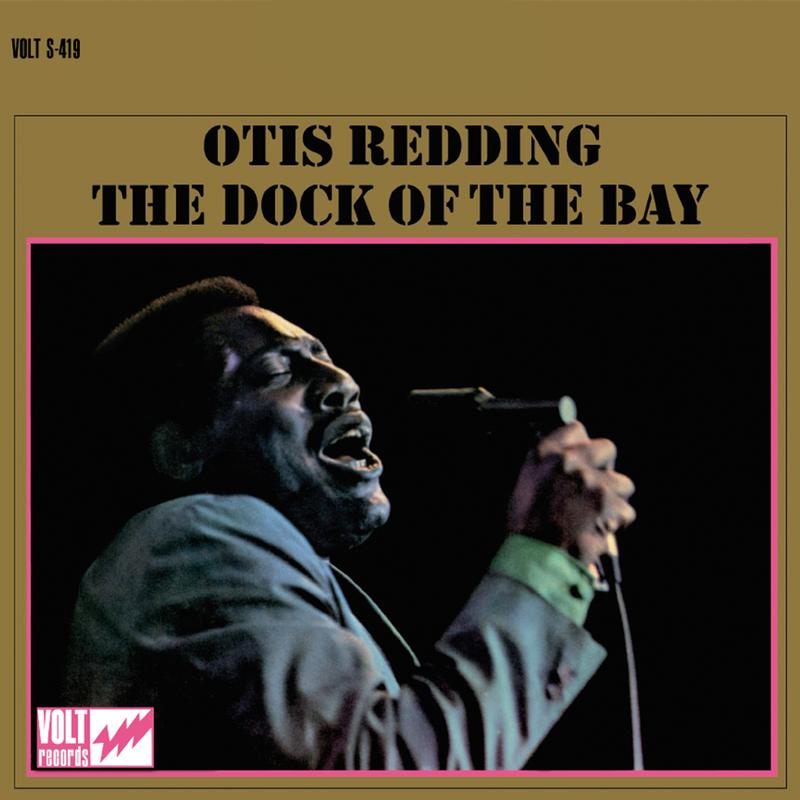






A farewell that was still looking ahead
A man sits beside the water, ships come and go, and for a moment nothing else seems to have to happen. With “(Sittin’ On) The Dock of the Bay”, Otis Redding found a language noticeably different from that of his great, urgent soul ballads. The voice remains unmistakable, but it is not struggling towards the next outburst. It observes, waits and leaves room for thought. That restraint helps make the song so affecting. We hear a singer whose expressive possibilities were far from exhausted, while knowing how his story ended. Redding died in a plane crash on December 10, 1967; both the single and the album bearing its name appeared afterwards.
The idea for the song emerged during a 1967 stay in the San Francisco area, on a houseboat in Sausalito. Steve Cropper subsequently helped Redding develop it in Memphis. That connection matters: the song’s new sense of space did not mean abandoning the musical partner with whom Redding had shaped his language. Cropper understood how little a guitar figure sometimes needs to do to open up an entire room. The recording makes that economy audible. Instead of filling every gap, guitar, bass and drums provide a calm framework for the singing. The water and gull sounds belong to the picture, but a carefully constructed song remains at its centre.
Released in 1968, the album does not document one unified final studio session. It gathers recordings from different moments between 1965 and 1967. To treat the compilation as a finished concept album demonstrating a fully completed change of direction is to impose more unity than its origins support. As a portrait, however, it has a particular strength. The title track opens a door, while the remaining songs reveal how many rooms the house already contained. Posthumous release turns the collection into a retrospective, even though much of the music still sounds as though it is looking towards the future.

Steve Cropper and the art of the right intervention
With Redding, musical scale often emerges from the relationship between physical singing and disciplined accompaniment. His phrases can press forward, break off, cling to a word or suddenly soften. A band responding only with greater volume would miss the crucial point. Steve Cropper represents another possibility: precisely placed guitar figures, rhythmic attentiveness and an understanding of when an answer is more useful than a doubling of the vocal line. This gives Redding’s voice both resistance and support without enclosing it. The music feels immediate in part because its accompaniment is so carefully organised.
The personnel credits include other central figures associated with the Memphis recordings: Booker T. Jones and Isaac Hayes on keyboards, Donald “Duck” Dunn on bass and Al Jackson Jr. on drums. Wayne Jackson and Joe Arnold represent the horn side of this music. With a collection drawn from several sessions, however, album credits must not be converted into an identical lineup for every track. Different recording dates and supplementary discographies require more careful assignments. The musicians section therefore distinguishes between documented participation on the album and securely established involvement in a particular song.
One such specific encounter is “Tramp”, with Carla Thomas. Here Redding’s solitary declaration becomes an exchange between two voices. Thomas refuses to be pushed to the margins; her timing and replies give the scene an attitude of its own. The attraction lies not simply in contrasting a rougher voice with a smoother one, but in the way the singers respond to each other. Each entrance changes the effect of what follows. Within this album, the duet introduces another kind of intimacy: less solitary reflection, more wit, friction and a vivid sense of the present.

Eleven songs, many sides of one voice
“I Love You More Than Words Can Say” and “Nobody Knows You When You’re Down and Out” demonstrate how Redding could redistribute the emotional weight of familiar material through the shape of a phrase. What matters is not only what a song declares, but how long he holds a thought and exactly where he releases it. In the slower performances, the small transitions between a note and a breath reward attention. The voice retains tension even when he is not using its full force. These recordings consequently offer considerably more than demonstrations of an impressive vocal technique.
Alongside them stand the agility of “Don’t Mess with Cupid”, the openness of “Open the Door” and the rhythmic energy of “The Huckle-Buck”. “Ole Man Trouble”, already familiar from the context of Otis Blue, connects the insistence of early Redding with a melody that allows darker shades to develop. The sequence does not establish a neat chronology. It moves between temperaments, which is precisely why the famous opening should not determine a single mood for everything that follows. Behind the man sitting by the water remains the singer who could set a room in motion within a few bars.
For collectors, part of the selection’s value lies in its connections with Redding’s other releases. Some songs recur in different album or single contexts; their presence here also tells us something about how his work was presented after his death. This edition contains the album’s eleven tracks. It preserves a distinct historical release, even though the recordings did not originate in a single project. The quiet conclusion of the title song and the undiminished energy of the other performances remain side by side. Understanding the album does not require that tension to be resolved.
This edition: an Analogue Productions hybrid stereo SACD
CAPA 005 SA is an Analogue Productions hybrid stereo SACD. It is therefore separate from the vinyl pressings in the Atlantic programme. The disc contains an SACD layer for suitably equipped players and a CD layer for ordinary CD players. “Hybrid” describes these two playback layers; it does not indicate a multichannel mix here. Stereo is the specified presentation for this edition. The distinction matters when collecting, because the same album title is available in different formats and technical information must not be transferred indiscriminately between them.
According to the publisher, Bernie Grundman mastered this SACD from the original analogue master tape directly to DSD. That is the edition’s documented provenance, rather than a substitute for a personal listening comparison. Useful points of attention would include the outline of Redding’s voice, the relationship between horns and rhythm section, and the differences between the individual recordings. The varied recording history belongs to the album. Careful reproduction can allow it to remain recognisable: this portrait derives much of its life from showing more than one fixed, unchanging version of Otis Redding.
You order from Michael 45 in Germany. We arrange the US import and dispatch from Hilden.
Also in another edition: The Dock Of The Bay
More by Otis Redding: Complete & Unbelievable… The Otis Redding Dictionary Of Soul · Otis Blue- Otis Redding Sings Soul
Customer question: Buying Analogue Productions records in Europe
Musicians
Participants and documented credit status. Track references correspond to the tracklist.
- Otis ReddingvocalsParticipation: All album tracks
- Steve CropperguitarParticipation: Album personnel; not a blanket assignment to every track
- Booker T. JoneskeyboardsParticipation: Album personnel; not a blanket assignment to every track
- Isaac HayeskeyboardsParticipation: Album personnel; not a blanket assignment to every track
- Donald “Duck” DunnbassParticipation: Album personnel; not a blanket assignment to every track
- Al Jackson Jr.drumsParticipation: Album personnel; not a blanket assignment to every track
- Wayne JacksontrumpetParticipation: Album personnel; not a blanket assignment to every track
- Joe Arnoldtenor saxophoneParticipation: Album personnel; not a blanket assignment to every track
- Carla ThomasvocalsParticipation: 8


Compilation drawn from several sessions (1965–1967). Further horn assignments found in a fan discography are unconfirmed and are therefore not listed here.

Reviews
There are no reviews yet.