Mingus moves to the piano
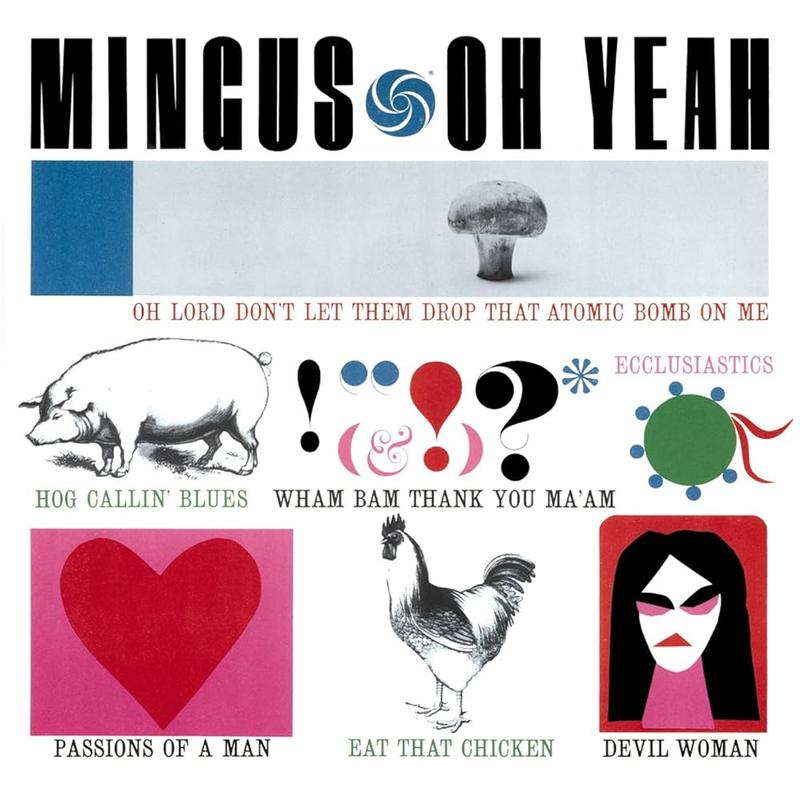
On November 6, 1961, Charles Mingus records Oh Yeah at Atlantic Studios in New York. The first surprise is his own role: the celebrated bassist plays piano and sings, leaving the double bass to Doug Watkins. That shift changes the ensemble’s starting point. Mingus remains its composer and leader while influencing the performance from a different position. Released in 1962, the album brings blues, gospel references and sonic experimentation together across seven of his own compositions.
Producer Nesuhi Ertegun and recording engineers Tom Dowd and Phil Iehle work with a group of strong individual voices. The album can be approached as an expression of Mingus’ imagination, using familiar musical forms as material for something intensely personal. Humour and seriousness, shared momentum and independent impulses coexist. Listeners who primarily know him as a bassist gain another route into his musical thinking. His change of instrument is an explicit part of this recording’s identity and of the relationships heard within it.

Roland Kirk, Booker Ervin and the rhythm section
Roland Kirk brings tenor saxophone, manzello, stritch, flute and siren to the album’s instrumental resources. Booker Ervin also plays tenor saxophone, with Jimmy Knepper on trombone. Doug Watkins on bass and Dannie Richmond on drums provide the rhythmic foundation. Kirk’s instruments are documented as album credits; this does not automatically establish which instrument he plays on each individual selection. The first useful point of attention is the diversity of voices Mingus assembles within this sextet.
With Watkins handling bass, space opens for Mingus’ piano and vocal contributions. The horns can take over lines, thicken the texture or introduce contrasting directions. A complete listen rewards attention to how individual expression meets a shared course. When does a soloist move forward? When does the ensemble itself become the principal voice? For Mingus, these shifts belong to musical storytelling. The group contains enough distinct personalities to make recurring forms feel different as they pass from one setting to another.

Blues, prayer and contradiction
“Hog Callin’ Blues” opens the album, followed by “Devil Woman” and “Wham Bam Thank You Ma’am.” “Ecclusiastics” begins its second half. “Oh Lord Don’t Let Them Drop That Atomic Bomb On Me” gives the music an explicitly historical horizon, before “Eat That Chicken” and “Passions Of A Man” complete the programme. Even the titles reveal several tones existing together. Everyday humour, invocation and threat occupy the same musical world, without needing to be reduced to a single emotional register.
“Devil Woman” and “Eat That Chicken” are secure starting points for hearing Mingus as a singer. The experimental character of the closing “Passions Of A Man” expands the perspective again. Searching only for a consistent style would miss an essential attraction. Oh Yeah holds its parts together through personality. Listening means allowing the different forms their own space and accepting that an album can both exhilarate and unsettle. That openness is part of what makes returning to it so rewarding.
The Analogue Productions 45 RPM edition
AAPA 039-45 is the Atlantic 75 Series stereo double LP. Its seven tracks are spread across four sides at 45 RPM, on two 180-gram records. Kevin Gray handled mastering at Cohearent Audio, with Analogue Productions identifying the original analogue master tape as the source. “Hog Callin’ Blues” occupies the opening side alone, while “Devil Woman” and “Wham Bam Thank You Ma’am” share side B. The album sequence is preserved while its physical organisation changes.
The first 2,000 numbered copies were manufactured by Quality Record Pressings; later pressings may come from QRP or RTI. A Stoughton Printing tip-on gatefold with two pockets completes the presentation. This vinyl release is a distinct edition alongside the separately available hybrid SACD. It invites the album to be heard in four concentrated stages. Behind the care invested in the physical record is music that can remain unpredictable after many encounters: personal, physical, independent-minded and animated by the pleasure of collective expression.
You order from Michael 45 in Germany. We arrange the US import and dispatch from Hilden.
Also on SACD: Oh Yeah
More by Charles Mingus: Pithecanthropus Erectus · The Black Saint And The Sinner Lady
Customer questions: Atlantic 75: which titles are worth buying? · Buying Analogue Productions records in Europe
Series: Atlantic 75 Series – all 75 albums, time journey and the people behind Atlantic
Musicians
Participants and documented credit status. Track references correspond to the tracklist.
- Charles Minguspiano, bandleaderParticipation: Album personnel
- Charles MingusvocalsParticipation: B1, D1
- Roland Kirkflute, siren, tenor saxophone, manzello, stritchParticipation: Album personnel
- Booker Ervintenor saxophoneParticipation: Album personnel
- Jimmy KneppertromboneParticipation: Album personnel
- Doug Watkinsdouble bassParticipation: Album personnel
- Dannie RichmonddrumsParticipation: Album personnel


Charles Mingus (piano, vocals; vocals on three tracks per his estate; documented on “Devil Woman” and “Eat That Chicken”, sources disagree on the third) · Roland Kirk (flute, siren, tenor saxophone, manzello, stritch) · Booker Ervin (tenor saxophone) · Jimmy Knepper (trombone) · Doug Watkins (bass) · Dannie Richmond (drums) — recorded November 6, 1961, at Atlantic Studios, New York. Produced by Nesuhi Ertegun · Recording engineers: Tom Dowd and Phil Iehle · Original cover: Loring Eutemey · Liner notes of the original stereo issue: Nat Hentoff. All compositions by Charles Mingus. This edition: stereo, mastered by Kevin Gray (Cohearent Audio) from the original analog master tape (per the publisher), pressed at Quality Record Pressings (first 2,000 copies numbered), gatefold jacket by Stoughton Printing.
How Michael hears this edition
Listening impression · paraphrased from the video
Despite the density of the music, Michael hears every instrument in its place. The studio recording also conveys a pronounced live atmosphere to him, as if the band were performing on stage.

Reviews
There are no reviews yet.