
Freedom as the language of a quartet
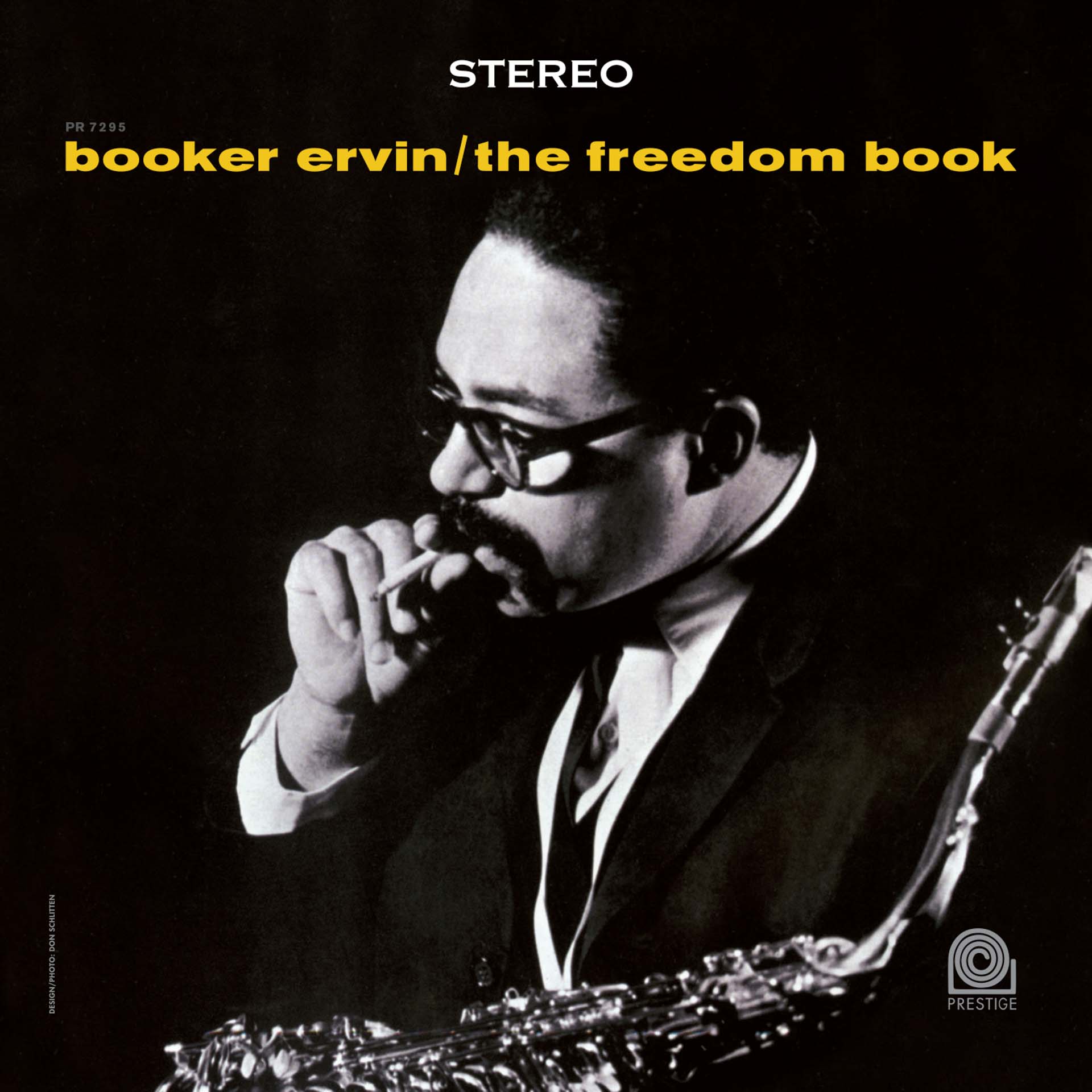
The Freedom Book is an apt title for a record built around four distinct musical personalities. Booker Ervin, Jaki Byard, Richard Davis and Alan Dawson came together at Rudy Van Gelder’s studio in Englewood Cliffs on 3 December 1963. Prestige released the album in March 1964. It belongs to a period when the possibilities of a small jazz ensemble had expanded considerably: blues and song form remained available, while harmony, rhythm and individual sound opened new directions. Ervin’s title need not be understood as an announcement that all structure has been abandoned. It can instead invite a closer consideration of the freedom available within a shared musical language.
Ervin came from Denison, Texas. Before taking up the tenor saxophone, he learned trombone from his father. During his Air Force service on Okinawa he taught himself tenor, later studying at Berklee. That background brings together several kinds of learning: family transmission, independent exploration and formal training. His regular association with Charles Mingus began late in 1958 and initially continued until 1960, with further encounters extending into 1964. For listeners who know his sound primarily from Mingus records, this album provides an opportunity to meet him as a composer and the leader of his own quartet.
The Prestige albums carrying “Book” in their titles belong to that independent chapter. The Freedom Book is not a retrospective anthology but a session album with five selected compositions. Don Schlitten produced it and is also credited with design and photography; David Himmelstein’s liner notes are dated January 1964. Van Gelder was the recording engineer. Another piece from the same session, “Stella by Starlight”, later appeared on Groovin’ High. It is not part of the five-track programme offered here. That distinction is useful to collectors: the recording date produced more music than the album contains, but the album has its own considered shape.

Ervin, Byard, Davis and Dawson
Booker Ervin is the sole horn player. Opposite him sits Jaki Byard, a pianist whose musical range extended from ragtime and stride to freer forms of expression. Byard also worked with Mingus. Their shared connection does not explain every decision on this record, but it helps establish the breadth of experience both musicians brought to the session. Byard plays piano throughout The Freedom Book. His work as a saxophonist belongs to his wider biography, rather than to the instrumentation of this particular date. With such versatile artists, keeping those two things separate matters.
Richard Davis on double bass and Alan Dawson on drums complete the quartet. These four names account for the whole album, rather than a succession of different line-ups. The record can therefore be approached as an ongoing conversation between the same partners. How does the relationship between tenor and piano change from one composition to another? When does attention shift towards the bass, or towards the movement of the drums? Those questions offer more than a general declaration that this is a “perfect rhythm section”. The contribution of the accompanying players becomes clearer through their changing relationship to Ervin’s themes and phrases.
The label places Ervin’s sound in the American Southwest, connecting that background with bebop sophistication and suggestions of free jazz. It is a useful historical approach as long as it does not become a restrictive category. A personal tenor sound is not simply the automatic product of a birthplace. In Ervin’s case, regional background, training and work in demanding ensembles meet. Listening to the beginning of a note as well as the course of a phrase can be particularly revealing: articulation, tension, breath and the responses of the other players make an individual voice more tangible than a convenient label does.

Five compositions and one important outside writer
Ervin wrote four of the five pieces. “A Lunar Tune” opens the first side, followed by Randy Weston’s “Cry Me Not”. As the only composition by another writer, it is more than an incidental standard in the programme. Ervin also worked with Weston during the 1960s, so this choice points towards another musical relationship beyond the quartet. Weston does not play piano on the recording; that role belongs to Byard throughout. Precisely because a composer’s name can open such a significant connection, it is worth distinguishing the source of a composition from the personnel actually present at the session.
“Grant’s Stand” completes side one. “A Day to Mourn” and “Al’s In” occupy the second side. These titles suggest different emotional or imaginative spaces, but they are not substitutes for documented accounts of how the music came about. Without an additional source, “A Day to Mourn” should not be given a specific dedication. It can first be encountered as an Ervin composition within this programme. “Al’s In” likewise needs no invented anecdote to make it interesting. The same four musicians carry the relationship between all five selections, and that is already a substantial way into the album.
Published timings differ between documented pressing information and supplementary discographies. For this description, the confirmed order is more useful than a misleadingly exact calculation of minutes. Three tracks on side A and two on side B establish the shape of the LP. That division invites continuous attention: the end of the first side is followed by a fresh beginning, rather than simply another item in an endless playlist. It is a characteristic of the album as a vinyl programme, without requiring any claim that vinyl must therefore sound better than every other format.
For listeners who have encountered Ervin as a striking presence in someone else’s band, The Freedom Book offers a rewarding change of perspective. Here he supplies the themes, selects a composition by a colleague and works with the quartet that helped define his Prestige recordings of this period. Collectors of the “Book” albums can enjoy the wider context; newcomers have the benefit of a compact, clearly documented line-up. Both approaches leave room for discoveries that cannot be reduced to a single description of the leader. The record’s interest extends beyond the tenor voice to the musical company in which it finds expression.
The Analogue Productions Prestige Stereo LP
APRJ 7295 identifies the Analogue Productions edition offered here: a single stereo LP playing at 33⅓ rpm. Kevin Gray is credited with cutting at Cohearent Audio, Quality Record Pressings with manufacture and Gary Salstrom with plating. The label describes the series as mastered from the analogue master tapes, with a tip-on jacket. These are details of a later reissue of an album recorded in 1963 and released in 1964. They should not be confused with the roles played by Schlitten and Van Gelder in the original production.
Several AP pressings are documented. The current label listing specifies 180 grams, while an earlier numbered edition is recorded at 200 grams and a later 2023 issue at 180 grams. The particular stock batch has not been established by inspecting or weighing an individual copy. Historical numbering and an earlier weight are therefore not general promises about every copy presently offered. The catalogue number, stereo format and original five-track programme provide more dependable identifiers for this edition than an assumption borrowed from an older collector listing.
At 33⅓ rpm, The Freedom Book retains its two continuous sides. That makes room for an unhurried encounter with music whose appeal comes from four independent voices working together. Placed on a shelf alongside Mingus, Weston and the other Prestige “Books”, it connects several parts of Ervin’s musical world. It also deserves to stand as an album in its own right. Freedom need not always announce itself through a manifesto. There is time here to discover the relationships within the quartet and to decide which of them draws the ear on the next listening session. You order from Michael 45 in Germany. We arrange the US import and dispatch from Hilden.
More by Booker Ervin: The Song Book · Exultation!
Customer question: Buying Analogue Productions records in Europe
Series: Analogue Productions Prestige – all 50 records, musicians and session paths
Musicians
Participants and documented credit status. Track references correspond to the tracklist.
- Booker Ervintenor saxophoneParticipation: Album personnel
- Jaki ByardpianoParticipation: Album personnel
- Richard Davisdouble bassParticipation: Album personnel
- Alan DawsondrumsParticipation: Album personnel


Recorded 3 December 1963, Englewood Cliffs. Rudy Van Gelder, engineer. Analogue Productions: Kevin Gray, cutting; QRP, pressing. Personnel on all tracks.
How Michael hears this edition
Listening impression · paraphrased from the video
Michael praises the clear separation of instruments and a beautiful, stable soundstage. His copy, cleaned ultrasonically beforehand, plays without audible clicks on that first listen. This observation concerns his own copy of the reviewed 200-gram AP edition; it is not a guarantee for every copy or later repress.

Reviews
There are no reviews yet.