

Two tenor generations in one group
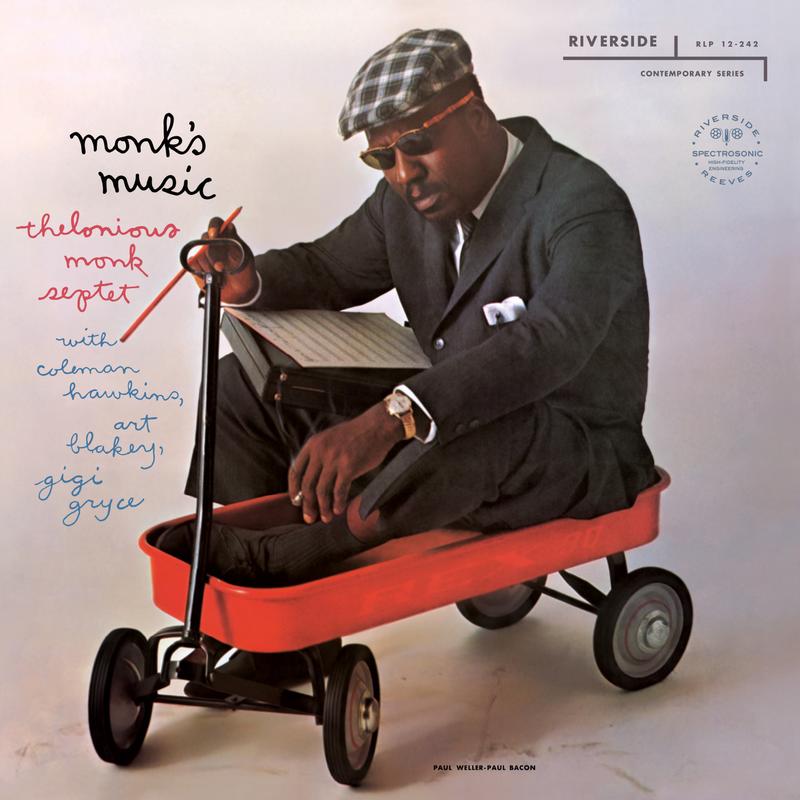
Coleman Hawkins and John Coltrane stand side by side on Monk’s Music. In June 1957, Thelonious Monk brings a septet into Reeves Sound Studios with Ray Copeland, Gigi Gryce, Wilbur Ware and Art Blakey. The musicians carry different experiences into the session; Monk’s compositions provide their meeting place.
That encounter is central to the album’s appeal. Rather than following one single line of jazz development, we meet several personalities within the same musical setting. Monk’s audible call to Coltrane during “Well, You Needn’t” reminds us that the finished record began as a working collaboration between people listening and responding to one another.

A hymn opens the record
“Abide With Me” begins without piano or rhythm section. The horns alone play the hymn by William Henry Monk, who should not be confused with Thelonious. This brief, unexpected opening precedes the larger space given to the septet in “Well, You Needn’t.”
“Ruby, My Dear” reduces the group to Monk, Hawkins, Ware and Blakey. The second side follows with “Off Minor,” “Epistrophy” and “Crepuscule with Nellie.” These changing combinations are identified by track in the personnel list. Hawkins participates throughout; Coltrane does not play on “Ruby, My Dear,” while Monk is absent from the opening hymn.

Different perspectives on the musicians
The program moves between horns alone, quartet and septet. These changes give the individual voices definition. Following Hawkins and Coltrane in turn, then returning attention to the complete group, offers one rewarding path through the music.
“Crepuscule with Nellie,” receiving its first recording here, closes the program. For a collection interested in the relationships between musicians, Monk’s Music is particularly rich. The larger ensemble never has to become an anonymous backdrop: its members remain individual voices.
Mono is an essential distinction
AAPJ 12-242 is the mono edition on one 180-gram LP at 33⅓ RPM. The original mono and stereo recordings used different microphone arrangements, making mono a specific recording perspective here. “Crepuscule with Nellie” was absent from the original stereo LP; it is included in this mono program.
Kevin Gray’s AcousTech cut belongs to the Riverside Tenor Sessions project of 1997/98 and was reused for the later pressing. Analogue Productions specifies the original analog master tape, QRP and a tip-on jacket. This edition is distinct from the later Craft/OJC recut and the separate stereo 45-RPM editions, making clear which version of this musical encounter is being offered.
You order from Michael 45 in Germany. We arrange the US import and dispatch from Hilden.
More by Thelonious Monk: The Riverside Tenor Sessions · Thelonious In Action
Artist page: All titles with John Coltrane
Customer question: Buying Analogue Productions records in Europe
Musicians
Participants and documented credit status. Track references correspond to the tracklist.
- Thelonious MonkpianoParticipation: A2, A3, B1, B2, B3
- Ray CopelandtrumpetParticipation: A1, A2, B1, B2, B3
- Gigi Grycealto saxophone, arrangementsParticipation: A1, A2, B1, B2, B3
- Coleman Hawkinstenor saxophoneParticipation: Album personnel
- John Coltranetenor saxophoneParticipation: A1, A2, B1, B2, B3
- Wilbur Waredouble bassParticipation: A2, A3, B1, B2, B3
- Art BlakeydrumsParticipation: A2, A3, B1, B2, B3


Produced by Orrin Keepnews. A1 features horns only; A3 features Monk, Hawkins, Ware and Blakey. Engineering credits differ between sources.

Reviews
There are no reviews yet.