

An individual voice alongside Genesis
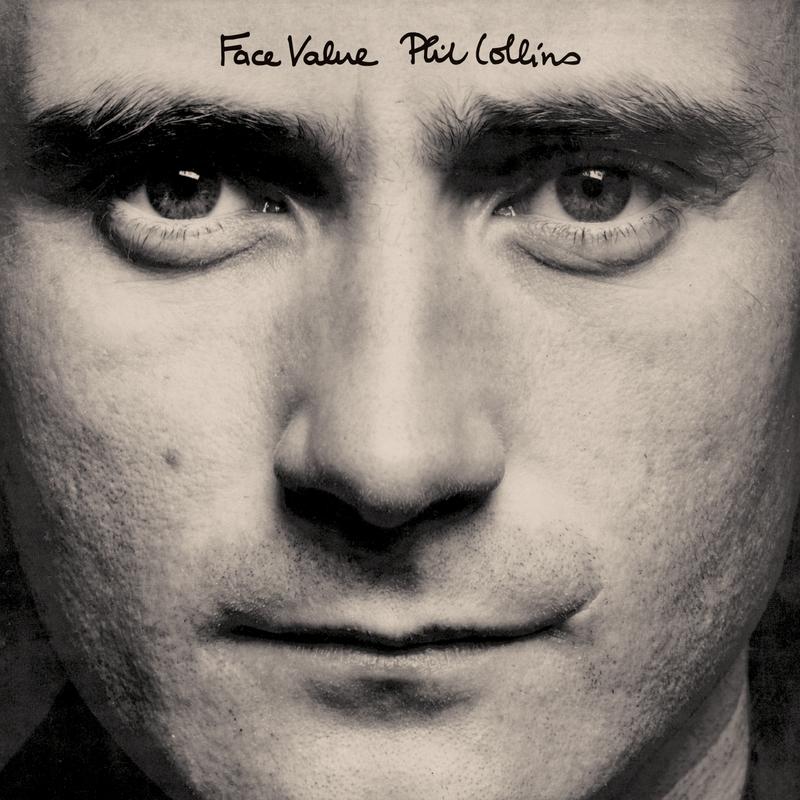
With Face Value, Phil Collins steps in front of his audience under his own name in 1981. He does not need to discard his past as the drummer and singer of Genesis. Instead, this solo debut changes the point of departure: home recordings, personal experience and his own approach to rhythm determine where the music can go. The first demos emerge in 1979 during the separation from his then wife. That private work develops into an album that accommodates vulnerability as readily as rhythmic energy and refuses to settle into just one emotional register.
Phil Collins and Hugh Padgham share production. The work connects Old Croft in Surrey and The Town House in London with the Village Recorder in Los Angeles; overdubs and mixing are developed during 1980. These different stages help explain the breadth of the finished music. The album combines the concentration of an idea developed at home with contributions from guitarists, bassists, horns, strings and a children’s choir. A personal record need not be a solitary one. The relationship between a clear centre and ensembles of different sizes is an essential part of its character.
Face Value appears on 13 February 1981, through Virgin in Britain and Atlantic in North America. Its opening song, In The Air Tonight, has become so familiar that it can overshadow the rest of the record. Yet these twelve tracks contain much more than the celebrated drum entrance. They move through restrained songs, rhythm-led pieces, instrumental passages and a Beatles interpretation at the end. Within a collection, the album is therefore not merely the home of a major single: it marks the beginning of an individual musical viewpoint alongside Collins’ continuing band work.

Beyond the famous drum entrance
In The Air Tonight opens side A of this edition. Its tension does not begin with the much-discussed arrival of the acoustic drums, but with what is allowed to remain before it: recurring figures, a persistent rhythmic foundation and the voice. If you already anticipate the entrance, following that long preparation offers another way into the song. The credits place John Giblin on bass, Daryl Stuermer on guitar and L. Shankar on violin alongside Collins. Even this opening is more specifically populated than the image of a lone singer working only with machines might suggest.
This Must Be Love and Behind The Lines introduce other emphases. Stephen Bishop adds backing vocals to the former; the horn section expands the latter’s musical space. Side B then brings together The Roof Is Leaking, Droned and Hand In Hand. Their sequence reveals how differently Collins can develop an initial idea: voice and piano, additional stringed-instrument colours, percussion, electronic instruments and larger ensemble contributions are given changing proportions. These transitions are worth following as part of the album’s construction rather than simply waiting for the next familiar refrain to arrive.
Side C contains I Missed Again, You Know What I Mean and Thunder And Lightning. Ronnie Scott supplies the tenor saxophone solo on I Missed Again, while the restrained setting of You Know What I Mean provides a distinct contrast. I’m Not Moving, If Leaving Me Is Easy and Tomorrow Never Knows form the final side. Ending with the Beatles composition places the album beside material that positively invites an individual imaginative response. The sequence consequently travels from its personal opening towards a conclusion that looks beyond Collins’ own songwriting.

The players and the changing instrumental colours
Daryl Stuermer supplies an important connecting thread. His contributions cannot be reduced to one general guitar role: he is credited with banjo on The Roof Is Leaking and twelve-string guitar on Droned. Jo Partridge adds slide guitar to The Roof Is Leaking. These distinctions are small enough to disappear from an abbreviated personnel list and substantial enough to change an arrangement’s character. The bass chair also changes, with Alphonso Johnson and John Giblin participating on different tracks rather than forming a permanent two-bass ensemble throughout the album.
The horn players are Don Myrick, Louis Satterfield, Michael Harris and Rahmlee Michael Davis. Their instruments require precise distinction: tenor saxophone, trombone and two trumpets appear in several ensemble contributions. On If Leaving Me Is Easy, however, Myrick is credited with alto saxophone, while Harris and Davis play flugelhorn. Eric Clapton also contributes guitar to that song. A famous guest name should not obscure the actual musical role: what matters is his place in this individual piece, not an implication that he participated across the entire record.
Arif Mardin arranges the strings for You Know What I Mean and If Leaving Me Is Easy. The individually named string players are included in the complete credits without assigning them personal track participation that the available credits do not establish. Children from churches in Los Angeles contribute to Hand In Hand and Tomorrow Never Knows. L. Shankar’s work and Peter Robinson’s Prophet synthesizer on Behind The Lines further extend the picture. Following these changes reveals an album held together by Collins’ choices among different musical possibilities, rather than by an unchanging instrumental line-up.
Atlantic 75 and a precisely identified tape source
The edition offered here is AAPA 003-45, the stereo double LP in the Analogue Productions Atlantic 75 Series: two 180-gram records playing at 45 RPM. Chris Bellman at Bernie Grundman Mastering is responsible for mastering and lacquer cutting. The source description is unusually specific: an equalized, Dolby-encoded quarter-inch tape copy of the original master was used. The studio’s name is not a personal mastering credit for Bernie Grundman, and a copy does not become the original tape simply because its relationship to that original is stated.
For a serious collector, this precision is useful. It makes it possible to understand an edition through its actual production details rather than substituting a different provenance inferred from general series language. The complete twelve-track programme occupies four sides, with three songs on each. The 45 RPM division provides different cutting conditions from a single 33⅓ RPM LP; in everyday use it also means more frequent side changes and the correct turntable speed setting. Listeners who enjoy following coherent album sides receive four clearly defined groups, retaining the progression from the opening song to the Beatles interpretation.
Packaging includes a Stoughton tip-on gatefold jacket. The series’ first 2,000 copies were numbered and pressed at Quality Record Pressings; unnumbered copies may also come from RTI. The precise version of an individual stock copy can only be confirmed by inspecting it. The central identifiers of this offer are therefore the catalogue number, format, Chris Bellman’s cut and the explicitly stated tape copy. They establish a carefully described collector’s edition of Face Value, while the album’s musical substance remains in the variety of its twelve pieces. You order from Michael 45 in Germany. We arrange the US import and dispatch from Hilden.
More by Phil Collins: Hello I Must Be Going!
Artist page: All titles by Genesis and Phil Collins
Customer questions: Atlantic 75: which titles are worth buying? · Buying Analogue Productions records in Europe
Series: Atlantic 75 Series – all 75 albums, time journey and the people behind Atlantic
Musicians
Participants and documented credit status. Track references correspond to the tracklist.
- Phil Collinsvocals, drums, piano, synthesizers and other instruments (varies by track)Participation: All 12 tracks
- Daryl Stuermerguitar; banjo; twelve-string guitar; individual instrument not specifiedParticipation: guitar: A1, A2, A3, B3, C1, C3, D2; banjo: B1; twelve-string guitar: B2; individual instrument not specified: D3
- Alphonso JohnsonbassParticipation: A2, A3, B3, C1, D2
- John GiblinbassParticipation: A1, C3, D1, D3
- L. Shankarviolin; violin, tambora, voice, drums; violin; individual instrument not specifiedParticipation: violin: A1; violin, tambora, voice, drums: B2; violin: C1; individual instrument not specified: D3
- Eric ClaptonguitarParticipation: D2
- Stephen Bishopbacking vocalsParticipation: A2
- Don Myricktenor saxophone; alto saxophoneParticipation: tenor saxophone: A3, B3, C1, C3; alto saxophone: D2
- Louis SatterfieldtromboneParticipation: A3, B3, C1, C3
- Michael Harristrumpet; flugelhornParticipation: trumpet: A3, B3, C1, C3; flugelhorn: D2
- Rahmlee Michael Davistrumpet; flugelhornParticipation: trumpet: A3, B3, C1, C3; flugelhorn: D2
- Peter Robinsonsynthesizer (Prophet)Participation: A3
- Jo Partridgeslide guitarParticipation: B1
- Ronnie Scotttenor saxophone soloParticipation: C1
- Children From The Churches Of Los AngeleschoirParticipation: B3, D3
- EWF Hornsindividual instrument not specifiedParticipation: D3
- Gavyn Wrightviolin / string leaderParticipation: String section; individual track assignments unconfirmed
- Bill BenhamviolinParticipation: String section; individual track assignments unconfirmed
- Bruce DukovviolinParticipation: String section; individual track assignments unconfirmed
- David WoodcockviolinParticipation: String section; individual track assignments unconfirmed
- Liz EdwardsviolinParticipation: String section; individual track assignments unconfirmed
- Irvine ArdittiviolinParticipation: String section; individual track assignments unconfirmed
- Ken SillitoeviolinParticipation: String section; individual track assignments unconfirmed
- Peter OxerviolinParticipation: String section; individual track assignments unconfirmed
- Richard StudtviolinParticipation: String section; individual track assignments unconfirmed
- Brian HawkinsviolaParticipation: String section; individual track assignments unconfirmed
- Roger BestviolaParticipation: String section; individual track assignments unconfirmed
- Simon WhistlerviolaParticipation: String section; individual track assignments unconfirmed
- Tony PleethcelloParticipation: String section; individual track assignments unconfirmed
- Clive AnsteecelloParticipation: String section; individual track assignments unconfirmed
- Nigel Warren-GreencelloParticipation: String section; individual track assignments unconfirmed
- Chris Laurencedouble bassParticipation: String section; individual track assignments unconfirmed


Track numbers and side references correspond to this edition. Album credits do not mean every instrument appears on every track. Strings are credited at album level only. EWF Horns on D3 is an additional group credit without individual instruments specified.
How Michael hears this edition
Listening impression · paraphrased from the video
Compared with the US first pressing, Michael hears drier, more precise bass and midrange, a wider soundstage and more detail in the Atlantic 75 edition, including the dense closing section of “In the Air Tonight”. This is his listening impression on his own system.
🎧 Review video: Phil Collins Face Value: Atlantic 75 vs. First Pressing
This video is hosted by YouTube (Google). It only loads once you switch on “Functional” in the cookie settings.

Liam Molyneux –
An amazing release to kick start the Atlantic 75 series.
As soon as the drum solo comes in on “In the Air Tonight” you immediately realise something special is happening.
The dynamics,,the soundstage & the separation of instruments are on another level.
A stunning sounding record perfect for 2 x 45 rpm format.
On the back of this & the quality of the package I for one will be buying a lot more of the series.
A big thank you to the Michael 45 record store.
The service you receive is of such a high standard.
Michael along with Hartmut continue to provide amazing customer care.
Cannot recommend using the shop enough.
A fantastic experience.
Peter –
Even after washing, there are annoying background noises in quiet passages.
Both records slightly wavy.
Both inner sleeves are bent.
For the price I expected more.
After more than a month there was no response to my problem description from Michael45.
Michael –
Peter, you’re right to be annoyed, and the line that bothers me most is your last one: you described a problem and heard nothing back. That’s not how this shop is supposed to work, and I’m sorry.
On the record itself you were right as well. If the noise survives a wash, it isn’t dirt — it sits in the vinyl, and that’s a pressing fault, not something you should have to live with. Wavy discs and creased inner sleeves don’t belong at this price either.
This is far enough back that I can’t put it right: that pressing is long sold out, and anything I offered now would be a gesture rather than a solution. I’d rather say that plainly than dress it up.
What I can change is the part that actually failed. Write to me at [email protected] and you get an answer — for this or anything else.
Michael