

Ellington in shorter forms
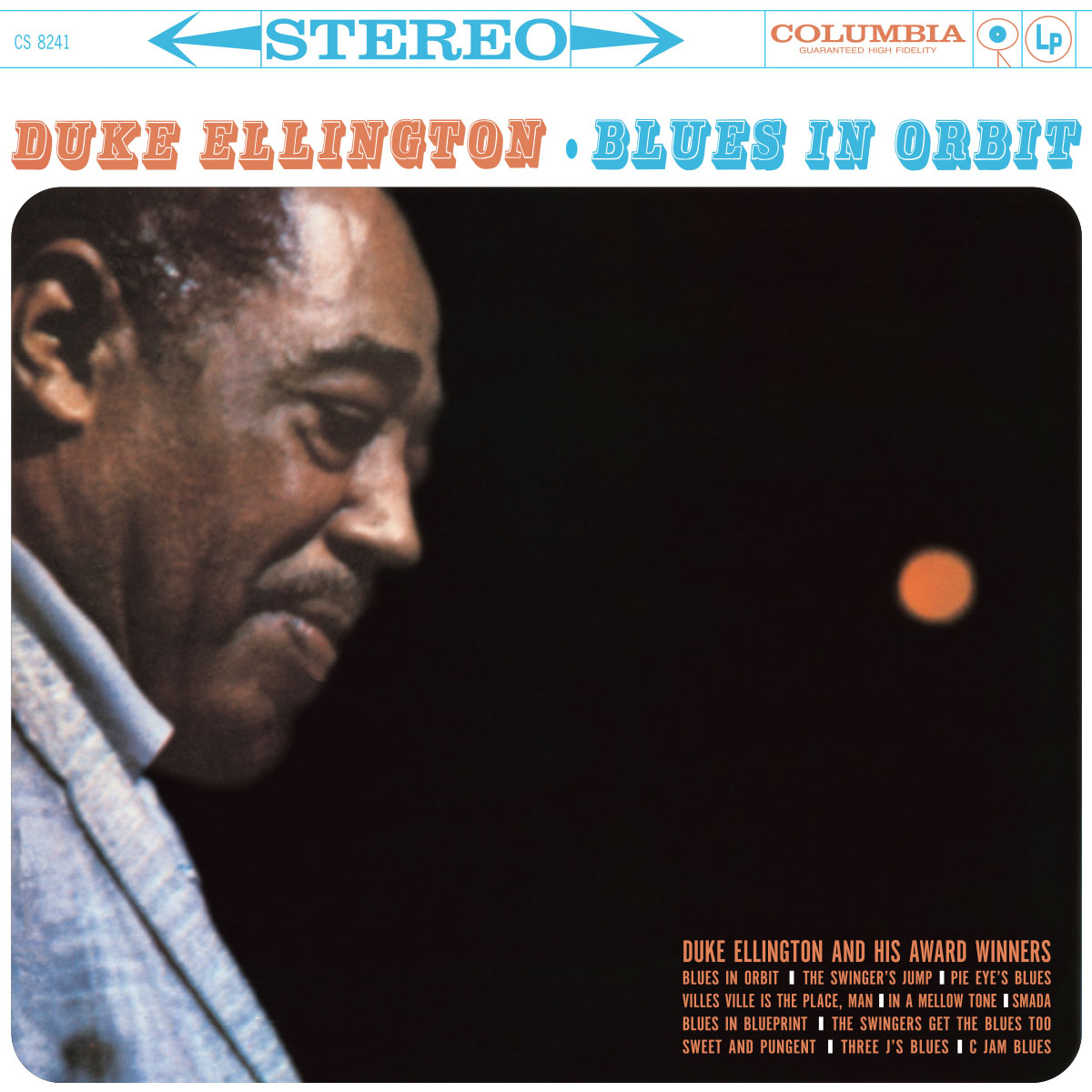
Duke Ellington’s name readily suggests extended suites, long developments and an orchestra whose history reaches far beyond individual albums. Blues in Orbit provides another, equally rewarding route into that world. Released by Columbia in 1960, the record brings together eleven comparatively short pieces. Blues forms, familiar themes and less frequently discussed compositions sit alongside one another. Their scale directs attention to individual voices and to the way an arrangement can give them a place within a few minutes. The orchestra becomes a gathering of distinctive people rather than an anonymous expanse of instrumental sound.
The main body of the album was recorded on 2 and 3 December 1959 at Columbia’s 30th Street studio in New York. Two selections come from earlier dates: “Blues in Orbit” was recorded on 12 February 1958 at Radio Recorders in Los Angeles, and “Villes Ville Is the Place, Man” on 25 February 1959 in New York. That history matters when considering the personnel. The original LP does not document one uninterrupted session by an unchanged group. Bonus material and alternative takes on later CDs extend the story further, but they are not part of the eleven-piece programme offered on this record.
Teo Macero wrote the original liner notes. The blues is an obvious point of reference, as several titles suggest, but treating the selection merely as an exercise in a single form would be too restrictive. “Smada”, “Sweet and Pungent”, “C Jam Blues” and “In a Mellow Tone” open different perspectives on the repertoire. For collectors, the appeal includes discovering an album beside the major extended works on which shorter forms have substantial value of their own. Eleven separate pieces can reveal an orchestra just as effectively as a long suite, while asking the listener to follow a different kind of progression.

An orchestra made of unmistakable individuals
Johnny Hodges, Paul Gonsalves, Harry Carney, Jimmy Hamilton and Russell Procope are among the reed voices involved in these recordings. Their names show why an Ellington ensemble cannot be described adequately by counting its saxophones and clarinets. Each represents an individual musical personality. One approach is to notice differences between registers first, then begin recognising particular voices. A brief contribution can be as consequential to the character of a piece as an extended solo, especially when it changes the relationship between a featured player and the surrounding ensemble.
The brass players include Ray Nance, Britt Woodman, Matthew Gee and Booty Wood. Nance is credited with trumpet and violin, which does not mean both instruments appear on every selection. The earlier recordings involve other personnel combinations, including Cat Anderson, Shorty Baker and Clark Terry on trumpets, with Quentin Jackson and John Sanders among the trombones. Fats Ford is credited on “Villes Ville Is the Place, Man”. The full musician list distinguishes those contributions instead of assembling every name into an imaginary band playing unchanged throughout the complete album.
The rhythm section also rewards a precise look. Jimmy Woode plays double bass. Jimmy Johnson is the drummer on the December recordings, while Sam Woodyard appears on the two earlier selections. Johnson should not be confused with the later bassist of the same name. Ellington plays piano on most of the programme, but Billy Strayhorn takes that role on “Smada” and “Blues in Blueprint”. Those performances offer another perspective on Strayhorn: within the Ellington world, he is not present only as a name attached to a composition or arrangement, but here as a pianist directly participating in the recorded music.
These changes need not turn listening into an exercise in memorising personnel. They simply provide a more accurate picture of the album and make it possible to follow a particular musician without assuming that everyone listed appears everywhere. Once the broad distinctions are clear, attention can return to the music itself. The different sessions then become part of the record’s character rather than a source of confusion about who is playing.

Eleven selections and the variety within the blues
Side one opens with “Three J’s Blues”, a Jimmy Hamilton composition. “Smada”, “Pie Eye’s Blues”, “Sweet and Pungent” and “C Jam Blues” follow. The writing credits already offer several perspectives from within the orchestra: Hamilton contributes a piece, Strayhorn shares the “Smada” credit with Ellington, and “Sweet and Pungent” is Strayhorn’s composition. The album is therefore not only an opportunity to follow featured instrumentalists. It also makes visible the collaboration in repertoire that forms part of the distinctive identity of this musical environment and its continuing development.
Side B begins with “In a Mellow Tone”, followed by “Blues in Blueprint”, “The Swingers Get the Blues Too” and “The Swingers’ Jump”. The title track and “Villes Ville Is the Place, Man” close the record, bringing the two performances made before the December sessions to the end of the sequence. The running order combines different recording moments into one album. Noticing that progression can turn the side change and the closing stretch into stages in a small recording history, without reducing the musical relationship between the pieces to their dates.
“C Jam Blues” and “In a Mellow Tone” provide familiar bearings for many listeners. Less frequently encountered pieces such as “Blues in Blueprint” can then claim attention on their own terms. A record collection often grows through precisely those connections: a known name or melody leads towards an album, and other selections become memorable once the record is heard as a whole. Blues in Orbit welcomes that open approach because its programme does not depend on a single monumental centrepiece that necessarily outweighs every other track around it.
It can be rewarding to follow an entire side before returning to particular pieces. Piano may become the focus on one occasion, the lower reed registers on another, or the relationship between a solo voice and the ensemble. Each change of focus allows a different part of the actual ensemble to move into the foreground. A large band consists of people performing different functions, and with Ellington those differences are an especially fruitful part of spending time with the music.
The Analogue Productions edition on 180-gram vinyl
The edition offered here, AAPJ 056 from Analogue Productions, presents Blues in Orbit on a 180-gram stereo LP at 33⅓ RPM. According to the publisher, Bernie Grundman remastered the album from the original analogue tapes. Plating and pressing were carried out at Quality Record Pressings, and the disc is supplied in an old-style tip-on gatefold jacket from Stoughton Printing. These details identify the principal features of the reissue: the stated source, the engineer responsible for mastering, the manufacturing arrangements and the packaging.
The programme consists of the eleven original-LP tracks, with five on side A and six on side B. Later CD bonus selections such as “Track 360”, “Sentimental Lady” and “Brown Penny” are not included. That boundary matters for an album whose subsequent editions can contain substantially more material. The 33⅓ format preserves the sequence on one record, allowing several selections to follow one another before a side change. For a listener interested in following the orchestra through a succession of shorter forms, the result is a clearly defined and manageable album programme.
Familiar themes, less frequently mentioned compositions and personnel full of individual voices make Blues in Orbit an engaging addition to a varied Ellington collection. You order from Michael 45 in Germany. We arrange the US import and dispatch from Hilden. The record does not require a complete grasp of Ellington’s entire achievement in advance. It offers eleven concrete starting points and enough distinct personalities to encourage further curiosity about who is playing, answering or shaping the character of a passage long after the first encounter.
More by Duke Ellington: Masterpieces By Ellington · Duke’s Big 4
Customer question: Buying Analogue Productions records in Europe
Musicians
Participants and documented credit status. Track references correspond to the tracklist.
- Duke EllingtonpianoParticipation: A1, A3–A5, B1, B3–B6
- Billy StrayhornpianoParticipation: A2, B2
- Ray Nancetrumpet, violinParticipation: Album credit; instrument changes not assigned track by track
- Cat AndersontrumpetParticipation: B5, B6
- Shorty BakertrumpetParticipation: B5, B6
- Clark Terryportrait reference 1964trumpetParticipation: B5, B6
- Fats FordtrumpetParticipation: B6
- Britt WoodmantromboneParticipation: Album credit; instrument changes not assigned track by track
- Matthew GeetromboneParticipation: A1–A5, B1–B4
- Booty Woodportrait reference 1982tromboneParticipation: A1–A5, B1–B4
- Quentin JacksontromboneParticipation: B5, B6
- John Sandersvalve tromboneParticipation: B5, B6
- Jimmy Hamiltonclarinet, tenor saxophoneParticipation: Album credit; instrument changes not assigned track by track
- Johnny Hodgesalto saxophoneParticipation: A1–A5, B1–B4, B6
- Russell Procopealto saxophone, clarinetParticipation: Album credit; instrument changes not assigned track by track
- Paul Gonsalvestenor saxophoneParticipation: Album credit; instrument changes not assigned track by track
- Harry Carneybaritone saxophoneParticipation: Album credit; instrument changes not assigned track by track
- Jimmy Woodeportrait reference 1958double bassParticipation: Album credit; instrument changes not assigned track by track
- Jimmy JohnsondrumsParticipation: A1–A5, B1–B4
- Sam Woodyardportrait reference 1958drumsParticipation: B5, B6


Only the eleven original-LP tracks. Tracks 1–9 map to A1–A5/B1–B4, tracks 10–11 to B5–B6. B5: 12 February 1958, B6: 25 February 1959; remaining tracks: 2–3 December 1959. The 4 February 1958 session relates only to CD bonus tracks and is not part of this LP. Nance’s and the reed players’ instrument changes must not be applied indiscriminately to every piece. Drummer Jimmy Johnson is not the later bassist of the same name.
How Michael hears this edition
Listening impression · paraphrased from the video
Michael describes a large soundstage on which the individual instruments and musicians remain clearly separated. This combination of scale and separation particularly impresses him about the Analogue Productions edition.

Reviews
There are no reviews yet.