A great singer within the proportions of a small group
Clap Hands, Here Comes Charlie! places Ella Fitzgerald in a setting that makes the detail of her musical decisions readily approachable. Her voice is joined by Lou Levy on piano, Herb Ellis on guitar, Joe Mondragon on double bass and Gus Johnson on drums. Four accompanists and fourteen songs provide an intimate encounter with a broad repertoire. Listeners familiar with Fitzgerald’s major Songbook recordings will find another kind of concentration here. The singer works inside a small jazz ensemble, leaving a direct relationship between a line of words and an instrumental reply. The personnel alone invite attention to the particulars.
The fourteen performances on this LP were recorded in Los Angeles on June 22 and 23, 1961, with Norman Granz producing. Verve released the album that year. Its shared recording context contributes to a coherent identity. A consistent group works through songs requiring different combinations of melodic shape, rhythmic flexibility, verbal emphasis and the ability to give a short performance substance. The cheerful album title describes only part of the programme. Alongside its more animated material are songs concerned with memory, vulnerability and disappointed expectations, making room for several kinds of emotional address within the same modest musical setting.
That variety gives the record a useful place in a collection. Each title need not serve an identical purpose. Fitzgerald approaches different subjects while the quartet maintains a common musical scale. Familiar songs remain recognisable, and at the same time a listener can follow how differently a voice might inhabit a melody. A lyric that seems brief on the page can expand through phrasing. An animated number requires more than pace; it also depends on a reliable feeling for the placement of a word. The small ensemble makes these relationships accessible without surrounding every song with elaborate orchestral explanation.

From Night in Tunisia to an extended view of spring
Night in Tunisia opens the first side with material closely associated with instrumental jazz. You’re My Thrill, My Reverie and Stella by Starlight follow. Those first four selections already suggest the breadth of the programme: different melodic forms and lyrical worlds connected by one singer and the same accompanying musicians. One rewarding approach is to hear the transitions between songs as part of the album. How does your attention change when a flexible musical framework is followed by a melody with another kind of tension? The running order gives such contrasts a natural place to develop.
‘Round Midnite, Jersey Bounce and Signing Off complete side A. The second side begins with Cry Me a River, This Year’s Kisses, Good Morning Heartache and (I Was) Born to Be Blue. Their titles introduce closeness, recollection and the emotional aftermath of a relationship. Fitzgerald’s task is to give each its own identity. Try following the beginning and ending of a sentence rather than waiting for an especially striking note. With songs already familiar through other interpretations, that attention to language can offer another relationship to the melody, keeping recognition from becoming a reason to stop listening closely.
The title song, Clap Hands, Here Comes Charlie!, leads to Spring Can Really Hang You Up the Most, before Music Goes ‘Round and ‘Round brings the album to a close. At a little over six minutes, Spring receives particularly generous space among these generally shorter performances. The song by Fran Landesman and Tommy Wolf offers another view of a season usually associated with renewal. Its position near the end makes it a significant destination within the programme. Afterwards, attention returns to the movement of music itself. Fourteen selections consequently become a sequence with relationships and contrasts, rather than simply a list of established standards.

Lou Levy, Herb Ellis, Joe Mondragon and Gus Johnson
Lou Levy’s piano and Herb Ellis’s guitar provide two harmonic partners for the voice. Both instruments can indicate a direction with a few notes or continue a melodic thought. Their combination offers a useful listening perspective: notice how the accompaniment gathers around the singer and what a short reply might contribute between two vocal lines. Accompanying in this setting involves attention to the words as well as to the musical progression. The singer needs room while the group maintains a presence of its own. The relationship between those tasks is part of the particular attraction of a small-group vocal record.
Joe Mondragon plays bass on the fourteen LP tracks, with Gus Johnson at the drums. Together they contribute the lower register and rhythmic framework. A return visit can begin here: how might a song’s movement remain evident when a vocal phrase takes its time? How can the group lead from one line to the next without crowding the words? Such questions draw attention to the accompanists as participants in shaping the interpretation. Their names are much more than small print beneath that of a celebrated singer. They identify the particular group through which these performances acquired their form.
This personnel distinction is relevant when comparing editions. Expanded versions include further recordings made in New York in January 1961, with Wilfred Middlebrooks credited on bass. Those additional tracks are not included in this vinyl programme. The LP retains the fourteen June recordings with Mondragon. You therefore receive a clearly defined album setting, with the personnel corresponding to the music actually present. That can be helpful when collecting several versions: the same album title does not always mean identical contents. Here, the musical relationships can be followed within the original LP selection, without the later additions changing its scale.
Bernie Grundman’s mastering and the Verve gatefold edition
AVER 898678 belongs to the Verve Acoustic Sounds Series. The album is presented on one 180-gram stereo LP at 33⅓ RPM, pressed at Quality Record Pressings. According to the publisher, Bernie Grundman mastered the release from the original analogue tapes; the edition documentation also credits him with lacquer cutting. A Stoughton Printing tip-on gatefold jacket gives the reissue a carefully made physical presentation. These are specific attributes of the offered release. They do not replace a personal listening judgement, nor do they become a general promise about every earlier or subsequent edition sharing the title.
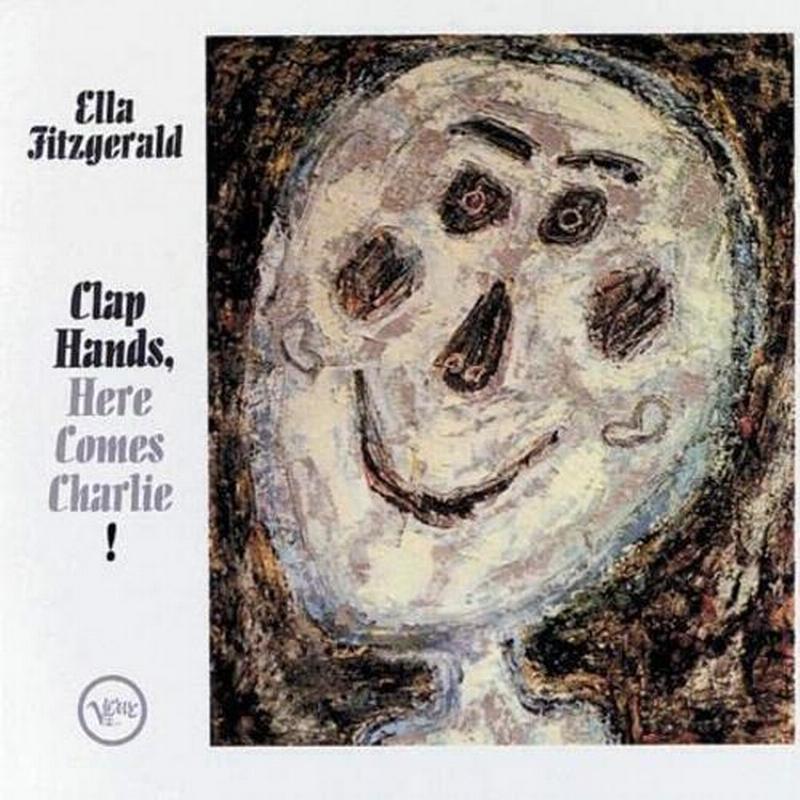
The sleeve has a history of its own. Its artwork derives from Jean Dubuffet’s 1948 painting Tête d’une femme, and its original notes are by Benny Green, the British jazz writer. He is not a member of the accompanying quartet. The documented repress uses metal parts from an earlier release, so the date of this pressing should not be assumed to identify a newly created cut. In use, the arrangement remains straightforward: seven tracks per side, one interruption between Signing Off and Cry Me a River, and the complete original LP programme preserved across the two sides.
Clap Hands, Here Comes Charlie! consequently offers an approachable and rewarding place in a Fitzgerald collection. The repertoire brings different song worlds together, while the small ensemble keeps the relationships between voice, melody and accompaniment open to attention. Anyone interested in the work of interpreting a song has fourteen opportunities to hear a familiar singer at close range and to recognise the contributions of her partners. The programme can be enjoyed as a continuous album or revisited through an individual song, with its small-group setting providing a consistent thread throughout. You order from Michael 45 in Germany. We arrange the US import and dispatch from Hilden.
Series: Verve – all 34 records: voices, organ and bossa nova
Musicians
Participants and documented credit status. Track references correspond to the tracklist.
- Ella FitzgeraldExisting portrait; not a session depictionvocalsParticipation: Fourteen original LP tracks; no CD bonus tracks
- Lou LevyExisting portrait reference 1957pianoParticipation: Fourteen original LP tracks; no CD bonus tracks
- Herb EllisLater, undated portrait referenceguitarParticipation: Fourteen original LP tracks; no CD bonus tracks
- Joe Mondragondouble bassParticipation: Fourteen original LP tracks; no CD bonus tracks
- Gus JohnsonLater portrait reference: 1980sdrumsParticipation: Fourteen original LP tracks; no CD bonus tracks


Los Angeles, June 22–23, 1961; fourteen original LP tracks. Norman Granz: producer; Benny Green (British writer): liner notes; Jean Dubuffet: cover artwork Tête d’une femme (1948). Lou Levy, Herb Ellis, Joe Mondragon and Gus Johnson accompany Ella Fitzgerald. Wilfred Middlebrooks belongs to three later CD bonus tracks, not this LP. Conflicting writer credits for My Reverie/Jersey Bounce are documented in the research data. Bernie Grundman: mastering for this series; existing metalwork is reused.

Reviews
There are no reviews yet.