

The electric guitar finds a storytelling voice
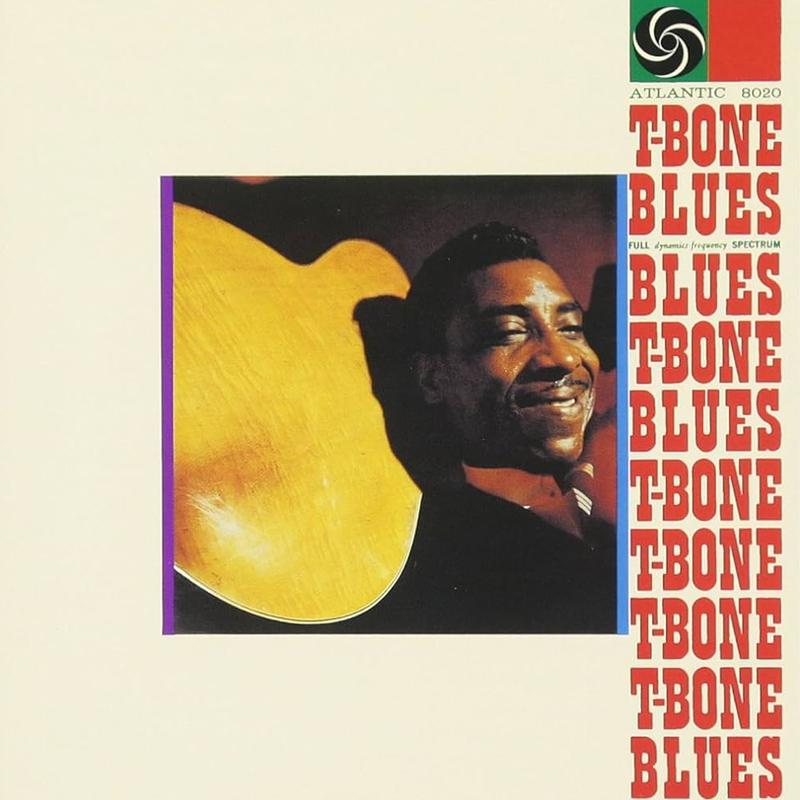
T-Bone Blues leads to a musician whose importance extends far beyond a single album. T-Bone Walker is one of the defining voices of electric blues guitar. These recordings were made in Chicago and Los Angeles between 1955 and 1957, with Atlantic releasing the album in 1959. It documents several encounters rather than a single studio date. Together, they create a portrait in which Walker’s singing, guitar lines and interaction with changing musical partners can be approached from several directions.
The appeal lies in a combination of blues expression and melodic elegance. Walker can shape a guitar line as a second voice beside his singing. Different lineups create different settings for that conversation. Horns appear in some sessions, a smaller group takes focus in others, and several guitarists meet elsewhere. That variety makes the album an especially rewarding introduction. It demonstrates both a distinctive style and the flexibility with which that style can inhabit different musical circumstances.

Chicago and Los Angeles
Documented partners include pianist Lloyd Glenn, bassist Billy Hadnott and drummer Oscar Lee Bradley on the 1956 recordings. Other sessions bring guitarists R.S. Rankin and Barney Kessel, tenor saxophonist Plas Johnson, pianist Ray Johnson, bassist Joe Comfort and drummer Earl Palmer. Jimmy Rogers and Junior Wells are documented on “Play On Little Girl.” The personnel therefore need to be read alongside their track assignments, rather than imagined as one large group present throughout the entire album.
“Two Bones And A Pick” makes the attraction of these encounters particularly clear, placing several guitar personalities within the same musical setting. Instead of concentrating only on speed or volume, listen for differences in attack and the construction of a phrase. The smaller lineups change the perspective again. How does a pianist leave room for guitar? How does the rhythm section hold a performance together? These relationships make the journey through the sessions worthwhile and give the album its range of musical detail.

“Stormy Monday” within an eleven-track programme
“Two Bones And A Pick” is followed by “Mean Old World” and “T-Bone Shuffle.” “Stormy Monday Blues” brings a selection especially closely associated with Walker. “Blues For Marili” and the title track continue the programme, joined by “Shufflin’ The Blues,” “Evenin’,” “Play On Little Girl,” “Blues Rock” and “Papa Ain’t Salty.” Eleven pieces bring contrasting movements and ensembles into one album. They invite listeners to encounter the guitarist through familiar repertoire and through material heard less constantly.
That range prevents Walker from being reduced to a single celebrated number. A complete play allows his musical handwriting to be followed under changing conditions. For guitar listeners, the pleasure is especially direct. A phrase does not need to be expansive to reveal personality. The timing of an entrance, the duration of a note or a brief response to a vocal line may be enough. T-Bone Blues supplies several different settings in which those small decisions can make their effect felt.
The Atlantic 75 mono double LP
Analogue Productions’ AAPA 053-45 presents the album in mono on two 180-gram LPs playing at 45 RPM. Matthew Lutthans handled mastering and lacquer cutting at Cohearent Audio. The publisher identifies the original master tape as the source. It also specifically notes a hum on “Blues For Marili” originating from Walker’s guitar amplifier during the recording. This is a characteristic of the historical source, an informative distinction when listening to this particular track on a new pressing.
The first 2,000 numbered copies were pressed at Quality Record Pressings, with QRP or RTI specified for later copies. A Stoughton Printing tip-on gatefold with two pockets completes the edition. Care in the physical record serves music built on personal expression and precise craftsmanship. For anyone wishing to hear the history of electric blues guitar rather than only read about it, T-Bone Blues offers a rich starting point. Its varied encounters also provide plenty of reasons to return to the beginning after the final selection ends.
You order from Michael 45 in Germany. We arrange the US import and dispatch from Hilden.
More from the series: Atlantic 75 Series
Also on SACD: T-Bone Blues
Customer questions: Atlantic 75: which titles are worth buying? · Buying Analogue Productions records in Europe
Series: Atlantic 75 Series – all 75 albums, time journey and the people behind Atlantic
Musicians
Participants and documented credit status. Track references correspond to the tracklist.
- T-Bone Walkerguitar, vocalsParticipation: Album personnel
- John YoungpianoParticipation: A3, D3
- Eddie Chambleetenor saxophoneParticipation: A3, D3
- Andrew „Goon“ Gardneralto saxophoneParticipation: A3, D3
- McKinley „Mack“ Eastonbaritone saxophoneParticipation: A3, D3
- Ransom KnowlingbassParticipation: A3, D3
- LeRoy JacksondrumsParticipation: A3, D3
- Jimmy RogersguitarParticipation: D1
- Junior WellsharmonicaParticipation: D1
- Lloyd GlennpianoParticipation: A2, B1, B2, C1, C2
- Billy HadnottbassParticipation: A2, B1, B2, C1, C2
- Oscar Lee BradleydrumsParticipation: A2, B1, B2, C1, C2
- R.S. RankinguitarParticipation: A1, C3, D2
- Barney KesselguitarParticipation: A1, C3, D2
- Plas Johnsontenor saxophoneParticipation: A1, C3, D2
- Ray JohnsonpianoParticipation: A1, C3, D2
- Joe ComfortbassParticipation: A1, C3, D2
- Earl PalmerdrumsParticipation: A1, C3, D2


T-Bone Walker (guitar, vocals). Chicago, April 21, 1955: John Young (piano), Eddie Chamblee (tenor saxophone), Andrew “Goon” Gardner (alto saxophone), McKinley “Mack” Easton (baritone saxophone), Ransom Knowling (bass), LeRoy Jackson (drums) on A3, D3 · Jimmy Rogers (guitar) and Junior Wells (harmonica) on D1; bass and drums on D1 not confirmed. Los Angeles, December 14, 1956: Lloyd Glenn (piano), Billy Hadnott (bass), Oscar Lee Bradley (drums) on A2, B1, B2, C1, C2. Los Angeles, December 27, 1957: R.S. Rankin and Barney Kessel (guitar), Plas Johnson (tenor saxophone), Ray Johnson (piano), Joe Comfort (bass), Earl Palmer (drums) on A1, C3, D2; solo order on A1 and D2: Rankin, Kessel, Walker. One source assigns D2 to a different session. Producer: Nesuhi Ertegun; Chicago titles: Ahmet Ertegun and Jerry Wexler · Liner notes (original): Ralph J. Gleason · Cover photo: William Claxton · Cover design: Marvin Israel. This edition: mastered and lacquer cut by Matthew Lutthans at Cohearent Audio · Pressed at Quality Record Pressings. Recording engineers and studios not documented. Series pressing specification: first 2,000 at QRP, later copies at QRP or RTI.
How Michael hears this edition
Listening impression · paraphrased from the video
On his first listen to this Atlantic 75 edition, Michael was surprised by both the music and the recording quality. He particularly enjoys how the mono recording conveys T-Bone Walker’s guitar, voice and interplay with the band. He explicitly praises the mono cut; he does not describe a comparison with an original pressing in this passage.

Reviews
There are no reviews yet.