
A band growing into its own scale
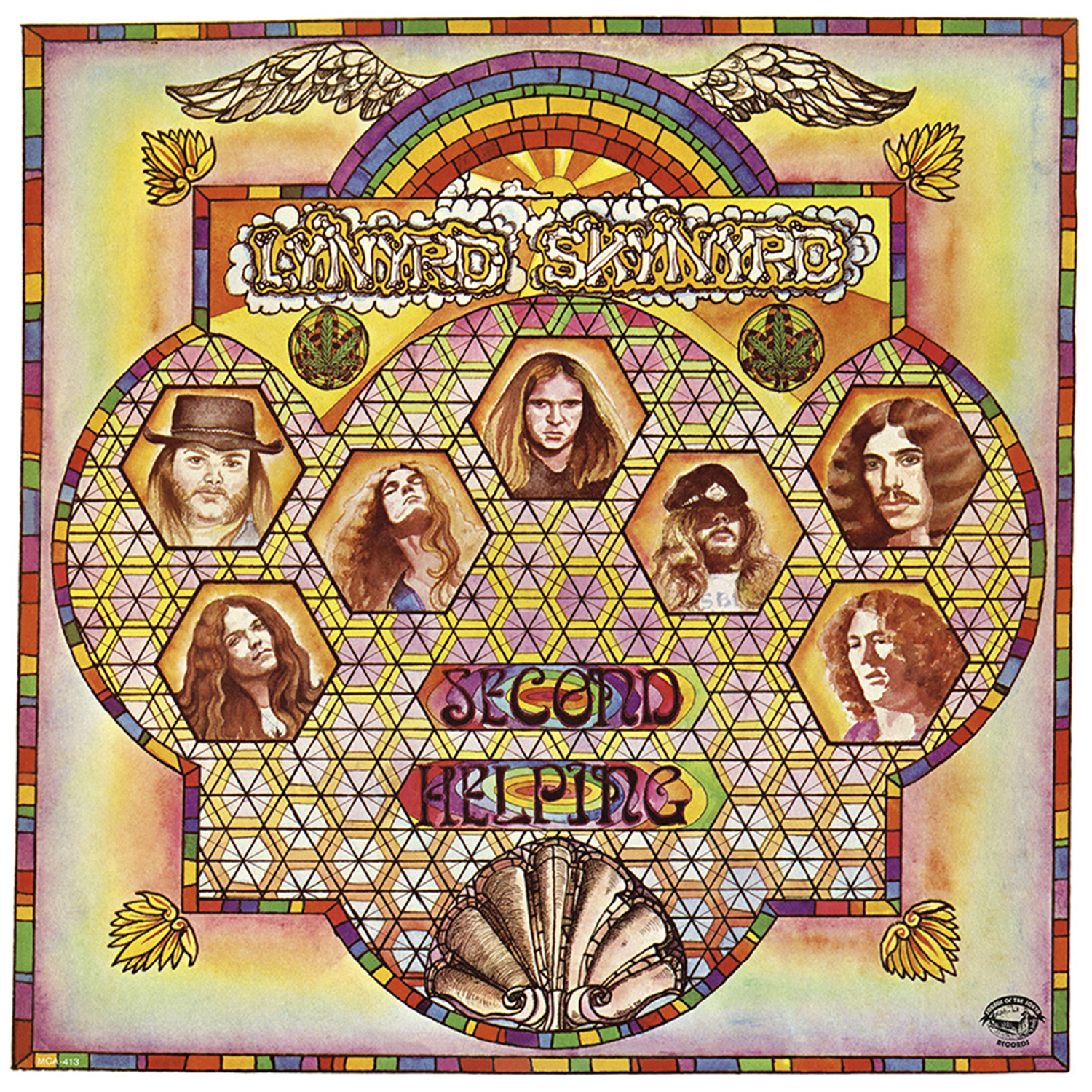
When Second Helping appeared in April 1974, Lynyrd Skynyrd were already more than a promising band from Jacksonville. Their debut had established their presence, while support appearances on the Who’s American Quadrophenia tour in 1973 brought them before a wider audience. The second album captures the next step. Ronnie Van Zant stands at its centre as the singer, but the group around him draws its identity from several distinct musical voices. Particularly important are the three guitarists: Gary Rossington, Allen Collins and Ed King, each contributing something more specific than additional volume.
The recordings were made in different locations. “Sweet Home Alabama” had already been recorded at Studio One in Doraville, Georgia, in June 1973. The remaining album work took the band to the Record Plant in Los Angeles, with the documented recording period extending into January 1974. Al Kooper produced the album and also participated in the engineering. These locations are more than incidental details. The eventual opening track existed before the programme was completed with further songs and the accumulated experience of a band spending substantial time performing together in front of audiences.
All three guitarists wrote with Van Zant on this album. That gave the group several ways into a song: a riff, a sequence of chords, a melodic idea or a particular rhythmic character. Van Zant’s words and delivery connect those contributions without erasing their differences. This provides a useful starting point for approaching Second Helping. Enjoy the familiar opening, then notice how differently the remaining pieces are constructed. The album’s history is considerably larger than the history of its most famous song, even if that song has become its most immediately recognisable calling card.
The success was substantial: the album reached number twelve on the American album chart. For collectors, it also documents a particular line-up at a particular stage. Bob Burns still played most of the drums, Leon Wilkeson supplied most of the bass parts, and Billy Powell added another voice to the guitar framework through his keyboard work. Looking only at the label Southern rock can obscure the individual musical decisions beneath it. These names turn a broad stylistic category into the history of a working band, with specific contributions and exceptions worth following.

Three guitars and a flexible foundation
The edition’s credits associate Rossington with a Gibson Les Paul, Collins with a Gibson Firebird and King with a Fender Stratocaster. These identify the documented guitar line-up; they do not automatically assign every note on the record to one particular instrument. They do, however, help prevent three musicians from disappearing into an anonymous wall of guitars. A useful listening approach is to distinguish an accompanying figure, a rhythmic accent and a line moving into the foreground. A band does not require every guitar to perform the same task simultaneously in order to make a substantial impression.
Ed King is more than the guitarist responsible for the famous opening riff of “Sweet Home Alabama”. He plays bass on “I Need You” and “Don’t Ask Me No Questions”. Leon Wilkeson is credited with bass on the remaining songs and also contributes backing vocals. The drum credits contain another important exception: Mike Porter replaces Bob Burns on “I Need You”. These details do not change the identity of Lynyrd Skynyrd, but they make the description of this particular recording more accurate. A personnel list assigning every musician equally to all eight tracks would conceal part of the album’s actual construction.
Powell’s piano has a particularly prominent opportunity in the closing “Call Me the Breeze”. Horn players Bobby Keys, Trevor Lawrence and Steve Madaio contribute to “Don’t Ask Me No Questions” and “Call Me the Breeze”, extending the arrangements beyond the three guitars. On these tracks it is worth following how short horn responses relate to the movement of the rhythm section. The guests are not separate from the story of the band on record. They are part of the specific forms in which these songs were captured and presented on the finished album.
Some individual credits remain disputed. Merry Clayton and Clydie King, with Sherlie Matthews in an additional source, are named for the backing vocals on “Sweet Home Alabama”; another account identifies the Sweet Inspirations. For “The Ballad of Curtis Loew”, piano and acoustic-guitar attributions differ between Al Kooper and Allen Collins. Those disagreements remain marked in the credits. The availability of a name or portrait does not turn an uncertain track assignment into a verified fact. The documented band personnel remain visible while the genuinely unresolved details retain their qualifications.

Beyond the familiar greeting to Alabama
“Sweet Home Alabama” was written by Ed King, Gary Rossington and Ronnie Van Zant. None of the three came from Alabama: Van Zant and Rossington were from Jacksonville, while King came from Glendale, California. The song responds to Neil Young’s “Southern Man” and “Alabama” and belongs within that specific early-seventies exchange. Its lyrics cannot be reduced to a simple statement of geographical origin. Precisely because the refrain has become so familiar, it is rewarding to return to the recording as a piece involving several guitars, piano, supporting voices and a deliberately constructed rhythm track.
Accounts of its creation connect Rossington’s repeated picking figure with King’s developed guitar part. King’s 1973 Stratocaster, associated with the composition and recording, is documented as a museum object. This is an appealing collector’s detail, linking a universally recognisable musical opening to a specific working instrument. It does not replace the achievement of the other musicians. The song works as a band recording: Van Zant’s vocal, the complementary guitars and Powell’s piano belong to its identity just as much as the riff that announces it within a few seconds.
After that opening, the record moves in several directions. “I Need You” takes almost seven minutes, while “Don’t Ask Me No Questions” and “Workin’ for MCA” establish different proportions and emphases. On the second side, “The Ballad of Curtis Loew” tells the story of a character who, according to the documented band account, combines aspects of people from Van Zant’s neighbourhood. Curtis Loew should therefore not be treated as one securely identified biographical subject. The narrative draws its character from the relationship between an invented figure and memories of a real environment.
“Swamp Music” and “The Needle and the Spoon” lead towards the finale, J. J. Cale’s “Call Me the Breeze”. Closing with another songwriter’s work makes a further part of the band’s musical background visible. Powell and the horns deserve attention here alongside the guitars. Across eight songs, the record offers changing proportions rather than a succession of variations on its opening number. Listening to Second Helping as a complete album gives those differences room to register, in a way that isolated radio favourites can rarely communicate on their own.
The Analogue Productions 33⅓ RPM edition
The release described here is Analogue Productions AAPP 413, a single stereo LP running at 33⅓ RPM. Kevin Gray cut the record at Cohearent Audio, from the original analogue tapes according to the publisher. Quality Record Pressings is identified as the pressing plant, with Gary Salstrom credited for plating. The presentation includes a substantial tip-on gatefold jacket. These details belong to this specific AP edition and should not be merged with other reissues simply because they share the album title and its original MCA catalogue identity.
A single 33⅓ RPM record makes practical sense for an album structured this way. The first four songs form one continuous listening section, and the four tracks on the second side form another. “Sweet Home Alabama” opens one side, “The Ballad of Curtis Loew” the other, and “Call Me the Breeze” remains the destination at the end of the complete programme. One side change preserves that sequence in two substantial stretches. This is a practical reason to choose the format, rather than a claim that a rotational speed is inherently preferable regardless of source and mastering.
The earlier AP pressing from 2013 is documented at 200 grams, while the 2021 repress is listed at 180 grams. The publisher currently describes the 180-gram version; that does not constitute a physical inspection of the stock batch offered here. For the collector, the Kevin Gray cut, the exact catalogue number and the complete eight-track sequence remain reliable points of orientation. They allow the edition to be considered without treating vinyl weight as a promise about sound. The musical substance lies in the band, the songs and the many participants who preserved this particularly significant stage together.
You order from Michael 45 in Germany. We arrange the US import and ship from Hilden.
Also in another edition: Second Helping
More by Lynyrd Skynyrd: Gimme Back My Bullets · Nuthin’ Fancy
Customer question: Buying Analogue Productions records in Europe
Musicians
Participants and documented credit status. Track references correspond to the tracklist.
- Ronnie Van Zantlead vocalsParticipation: Album personnel
- Gary Rossingtonguitar (Gibson Les Paul)Participation: Album personnel
- Allen Collinsguitar (Gibson Firebird)Participation: Album personnel
- Ed Kingguitar (Fender Stratocaster), backing vocals, bass (A2, A3)Participation: Album personnel
- Leon Wilkesonbass, backing vocalsParticipation: All except A2, A3
- Billy Powellkeyboards, piano solo B4Participation: Album personnel
- Bob BurnsdrumsParticipation: All except A2
- Mike PorterdrumsParticipation: A2
- Merry Claytonbacking vocalsParticipation: A1 · conflicting credits; see note
- Clydie Kingbacking vocalsParticipation: A1 · conflicting credits; see note
- Sherlie Matthewsbacking vocalsParticipation: A1 · conflicting credits; see note
- Bobby KeyshornsParticipation: A3, B4
- Trevor LawrencehornsParticipation: A3, B4
- Steve MadaiohornsParticipation: A3, B4
- Al Kooperbacking vocals, piano (A3), piano/acoustic guitar B1 (Wikipedia; disputed)Participation: A3, B1


Sweet Home Alabama: Studio One, Doraville, June 1973; remaining album work: Record Plant, Los Angeles, through January 1974. Producer/engineer: Al Kooper. Ed King plays bass on A2/A3, Mike Porter drums on A2. Horns A3/B4: Bobby Keys, Trevor Lawrence, Steve Madaio. Backing vocals A1 disputed: Clayton/King/sometimes Matthews or Sweet Inspirations. Piano/acoustic guitar B1: Kooper versus Collins in different credits. AP: Kevin Gray, Cohearent Audio; Gary Salstrom, plating; Quality Record Pressings.

Reviews
There are no reviews yet.