A debut that begins by explaining its own name
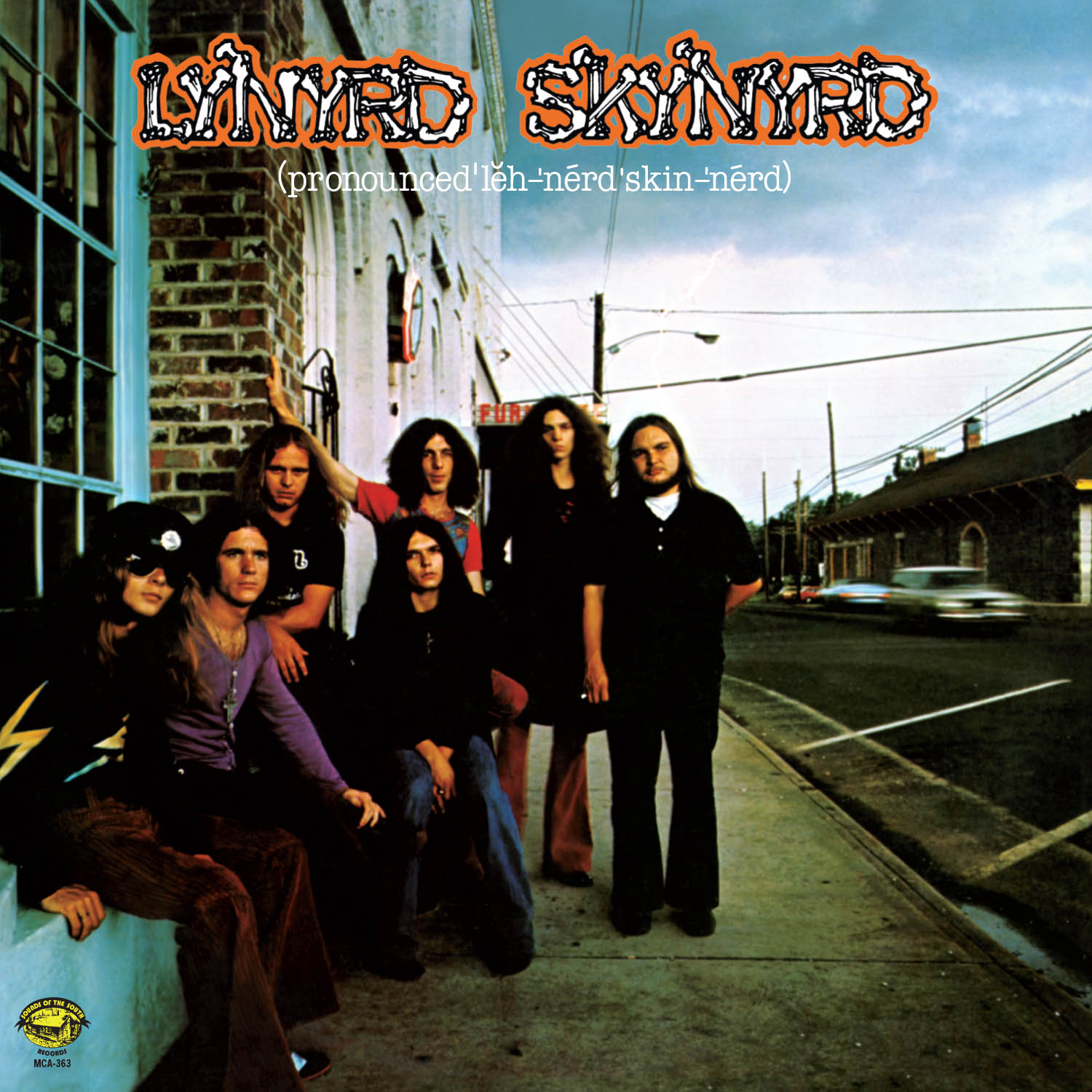
The title offers a small act of introduction: (Pronounced ‘Lĕh-‘nérd ‘Skin-‘nérd) tells the listener how to say the band’s name. The music then makes its own case. Lynyrd Skynyrd’s 1973 debut already includes Tuesday’s Gone, Simple Man, Gimme Three Steps and Free Bird, songs that became familiar far beyond their original album setting. That familiarity is a reason to return to the whole record. Here the celebrated pieces have neighbours, and together they describe a band whose possibilities cannot be reduced to one guitar figure or a single extended finale. The sequence is part of the story.
Al Kooper produced the album, with recording taking place at Studio One in Doraville, Georgia. His involvement extended beyond supervision: he also contributed as a musician, appearing in the credits under the name Roosevelt Gook. That combination is revealing. The group brings a clear identity to the sessions while allowing specific songs to acquire additional instrumental colours and practical support from its producer. The resulting record contains eight original album selections. Its large gestures rest on many smaller arrangement choices, making the personnel information useful for understanding the music rather than merely an appendix to a familiar band history.
Ronnie Van Zant’s voice provides the central presence. Around him, Gary Rossington, Allen Collins, Ed King, Billy Powell and Bob Burns form a recording line-up whose roles deserve attention. Anyone picturing the later three-guitar band should resist transferring that image unchanged to every track on the debut. King plays bass for most of this record, and the guitar duties are distributed more specifically than a group photograph might suggest. Such details do not diminish the band’s identity. They show how this particular album was made, and why a familiar list of names cannot automatically stand in for the actual session credits.

From the opening song to Free Bird’s extended journey
I Ain’t the One opens the album and is followed by Tuesday’s Gone. That pairing immediately offers two ways of shaping a song. A sharply defined opening and a more extended song structure can belong to the same band without competing for the same effect. Tuesday’s Gone also has distinctive personnel: Robert Nix plays drums, while Kooper supplies bass and Mellotron among his contributions. Following those supporting parts can give the song another dimension. Its progress becomes the work of a particular combination of players, rather than simply a route from one familiar refrain to the next.
Gimme Three Steps and Simple Man occupy the second side of this 45 RPM edition. One uses a specific narrative situation; the other draws on the force of a direct, personal statement about how to live. A listener need not study every lyric to follow their different shapes. Van Zant’s delivery, the return of a musical figure and the movement from a verse into its next section already provide points of orientation. The songs retain their contrasting proportions. Together they show a debut presenting the range within a band’s approach, rather than proving that one formula can be repeated throughout a record.
Side C contains Things Goin’ On, Mississippi Kid and Poison Whiskey, leaving Free Bird alone on side D. Mississippi Kid introduces other colours through Kooper’s mandolin and Steve Katz’s harmonica, with Ed King credited on lead guitar. The closing piece works on a larger scale, bringing the song and its instrumental expansion into one continuing journey. Hearing it at the end of the album can restore a sense of that overall movement. This is the studio recording in the original programme; later concert performances, demos and expanded-edition bonus material are not folded into the eight selections offered here.

The players and their actual jobs on the record
The guitar credits divide responsibilities between Gary Rossington and Allen Collins. Collins is assigned lead guitar on I Ain’t the One and Free Bird; Rossington takes that role on Tuesday’s Gone, Gimme Three Steps, Things Goin’ On and Poison Whiskey. Lead parts do not account for everything either musician contributes. Rhythm playing, transitions and the way one line supports another are equally important to a group’s character. A useful listening exercise is to follow the guitar that is not currently drawing attention to itself. Its choices help determine the space and momentum available to the more prominent voice.
Ed King plays bass on every track except Tuesday’s Gone and Mississippi Kid. Kooper plays bass on Tuesday’s Gone; his bass-drum credit on Mississippi Kid does not establish a bass-guitar part. Leon Wilkeson is pictured and credited on the sleeve but does not play on these recordings. That distinction is retained explicitly rather than quietly making him the bassist on every song. Billy Powell’s keyboards and Bob Burns’ drums, with Nix replacing Burns on Tuesday’s Gone, complete the principal band contributions. There is no contradiction in this flexible studio arrangement. A record can express a group’s identity while individual songs draw on different combinations of the people working around it.
The additional players also deserve their places. Bobbye Hall contributes percussion to Gimme Three Steps and Things Goin’ On, and Steve Katz plays harmonica on Mississippi Kid. Kooper’s parts range from bass, Mellotron and backing vocals on Tuesday’s Gone to mandolin and bass drum on Mississippi Kid, with organ on Simple Man, Poison Whiskey and Free Bird. These assignments do not turn the guests into permanent group members. They show how individual songs were furnished with particular sounds. Portraits accompany the names where identity is established, with the dates of their references kept distinct from the album’s recording period.
Eight studio selections across four 45 RPM sides
Analogue Productions AAPP 363-45 presents the debut on two LPs running at 45 RPM. Ryan K. Smith at Sterling Sound cut the edition from the original analogue master tapes, with Quality Record Pressings responsible for plating and pressing. The package includes a Stoughton tip-on gatefold sleeve. The current publisher description specifies 180-gram vinyl, whereas an earlier documented pressing under the same catalogue number is listed at 200 grams. These are different documented release details, not proof of the weight of an unexamined stock copy. The secure format identity is the clearly designated 45 RPM double album.
The side allocation is unusually easy to grasp: two selections on A, two on B, three on C and Free Bird on D. Four sides require more interruptions than a single 33⅓ LP. In exchange, the long closing performance occupies its own side, while the remaining songs are arranged in compact groups. Whether that organisation suits a listening session is a practical collecting choice. Speed alone does not replace an assessment of a particular playback. It does explain why this version is organised differently, and why turning to the final side can become a deliberate preparation for the album’s concluding movement.
Listeners who know Lynyrd Skynyrd through individual classics can rediscover their original surroundings here. Collectors of the early albums can compare the contributions of King, Collins, Rossington and Kooper with later configurations. The debut remains more than a preliminary stage: eight songs of different lengths, instrumental combinations and kinds of expression, connected by Van Zant’s voice and a group confidently spelling out its identity. Accurate personnel and the complete original sequence make this edition a clearly defined part of that recorded history. You order from Michael 45 in Germany. We arrange the US import and dispatch from Hilden.
Customer questions: 45 or 33⅓ RPM: which edition is worth it? · Buying Analogue Productions records in Europe
Musicians
Participants and documented credit status. Track references correspond to the tracklist.
- Ronnie Van ZantLater portrait reference 1976lead vocalsParticipation: All eight tracks
- Gary RossingtonLater portrait reference 2008lead guitar A2/B1/C1/C3; rhythm guitar A1/B2/C2/D1Participation: Track assignments from liner notes
- Allen CollinsLater portrait reference 1975lead guitar A1/D1; rhythm guitar on remaining tracksParticipation: Track assignments from liner notes
- Ed KingExisting portrait; not a session depictionbass except A2/C2; lead guitar C2Participation: Mississippi Kid: lead guitar; not a blanket three-guitar credit
- Billy PowellLater portrait reference 1987keyboardsParticipation: Album personnel
- Bob BurnsEarly-1970s publicity portrait referencedrumsParticipation: All except A2 Tuesday’s Gone
- Leon WilkesonLater portrait 1977; no performance on this albumCredited on sleeve; does not performParticipation: No bass performance on the recordings
- Al KooperLater portrait reference 2009bass, Mellotron, harmony vocals A2; mandolin/bass drum C2; organ B2/C3/D1Participation: As Roosevelt Gook; also producer. Bass drum is not a bass guitar credit.
- Robert NixdrumsParticipation: A2 Tuesday’s Gone
- Bobbye HallpercussionParticipation: B1 Gimme Three Steps; C1 Things Goin’ On
- Steve KatzharmonicaParticipation: C2 Mississippi Kid


Studio One, Doraville, 1973; Al Kooper produced and performed as Roosevelt Gook. Eight original studio tracks. Leon Wilkeson appears in sleeve credits but does not play. Kooper’s bass drum on Mississippi Kid is not a bass guitar credit. Free Bird is the studio version, approximately 9:09; the supplementary Discogs list’s 11:09 is not adopted.

Reviews
There are no reviews yet.