

Six compositions shaped by one musical author
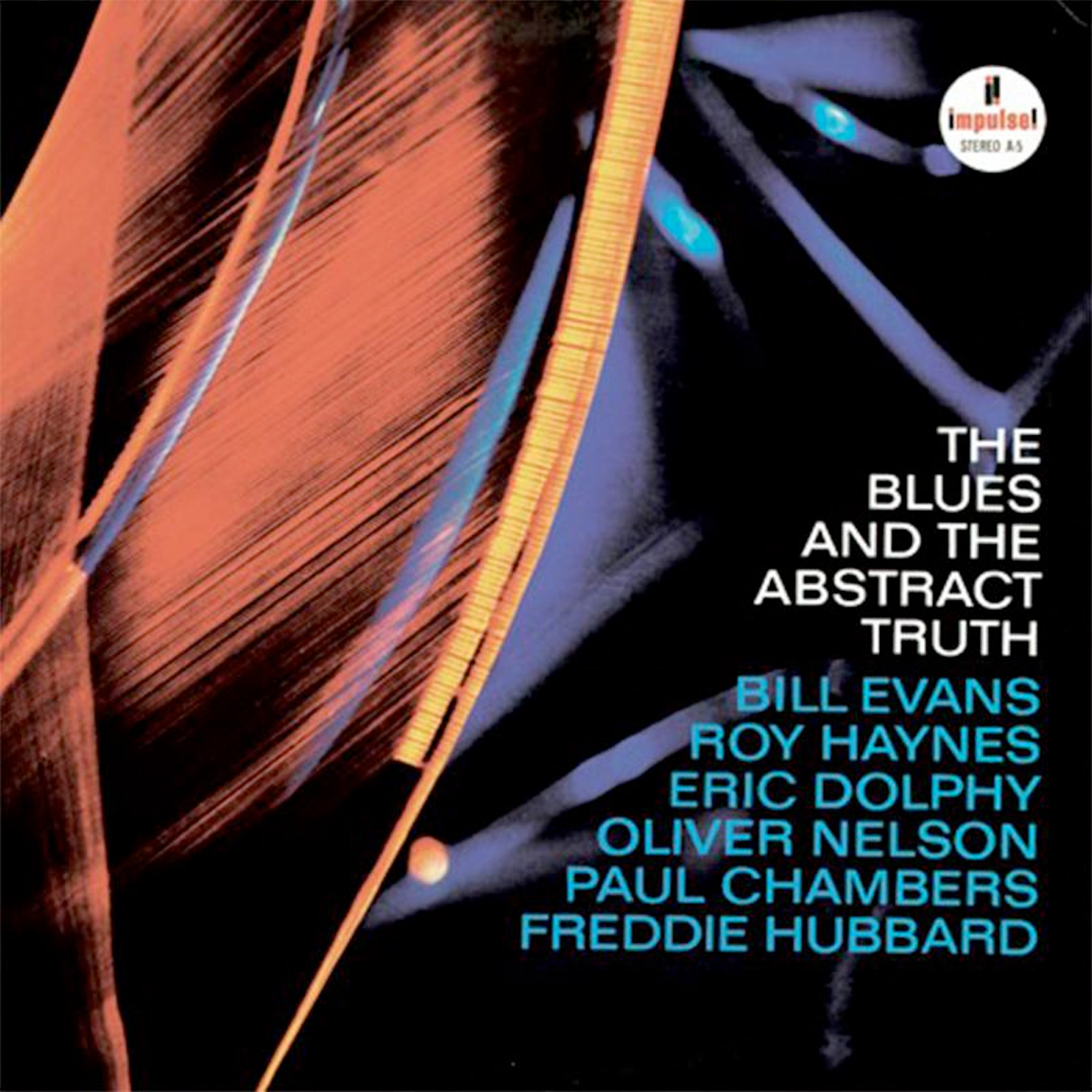
The Blues And The Abstract Truth connects the familiarity of the blues with Oliver Nelson’s work as a composer and arranger. He wrote all six pieces and their arrangements. Recorded at Van Gelder Studio in Englewood Cliffs on February 23, 1961, the album appeared on Impulse! that year. If you want to buy The Blues And The Abstract Truth on vinyl, this Acoustic Sounds Series edition presents the programme on one 180-gram stereo LP at 33⅓ RPM. It is a coherent album performed by a small group with a notably varied instrumental palette.
Nelson plays tenor and alto saxophone. Eric Dolphy contributes alto saxophone and flute, Freddie Hubbard trumpet, and George Barrow baritone saxophone. Bill Evans, Paul Chambers and Roy Haynes fill the piano, double-bass and drum positions. Seven musicians therefore stand behind the album. The instrument list describes their documented contributions; it is not a claim that every listed instrument is heard simultaneously on every piece. An arranger can draw different combinations from the same group of players.
That personnel already suggests why the title is more than an abstract promise. Trumpet and several saxophone registers offer possibilities different from those of a single melodic instrument with a trio. Dolphy’s flute adds another colour. Nelson has a compact ensemble in which individual soloists meet written parts, allowing musicians to move forward within a shared structure and then become part of the group again. Composition and improvisation do not have to occupy separate musical worlds for that to happen.
A score is not required to find a way into the record. A returning theme, a change in instrumental combination or a transition into a solo can be followed directly. The familiar idea of the blues provides a starting point for different compositions rather than obliging the album to repeat one identical pattern six times. Nelson invites attention to the connections between pieces and to the variety that can emerge from a programme shaped by one composer.

Stolen Moments and the first side’s proportions
Stolen Moments opens the record and, at nearly nine minutes, is its longest track. Closely associated with this album, the composition offers a particularly clear entry into Nelson’s relationship between ensemble writing and individual musicians. Its position at the beginning matters: an extended piece establishes the scale before two shorter tracks follow. The first side does not have to derive its impact from a high number of selections. It can give one musical idea time and then place different proportions beside it.
With this personnel, it is useful to distinguish the written melodic material from the musicians’ individual contributions. Horns speaking together make a different kind of statement from a single player moving into the foreground. Hubbard, Dolphy and Nelson each bring an instrumental perspective of their own; Evans, Chambers and Haynes extend the listener’s attention beyond the horn section. You can follow the melodic outline or return to concentrate on how the group setting relates to an individual line.
Hoe-Down comes next. Even its title suggests a different point of emphasis from Stolen Moments. Cascades follows before the first side ends. These are three separately conceived compositions, all by Nelson, rather than interchangeable examples of an album concept. Their order encourages curiosity: what continues from one piece to another, and what new tasks do the players encounter? Such questions can guide listening without turning the music into an exercise that requires theoretical answers before it can be enjoyed.
Arranging also involves deciding where weight belongs. A lower horn can support a written passage without becoming its most conspicuous solo voice; a flute offers a different outline from a saxophone. George Barrow’s baritone is therefore part of the album’s identity alongside the more familiar names in the personnel. Looking only at featured soloists would overlook part of Nelson’s work. The musician section keeps these contributions visible and presents the players as members of an ensemble rather than simply a list of stars.

The reverse side and Nelson’s switch to alto
Yearnin’ opens side two, followed by Butch And Butch and Teenie’s Blues. The three tracks continue a programme written entirely by Nelson. No inserted standard redirects the second half towards familiar material by another composer. Attention stays with the possibilities he develops through his own pieces within the same session. This gives the album a connection that goes beyond a shared recording location or a group brought together for the occasion.
Teenie’s Blues includes a specifically documented instrumental change: Nelson plays alto saxophone. The supplementary encyclopedia identifies that assignment, while the edition credits list alto and tenor without the same individual track detail. It is a helpful point of orientation. A musician’s name does not always stand for just one instrumental colour across an album. At the same time, that one assignment should not be expanded into an unsupported instrument-by-instrument chart for every other performance. The documented detail is already concrete enough to suggest another way of listening.
Bill Evans at the piano provides a further point of entry. Listeners who mainly know his trio records encounter him inside Nelson’s larger group here. Paul Chambers and Roy Haynes complete its rhythmic personnel. Their names connect the album to many other recordings, but the task is specific to this occasion: they are working within a programme composed and arranged by Nelson. Familiar musicians become neither incidental guests nor a collection of celebrated names without a common musical purpose.
Nelson also wrote the liner notes, giving the composer a voice in the presentation of his album beyond the performances themselves. Creed Taylor produced the session, and Rudy Van Gelder handled the recording. Those roles complement the story without adding further musicians to the personnel. The record can be considered as a carefully assembled release in which repertoire, instrumentation and accompanying explanation are closely linked to a central musical author.
The Impulse! album in the Acoustic Sounds Series
The offered reissue carries catalogue number AIMP 42801. Released in 2021 within the Verve/UMe Acoustic Sounds Series, it contains the six pieces on one 180-gram stereo LP. Ryan K. Smith mastered it at Sterling Sound from the original analogue tapes. Quality Record Pressings manufactured the record, with Stoughton Printing supplying the tip-on gatefold jacket. Playback speed is 33⅓ revolutions per minute. These details distinguish the particular edition from other formats and reissues of the album.
Three tracks on each side preserve an easily followed sequence. Stolen Moments, Hoe-Down and Cascades are followed by the second group of Yearnin’, Butch And Butch and Teenie’s Blues. The tracklist below gives the timings documented for this edition. Small differences between releases are not a reason to substitute another version’s durations or bonus programme. What matters is the six-track configuration actually presented by the offered LP, rather than an expanded digital or later CD release.
The Blues And The Abstract Truth can enter a collection through several different interests. One listener may arrive through Dolphy, another through Evans or Hubbard, and another through Nelson’s compositions. The album offers each a point of entry without dissolving into unrelated individual contributions. Following one soloist on an initial playing can lead to closer attention to the ensemble voices on the next. The possibility of moving between individual expression and a shared arrangement makes hearing the complete side particularly worthwhile.
For listeners who enjoy compact jazz groups with more instrumental colours than a conventional quartet, this is an appealing setting. Seven musicians, six compositions, one recording day and one arranger establish a clear frame. There is enough variety within it to resist reducing the whole record to its best-known piece. The album begins with Stolen Moments, but its musical and compositional connections continue through the final track. The complete programme is what gives those connections their context.
You order from Michael 45 in Germany. We arrange the US import and dispatch from Hilden.
Artist page: All titles with Bill Evans
Series: Impulse! – all 19 records: the house that Trane built
Musicians
Participants and documented credit status. Track references correspond to the tracklist.
- Oliver NelsonPortrait reference: 1961Tenor/alto saxophone; composition, arrangementsParticipation: Alto on B3; composition/arrangement all tracks
- Eric DolphyPortrait reference: 1960alto saxophone, fluteParticipation: Album personnel; individual scope unspecified
- Freddie HubbardPortrait reference: 1962trumpetParticipation: Album personnel; individual scope unspecified
- George Barrowbaritone saxophoneParticipation: Album personnel; individual scope unspecified
- Bill EvansPortrait reference: 1964pianoParticipation: Album personnel; individual scope unspecified
- Paul ChambersPortrait reference: 1958double bassParticipation: Album personnel; individual scope unspecified
- Roy HaynesExisting portrait; not a session depictiondrumsParticipation: Album personnel; individual scope unspecified


Seven musicians from album credits; no blanket claim that every instrument appears on every track. Oliver Nelson composed and arranged all six pieces; alto on Teenie’s Blues per supplementary encyclopedia. Creed Taylor: producer; Rudy Van Gelder: recording. Ryan K. Smith / Sterling Sound: mastering from original analogue tapes; QRP: pressing; Stoughton: jacket.
How Michael hears this edition
Listening impression · paraphrased from the video
Michael praises this Acoustic Sounds edition and the quiet, flat pressing of his copy. In a direct comparison, he finds his earlier Analogue Productions 45 RPM edition sounds a little better. He nevertheless explicitly recommends the newer edition and does not claim a large gap for this album.
🎧 Review video: Shootout: Acoustic Sound: Sonny Rollins: On Impulse, Oliver Nelson: The Blues and The Abstract Truth
This video is hosted by YouTube (Google). It only loads once you switch on “Functional” in the cookie settings.

Reviews
There are no reviews yet.