

A debut with a direction of its own
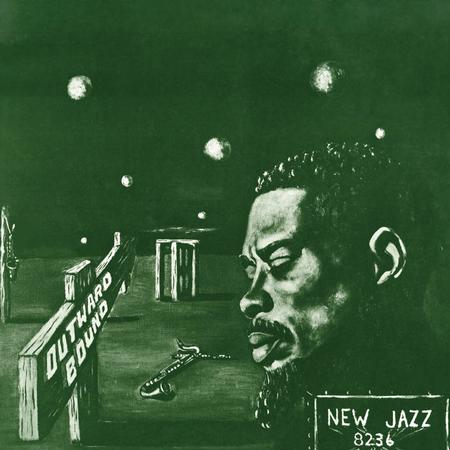
Outward Bound is Eric Dolphy’s debut as a bandleader and an invitation to examine musical individuality more closely. Recorded on April 1, 1960, at Rudy Van Gelder’s studio in Englewood Cliffs, it appeared that year on New Jazz as NJLP 8236. The location matters: this is no longer Van Gelder’s earlier Hackensack studio. Dolphy introduces himself with a quintet whose instrumentation looks familiar while its interaction opens other possibilities: Freddie Hubbard on trumpet, Jaki Byard on piano, George Tucker on double bass and Roy Haynes on drums.
Dolphy plays three instruments on the album. That is not an interchangeable detail in a list of equipment; it contributes to the programme’s structure. Alto saxophone, bass clarinet and flute bring different registers, methods of articulation and relationships with the trumpet. Outward Bound is consequently an apt heading for a record that creates several distinct instrumental settings from a modest group. It needs neither a large ensemble nor a single unchanging lead instrument to establish its range.
The year 1960 marks a period of concentrated independent work in Dolphy’s career. A leader debut does not mean that a musician discovers his language on the day of the session. It brings an already developed personality into a new position of responsibility, expressed through the choice of material, collaborators and musical space. Three of the six selections are Dolphy compositions. The others come from different settings and show how his playing can also transform more familiar material.
It helps not to treat the word “avant-garde” as a complete listening guide. The label explains neither an individual phrase nor a relationship between two players. More revealing questions concern the unexpected continuation of a line, the rhythm section’s response and the points of reference retained by the composition. This remains collective music. Its individuality emerges not because everyone plays independently, but through the meeting of different decisions within a common performance.

Three instruments assigned to six specific performances
Dolphy plays alto saxophone on G.W., Les and 245. These three original compositions are distributed across both sides: G.W. opens the album, Les closes side A, and 245 opens side B. The alto therefore occupies important structural points in the sequence. Comparing the three pieces offers a way to notice how Dolphy develops different kinds of movement on the same instrument. An individual voice need not produce an identical musical trajectory every time it appears.
The bass clarinet belongs to On Green Dolphin Street and Miss Toni. Its lower register creates a relationship with Hubbard’s trumpet different from that of the alto. The instrument’s colour is more than an opening effect at the start of a solo. It changes the weight of a line within the ensemble and the impact of movement between registers. The bass clarinet is a woodwind with a long dark body and metal keywork, not a low saxophone. Keeping the instruments distinct is essential to understanding what Dolphy contributes to these particular performances.
On Glad To Be Unhappy, Dolphy plays flute. Hubbard sits out, leaving a quartet with Byard, Tucker and Haynes. As with a ballad featuring only one horn, that decision changes the distribution of attention. There is no second horn to answer a phrase directly. Instead, the relationships between flute, piano, bass and drums become more exposed. Fewer voices do not mean that less musical significance is being carried by the performance; they change how the available space is shared.
These assignments prevent an easy oversimplification. Dolphy does not play all three instruments on every selection, and Hubbard is not present throughout the album. The personnel section therefore links each instrument to the relevant tracks. This also makes a comparative listening session easier to organise. One hearing can follow the succession of instrumental colours, while another attends to form, accompaniment and the preparation of transitions within the same programme.

Freddie Hubbard and a mobile rhythm section
Hubbard is the second horn on this recording. His trumpet offers a recognisable counterpart to Dolphy’s changing instruments. The two musicians also shared accommodation in New York for a time; what matters on this record is their musical proximity. Playing in a common front line does not require identical preferences in phrasing. Differences of articulation, register and emphasis can give a theme greater definition. On the five selections with trumpet, listen for the transition between a shared statement and the individual continuation that follows it.
At the piano, Byard does far more than fill in harmonies. He can establish relationships, leave space or provide a turn of phrase with a different setting. Tucker’s double bass and Haynes’s drums complete that flexible foundation. The rhythm section is not an unchanging backdrop for two conspicuous soloists. It helps determine whether a passage presses forwards, pauses or prepares a new direction. A hearing spent deliberately following bass and drums can consequently be as revealing as one devoted to the front-line solos.
The repertoire combines Dolphy originals with On Green Dolphin Street by Bronisław Kaper and Ned Washington, and Richard Rodgers and Lorenz Hart’s Glad To Be Unhappy. Miss Toni was written by Charles “Majeed” Greenlee. This mixture establishes different points of comparison. A familiar standard arrives with expectations, while a less familiar composition invites another kind of first encounter. Dolphy’s individuality need not be confined to his own pieces. It is equally present in the way he approaches melodies and forms written by other musicians.
For collectors, Outward Bound provides a particularly clear opening to a bandleader chapter. Six tracks keep the album manageable, yet they introduce several instruments of the leader, a distinctive second horn and a rhythm section with a personality of its own. The record can be approached through a single selection or heard in sequence. Across a complete hearing, the changes between alto, bass clarinet and flute give the programme a shape extending beyond a collection of individual solos. Familiar ensemble proportions become a starting point for something personal.
The Analogue Productions stereo LP
APRJ 8236 belongs to the Analogue Productions Prestige Stereo Series. The product is a single stereo LP playing at 33⅓ RPM. Kevin Gray at Cohearent Audio is credited with mastering from the analogue master tapes, Quality Record Pressings is the stated pressing plant, and Gary Salstrom is credited for plating. The current manufacturer specification is 180 grams. Documented older AP editions, including releases from 2017 and 2021, were listed at 200 grams. Without inspecting a particular stock copy, those historical specifications should not become a promise about the weight of every available pressing.
The original release on New Jazz and the album’s later inclusion in AP’s Prestige series describe different levels of the same publishing history. They do not turn it retrospectively into a different recording session. Date, venue and personnel remain the starting point. Ron Eyre supplied the original liner notes, while Van Gelder is associated with the recording. Later remastering and manufacturing are additional stages, rather than substitutes for the original credits.
The 33⅓ RPM edition retains two sides of three selections each. That preserves the succession of instruments and the place of the flute ballad within the programme without distributing the music across four shorter sides. Adding the album to a collection means acquiring more than an early Dolphy title. It offers a concentrated introduction to his possibilities as a leader: several instrumental colours, carefully chosen colleagues and material that allows individuality to grow within a shared musical setting.
You order from Michael 45 in Germany. We arrange the US import and dispatch from Hilden.
More by Eric Dolphy: At The Five Spot, Vol. 1 · Far Cry
Customer question: Buying Analogue Productions records in Europe
Series: Analogue Productions Prestige – all 50 records, musicians and session paths
Musicians
Participants and documented credit status. Track references correspond to the tracklist.
- Eric DolphyPortrait: 1960alto saxophoneParticipation: A1, A3, B1
- Eric DolphyPortrait: 1960bass clarinetParticipation: A2, B3
- Eric DolphyPortrait: 1960fluteParticipation: B2
- Freddie HubbardPortrait: 1962trumpetParticipation: All except B2
- Jaki ByardPortrait: 1965pianoParticipation: All tracks
- George Tuckerdouble bassParticipation: All tracks
- Roy HaynesPortrait: existing verified portraitdrumsParticipation: All tracks


Eric Dolphy’s instruments are assigned to individual tracks. Freddie Hubbard sits out B2. Recorded April 1, 1960, Englewood Cliffs.

Carlos Julian –
Though it may seem mild in comparison to some of his later work, Outward Bound is essential Dolphy not only because it’s his debut, but also because it’s one of the last times the juxtaposition of his avant-garde leanings and hard-bop origins is so easily evident. This session brings together a handful of the greatest musicians to ever play their respective instruments, and it’s more than a little coincidence that, when placed in the same environment for a common purpose, there was an extra affinity and edge that they evoked, seemingly in unison. the nothing.
If you’ve never experienced the joy that is Eric Dolphy, there’s no better place to start, as this is where it all officially began. There is no doubt that Eric Dolphy deserves to be mentioned among the all-time immortals of jazz music.