45 RPM AUDIOPHILE Free shipping from 2 records in Germany and most of the EU
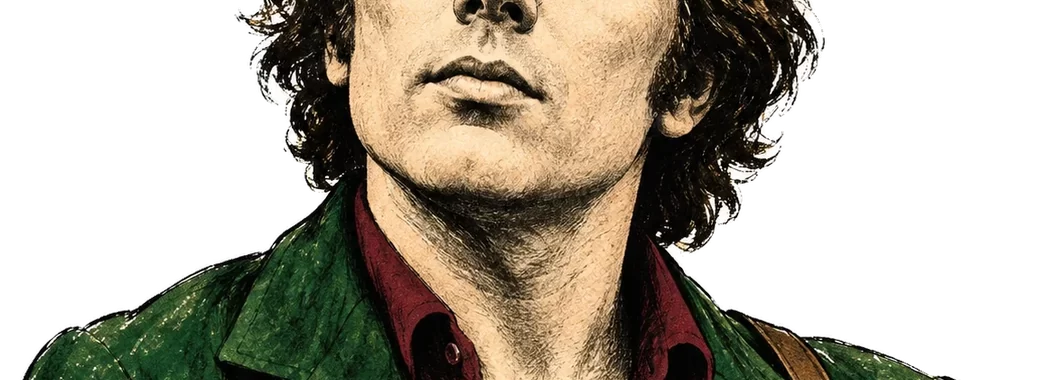
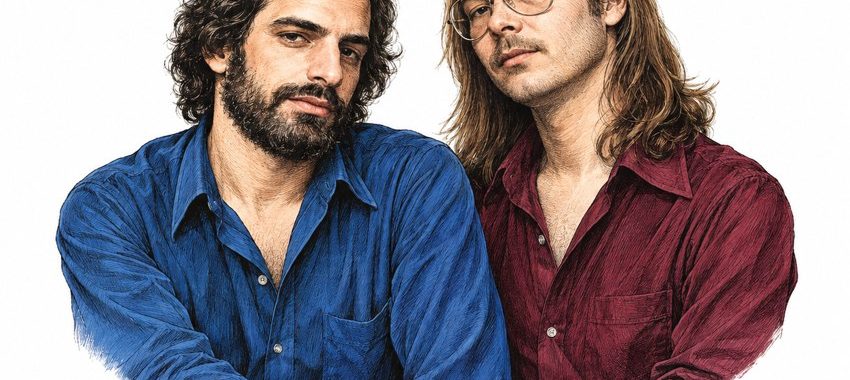
Walter Becker and Donald Fagen · illustration

Steely Dan: The Art of Leaving Nothing to Chance

Artist dossier · Rock / Jazz / Studio craft

Steely Dan: The Art of Leaving Nothing to Chance

Nine studio albums. Two singular minds. Music that keeps opening another door.

Donald Fagen and Walter Becker – colour illustration
Becker & Fagen · illustration

Some records demonstrate a sound system. Others explain why you wanted one in the first place. Steely Dan inhabit both worlds. The production can be astonishing; the songs are what make you stay.

A guitar phrase slips past, apparently effortless, then refuses to leave your head. A chorus suggests sunshine while its story has already moved into shadow. A bass line leans between the beats without disturbing the song’s balance. Walter Becker and Donald Fagen wrote music that welcomes you immediately and continues to resist easy explanation. You can discover these records casually and spend decades listening more closely.

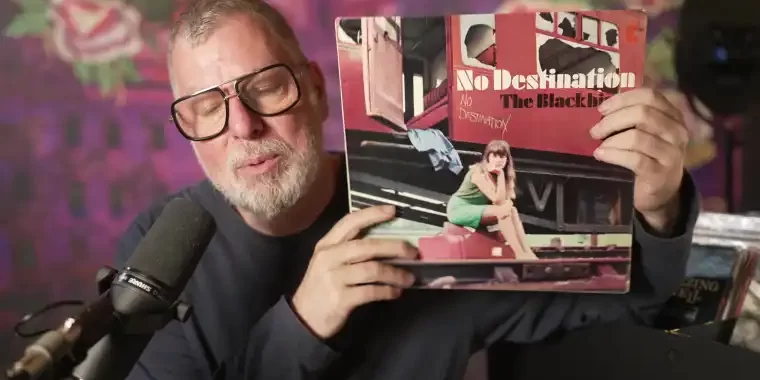
I have returned to Steely Dan repeatedly on my channel: in conversation with Chad Kassem, in UHQR comparisons with American white-label promos, against a regular reissue, and through the rediscovery of the two later studio albums. Those videos form the listening thread of this journey. Each verdict concerns the particular copies and the system I used at the time. The history of the music is, of course, a much larger subject.

We begin with a working touring band, move through the studios of Los Angeles and New York, and finish with two later albums that deserve much more than a footnote. If Aja is your starting point, there is plenty left to discover. If all nine records already occupy your shelves, this is an invitation to hear familiar music in a broader context.

1972 — 2003

Nine albums. A remarkable journey.

Choose an album to jump to its chapter.

Becker and Fagen: two writers, many voices

Becker and Fagen met at Bard College in New York State in 1967. Musical curiosity and an unusually oblique sense of humour brought them together. Jazz was part of their vocabulary, alongside rhythm and blues, pop and rock. They found a way to place complicated ideas inside songs that people could sing.

Producer Gary Katz became an important partner on the early albums, while engineer Roger Nichols helped realise their increasingly exacting ideas. Initially, a regular band surrounded Becker and Fagen. Gradually, they chose players according to the needs of individual songs. A drummer, guitarist or saxophonist arrived because of a specific musical quality. The changing personnel in the credits are therefore a guide to listening.

The people behind the precision matter. The attack of a note, its duration and the placement of a beat cannot be reduced to technical cleanliness. Steely Dan’s studio art depends on fitting those individual qualities into closely considered arrangements. These records contain countless decisions. Good reproduction helps us understand what those decisions contribute.

01 / 09 · 1972

Can’t Buy a Thrill

A band discovers its language

Denny Dias · illustration

Do It Again opens a world of its own: a circling rhythm, an immediately recognisable vocal line and Denny Dias’s electric sitar. Reelin’ in the Years moves in another direction. The guitar pushes forward, with Elliott Randall’s solo playing becoming a second voice alongside the singer. The debut already shows how widely Steely Dan could vary their musical colours within one record.

In 1972 the group still had a tangible band identity: Becker, Fagen, Dias, Jeff “Skunk” Baxter, drummer Jim Hodder and singer David Palmer. Palmer sings lead on Dirty Work and Brooklyn (Owes the Charmer Under Me). His presence gives those songs a character distinct from Fagen’s performances. That vocal variety belongs specifically to the debut and reminds us that the familiar Steely Dan identity was still taking shape.

Recorded at the Village Recorder in Los Angeles with producer Gary Katz and engineer Roger Nichols, the album places unusual harmonic movement inside accessible songs. It does not require immediate analysis. Alongside the famous singles, Only a Fool Would Say That and Fire in the Hole show a writing partnership whose signature is already recognisable, but whose possibilities remain open.

Comparing the UHQR with an American white-label promo, I was surprised by how clearly I preferred the reissue. I discussed its freshness and spatial presentation in the video. A second comparison, requested by viewers, brought in the regular Universal LP. I considered that a good edition too, while retaining a clear preference for the UHQR. This describes the copies I heard, rather than every pressing ever made of the album.

Edition in our shop

45 RPM Audiophile · 2022-11-07

Steely Dan Can’t Buy a Thrill UHQR vs Original Promo

Video in English · Start 7:10

Watch on YouTube ↗

45 RPM Audiophile · 2022-11-09

Steely Dan Can’t Buy a Thrill: UHQR vs 33 RPM

Video in English · Start 3:25

Watch on YouTube ↗

Can't Buy a Thrill – AUHQR 0009-45

UHQR · 2 LP · 45 RPM

Can’t Buy a Thrill in the shop ↗

AUHQR 0009-45

Also on Hybrid Stereo SACD ↗CAPP 134 SA

02 / 09 · 1973

Countdown to Ecstasy

Room for the band to move

Jeff “Skunk” Baxter · illustration

After the debut, the music stretches out. Countdown to Ecstasy contains eight tracks, including Bodhisattva, Your Gold Teeth and King of the World. Guitars have more room to speak; instrumental passages acquire weight of their own. Fagen now takes all the lead vocals, giving the record a more consistent narrative voice while the band explores broader musical structures.

The attraction lies in the relationship between movement and construction. These are carefully written pieces, yet they retain the energy of a working band. Jeff Baxter and Denny Dias contribute different guitar characters, while Victor Feldman expands the palette through keyboards and percussion.

My Old School offers an immediate entrance. From there, follow the longer arcs, the supporting voices and the rhythmic answers to Fagen’s singing. The result feels like a band developing its ideas across several stages rather than simply taking turns to solo.

My Old School draws on a specific college memory: the drug raid at Bard in May 1969. Its title might suggest a nostalgic homecoming song, but that background changes the expectation. This is a characteristic Steely Dan effect: an inviting musical surface can initially conceal the sting. Hearing story and arrangement together reveals a different kind of looking back. Background ↗

I also compared this UHQR with a white-label promo and found the reissue highly persuasive. The video concerns that particular original pressing. Watching it alongside the debut comparison shows why these early Steely Dan UHQRs attracted so much of my attention: the albums set different musical challenges, making their comparison especially revealing.

Edition in our shop

45 RPM Audiophile · 2022-12-19

Steely Dan UHQR: Countdown To Ecstasy UHQR vs. White Label Promo 1st Pressing

Video in English · Start 8:00

Watch on YouTube ↗

Countdown to Ecstasy – AUHQR 0010-45

UHQR · 2 LP · 45 RPM

Countdown to Ecstasy in the shop ↗

AUHQR 0010-45

Also on Hybrid Stereo SACD ↗CAPP 135 SA

03 / 09 · 1974

Pretzel Logic

Big ideas in compact forms

Victor Feldman · illustration

Pretzel Logic changes the scale. In 1974, shorter songs take the place of its predecessor’s extended forms without reducing the music’s density. Rikki Don’t Lose That Number is immediately accessible; the album continues to reveal small turns and unexpected angles. Its achievement is to make them seem natural.

The jazz connection becomes explicit. Parker’s Band points towards Charlie Parker, while East St. Louis Toodle-Oo brings Duke Ellington and Bubber Miley into the programme. Tradition is material that Becker and Fagen can work with while retaining a voice of their own.

The working method is changing too. Jim Gordon and Jeff Porcaro are among the album’s drummers. Selected studio players increasingly supplement the established band. The needs of an individual song begin to determine who occupies each position, pointing towards Katy Lied.

The publisher identifies Bernie Grundman and the original master tape for the UHQR. Start with the concise songs and the album’s position between the early band and the later studio method. A series name cannot replace a title-specific assessment.

Edition in our shop

Pretzel Logic – AUHQR 0011-45

UHQR · 2 LP · 45 RPM

Pretzel Logic in the shop ↗

AUHQR 0011-45

Also on Hybrid Stereo SACD ↗CAPP 136 SA

04 / 09 · 1975

Katy Lied

The songs and the studio’s shadow

Jeff Porcaro · illustration

Katy Lied is one of those records whose technical history can overshadow the music. Yet Black Friday, Bad Sneakers and Doctor Wu give ample reason to stay with the songs. Fagen’s voice connects their different moods, while Michael McDonald’s backing vocals introduce a distinctive new colour.

Jeff Porcaro is a central presence on drums. His playing is a reminder that precision need not mean rigidity. Rhythm has to support the structure and breathe within it. Hear Katy Lied as an ensemble record as well as a collection of memorable individual contributions.

Michael McDonald · 1975 · illustration

For Your Gold Teeth II, Fagen gave Porcaro a Mingus recording featuring Dannie Richmond as rhythmic guidance. The session story illustrates something valuable: finding a performance can mean stepping away from the song and listening to other music. Jazz is part of the musicians’ shared language. Session background ↗

The difficulties associated with the dbx noise-reduction system belong to the album’s history, but accounts differ about the nature and extent of the damage. They do not support a simple claim that a later edition repaired everything. Naming the original master tape as a source also says nothing conclusive about the condition of that historical material.

In my video on the Katy Lied UHQR, I explain how listening again helped me understand why some Steely Dan fans choose it as their favourite. Set beside the frequently discussed Aja and Gaucho, Katy Lied offers another perspective: ten concentrated songs in which individual players can say a great deal with a small gesture.

Edition in our shop

45 RPM Audiophile · 2025-03-04

4 Major Reissues: Steely Dan, Genesis, CSN & Alfie

Video in English · Start 0:15

Watch on YouTube ↗

Katy Lied – AUHQR 0012-45-1

UHQR · 2 LP · 45 RPM

Katy Lied in the shop ↗

AUHQR 0012-45-1

Also on Hybrid Stereo SACD ↗CAPP 137 SA

05 / 09 · 1976

The Royal Scam

The guitar becomes a storyteller

Larry Carlton · illustration

The Royal Scam moves the guitar towards centre stage. Larry Carlton is a key figure, alongside Denny Dias, Dean Parks and Elliott Randall. Those names reveal several distinct musical personalities at work; attributing every striking guitar passage to Carlton would erase that variety.

Kid Charlemagne demonstrates how a solo can belong to the drama of a song. The guitar develops the musical thought rather than merely interrupting the vocal. Don’t Take Me Alive takes another approach, while Haitian Divorce opens a different sound world again. The record remains remarkably varied within its guitar-led character.

Bernard Purdie · illustration

Kid Charlemagne takes loose inspiration from Owsley Stanley, while The Caves of Altamira turns towards an encounter with cave paintings. Those subjects are far apart, yet inhabit the same musical world. Becker and Fagen were interested in characters and ideas that resist an uncomplicated pop narrative. Song backgrounds ↗

Chuck Rainey’s bass and the contributions of drummers Bernard Purdie and Rick Marotta help form its foundation. Gary Katz produces, with Roger Nichols and Elliot Scheiner involved in engineering. These credits explain why Steely Dan’s studio history is also a history of exceptional supporting musicians.

When I introduced the Royal Scam UHQR in July 2025, an important chapter of the reissue programme had come together. I placed it alongside the other editions and said that ranking them was difficult. The pleasure lies in hearing the catalogue presented this way, with The Royal Scam adding its own guitar-led character to the larger picture.

Edition in our shop

45 RPM Audiophile · 2025-07-11

The CCR Audiophile Grail Is Back—Plus Steely Dan UHQR

Video in English · Start 7:30

Watch on YouTube ↗

The Royal Scam – AUHQR 0013-45-1

UHQR · 2 LP · 45 RPM

The Royal Scam in the shop ↗

AUHQR 0013-45-1

Also on Hybrid Stereo SACD ↗CAPP 138 SA

06 / 09 · 1977

Aja

The space behind the detail

Wayne Shorter and Steve Gadd · interpretive illustration of their contributions to Aja

Aja is many listeners’ introduction to Steely Dan as an audiophile subject. That is understandable, but its importance extends beyond impressive reproduction. Seven songs combine melodic clarity with a musical flexibility that keeps rewarding attention. Black Cow, Deacon Blues, Peg and Josie each provide a different entrance.

The title track travels particularly far. Wayne Shorter’s saxophone and Steve Gadd’s drums are defining voices. Jazz listeners have a direct point of connection; listeners arriving from pop can follow a song opening its form without losing coherence. Its details have direction rather than simply accumulating.

Chuck Rainey · illustration

Wayne Shorter’s story also leads to Miles Davis’s second great quintet. The Miles Davis dossier follows that wider context. A name in the credits can open the door to an entirely different collection.

My first response to the Aja UHQR in November 2023 was unusually emphatic: I considered it a candidate for the audiophile reissue of the year. Hear that enthusiasm in context. The video is called First Impression; it offers an invitation to hear the album’s musical and spatial effect.

The source requires careful wording. The original programme announcement identifies an analogue, non-EQ’d tape copy for Aja. The UHQR publisher page also identifies an analogue tape copy. Aja is an exception within the programme and deserves to be described accurately. The result deserves to be judged through listening rather than a simplified label.

Edition in our shop

45 RPM Audiophile · 2023-11-09

First Impression: UHQR Steely Dan: Aja

Video in English · Start 0:27

Watch on YouTube ↗

Aja – AUHQR 0014-45

UHQR · 2 LP · 45 RPM

Aja in the shop ↗

AUHQR 0014-45

Also on Hybrid Stereo SACD ↗CAPP 139 SA

07 / 09 · 1980

Gaucho

Tension beneath the polished surface

Studio technology as part of the music · conceptual illustration, not a documentary scene

Gaucho tightens the focus again: seven songs, highly controlled forms and characters who rarely seem entirely comfortable with themselves. Babylon Sisters, Hey Nineteen and Time Out of Mind provide obvious starting points. Beyond their elegance, listen for the tension between an inviting surface and the situations being described.

Released in 1980, the album closes the first studio era. Its production history includes Roger Nichols’s work with the early digital drum system Wendel. Technology belongs to the story without explaining the whole musical effect. The more interesting question is how a groove can be so controlled and remain so compelling.

In my Gaucho UHQR video, I explicitly did not compare it with an original. Aja was my reference as an outstanding reissue. I described Gaucho’s room-filling effect and placed it alongside Aja rather than declaring Aja the better-sounding record. “Gaucho vs. Aja” therefore discusses two different albums, not rival pressings of one album.

Gaucho is another source exception. The programme announcement specifies an analogue copy from 1980, originally EQ’d by Bob Ludwig. That information is more useful than suggesting every Steely Dan UHQR started from the same type of source. The recording, the available tape and the new mastering are separate stages.

Edition in our shop

45 RPM Audiophile · 2024-04-27

Gaucho vs. Aja, David Crosby, Hall & Oates, First Pablo

Video in English · Start 0:35

Watch on YouTube ↗

Gaucho – AUHQR 0015-45

UHQR · 2 LP · 45 RPM

Gaucho in the shop ↗

AUHQR 0015-45

Also on Hybrid Stereo SACD ↗CAPP 140 SA

08 / 09 · 2000

Two Against Nature

Twenty years later, immediately recognisable

Donald Fagen · illustration

Twenty years separate Gaucho and Two Against Nature. Donald Fagen’s The Nightfly from 1982 belongs to the intervening story, alongside Walter Becker’s solo work and the return to touring. A solo record remains distinct from a Steely Dan studio album, however close the musical connections.

Released in 2000, Two Against Nature resumes the conversation between Becker and Fagen. What a Shame About Me, Jack of Speed and West of Hollywood invite us to hear this later music without measuring everything against Aja. The writing remains recognisable while the perspective has changed.

Donald Fagen and Walter Becker around 2000 · interpretive illustration

The Album of the Year Grammy brought the return widespread attention. For listening, the more rewarding approach is to give these songs time. They have characters, rhythmic ideas and extended musical thoughts of their own.

My June 2022 video covers the Analogue Productions 45 RPM edition alongside Everything Must Go. Having compared both with the previous year’s Record Store Day editions, I clearly preferred the AP releases, although I already considered the earlier editions good. These AP double LPs are not UHQR editions, an important distinction when choosing a copy.

Album / edition source ↗

45 RPM Audiophile · 2022-06-10

New Analogue Production: 2 Great Steely Dan! + Thoughts on AP vs. MoFi

Video in English · Start 6:55

Watch on YouTube ↗

Two Against Nature – AAPP 141-45

Analogue Productions · 2 LP · 45 RPM

Two Against Nature in the shop ↗

AAPP 141-45

09 / 09 · 2003

Everything Must Go

A final studio album with a voice of its own

Walter Becker and Donald Fagen · illustration

Everything Must Go appeared in 2003, only three years after Two Against Nature. It did not have to bridge a twenty-year gap. The Last Mall, Things I Miss the Most and the title song establish an atmosphere worth hearing on its own terms.

Walter Becker sings lead on Slang of Ages, making the second writer present in a different way. Keith Carlock plays drums and Becker plays bass, within a relatively concentrated ensemble. The personnel offer another useful route into the record.

Keith Carlock · illustration

The journey began with a band and passed through increasingly specialised studio line-ups. Here, the experience of playing together again becomes central. It is not a recreation of the debut but a later collaboration with a confidence of its own.

The favourable comparison with the Record Store Day pressings in my video applies to Everything Must Go as well. For listeners who have concentrated on the seven classic albums, this offers a reason to widen the picture. The last studio album with Walter Becker deserves to close the journey as music, not simply as a historical endpoint.

Album / edition source ↗

Return to the video covering both later albums ↑

Everything Must Go – AAPP 142-45

Analogue Productions · 2 LP · 45 RPM

Everything Must Go in the shop ↗

AAPP 142-45

THE PEOPLE IN THE MUSIC

The musicians behind the Steely Dan name

Victor Feldman · illustration

Guitars with individual character

Denny Dias and Jeff Baxter connect the early albums with a working band. Later, other voices arrive. Larry Carlton matters particularly on The Royal Scam; Elliott Randall had already helped define Reelin’ in the Years. Follow how different players enter a song, leave room beneath the vocal and build a solo. Their contributions matter because of what they give each piece.

Different kinds of rhythmic precision

Jeff Porcaro, Bernard Purdie, Steve Gadd and Keith Carlock mark different chapters. Calling all of them “perfect” tells us very little. Gadd’s contribution to Aja and the ensemble approach on Everything Must Go provide distinct listening reference points. Following the drum parts across the catalogue reveals how the music changes.

Keyboards, saxophone and supporting voices

Victor Feldman broadens the instrumental palette. Wayne Shorter’s appearance on Aja connects the album with a major jazz voice. Michael McDonald’s backing vocals add a characteristic presence to Katy Lied and beyond. These contributions can define a passage before we have even read the name in the credits.

Katz, Nichols and the work behind the recording

Producer Gary Katz and engineer Roger Nichols belong to this story alongside the performers. Recording turns an idea into a preserved performance. Reissue mastering adds another stage, working with the material that survives. Distinguishing recording from reissue helps: a new cut is not a new session, and another format does not replace the musicians’ decisions.

ORIGINAL · REISSUE · FORMAT

Which Steely Dan edition is right for you?

Start with the album you actually want to hear. Aja offers a natural entrance into the elaborate studio world; Can’t Buy a Thrill welcomes listeners through familiar songs. Countdown to Ecstasy and The Royal Scam give guitars greater prominence. Katy Lied rewards listeners ready to look beyond the obvious landmarks. These are musical routes into the catalogue, not a hierarchy of prestige.

With originals, the specific pressing and its condition matter. An American white-label promo is an interesting comparison copy, but the description alone guarantees no particular sound. My preference for the UHQR in two promo comparisons does not make every original redundant. Historical pressings are also artefacts of their time. Record matrix details and condition when comparing different cuts.

The seven classic albums from Can’t Buy a Thrill to Gaucho form the UHQR programme discussed here, presented as 45 RPM double LPs. More side changes are part of the experience. If uninterrupted album flow matters to you, that is a legitimate consideration alongside packaging and materials. A listening verdict concerns source, mastering, pressing and playback together; speed alone cannot predict it.

From tape to groove · conceptual illustration

The Geffen/UMe 180-gram programme identifies high-resolution digital files as the basis for Alex Abrash’s lacquer cutting. It is not simply the UHQR in another sleeve. SACDs are digital discs: a hybrid stereo SACD includes SACD and CD layers and does not play on a turntable. A verdict on a vinyl edition cannot automatically be transferred to the SACD of the same album.

Two Against Nature and Everything Must Go belong here as Analogue Productions 45 RPM double LPs, without being UHQRs. Keeping those formats distinct makes comparisons more useful. There is no obligation to collect everything in one format: a favourite album on vinyl and another on SACD can make perfect sense. What matters is listening.

The UHQR series page provides more context and titles beyond Steely Dan. Edition links in this dossier take you directly to the relevant album, connecting the artist’s history with a specific release.

Making a useful comparison at home

Choose a familiar passage and compare at approximately matched levels. A slightly louder presentation can initially seem more impressive. Then follow musical relationships: can you understand the voice within the ensemble, trace the bass line and hear drum accents without losing the song’s overall shape?

Allow a complete passage to develop rather than switching after every note. Make brief notes about what draws you further into the music and what distracts you. That gives your decision more meaning than general phrases such as “more detail”. The videos provide reference points; listening in your own room remains a separate experience.

WHERE TO LISTEN NEXT

Three routes through the nine albums

01

Start with the songs

Begin with Can’t Buy a Thrill and Pretzel Logic. Familiar melodies welcome you in, while the differences show how the band changes its forms. Continue with Katy Lied to move further into the studio world.

02

Start from jazz

Try the title track of Aja, then Your Gold Teeth on Countdown to Ecstasy and Parker’s Band on Pretzel Logic. Each offers a different way of thinking jazz into a song, without requiring the album to behave like a conventional jazz record.

03

Revisit the later records

Play Two Against Nature and Everything Must Go together before returning to Gaucho. Give the later work a context of its own, then hear the connections and differences across the intervening years.

45 RPM Audiophile

From conversation to record: my Steely Dan videos

The videos also trace the reissue story. In June 2022, Two Against Nature and Everything Must Go were the immediate subject, with further titles still a prospect. In September, I spoke with Chad Kassem about the UHQR programme. He describes a Donald Fagen appearance in Salina in 2017 as the starting point of his story. This is the publisher’s first-hand account, a different perspective from a later listening comparison.

The plans then became records on the turntable: the debut against a white-label promo, the regular Universal edition as another option, Countdown to Ecstasy, then Aja and Gaucho. Presentations of Katy Lied and The Royal Scam continue the sequence. Older videos remain useful even when their preorder dates or prices have expired. They show when an opinion was formed and what it concerned.

The conversation with Patrick about Steely Dan and originals belongs here too. It opens questions beyond a single comparison: what should a reissue achieve, what remains attractive about an early pressing, and when do we need to identify the exact copy? Album chapters provide direct entry points; the complete video overview below includes the wider discussions.

45 RPM Audiophile · 2022-09-17

Chad Kassem on Steely Dan UHQR + Q&A

Video in English · Start 0:21

Watch on YouTube ↗

45 RPM Audiophile · 2022-11-06

Patrick & Michael: Steely Dan, Og´s and what comes to mind

Video in English · Start 0:00

Watch on YouTube ↗

Video archive: comparisons, conversations and announcement

Perfection is only the beginning

Across these nine albums, the story keeps moving. The early band, carefully selected studio players, long interruption and later renewal belong together. Countdown to Ecstasy changes the context in which we hear Aja. Everything Must Go gains when it is allowed to be itself rather than another album from the seventies.

The best Steely Dan collection is not necessarily the one with the greatest number of substantial boxes. It is the collection that keeps sending a record to your player: for a guitar solo, a song that has accompanied you for decades, or an edition that reveals something still waiting inside a familiar arrangement.

FAQ

Steely Dan vinyl: common questions

How many studio albums did Steely Dan release?

Nine: Can’t Buy a Thrill (1972), Countdown to Ecstasy (1973), Pretzel Logic (1974), Katy Lied (1975), The Royal Scam (1976), Aja (1977), Gaucho (1980), Two Against Nature (2000) and Everything Must Go (2003). This excludes live albums, compilations and solo releases.

Where should I start with Steely Dan?

Aja introduces the elaborate studio approach; Can’t Buy a Thrill offers familiar songs and the early band. Guitar listeners can continue with The Royal Scam or Countdown to Ecstasy. Let your musical preferences guide the choice.

Are all Steely Dan UHQRs sourced from original master tapes?

No. The programme announcement identifies an analogue tape copy for Aja and a 1980 tape copy originally EQ’d by Bob Ludwig for Gaucho. Sources need to be described album by album.

Are Two Against Nature and Everything Must Go UHQR editions?

The Analogue Productions editions presented here are 45 RPM double LPs, catalogue numbers AAPP 141-45 and AAPP 142-45. They are not UHQR editions.

Is The Nightfly a Steely Dan album?

The Nightfly is Donald Fagen’s 1982 solo album. Its musical connection is close, but it is not one of the nine Steely Dan studio albums.

Did the new Katy Lied edition repair the dbx problems?

No such restoration is established here. Historical accounts of the problem differ, and a favourable review of a reissue is not evidence of a technical repair.

Sources and editorial notes

Album and edition information was checked against publisher documentation, discography and the research files. Personal listening statements refer to the linked videos. Illustrations are AI-generated editorial drawings, not historical photographs; edition covers remain unchanged. Michael operates the shop linked in this article.

  1. Programm und Bandquellen / Programme and tape sources
  2. Diskografie / Discography
  3. Bandgeschichte / Band history
  4. Katy Lied: Aufnahmegeschichte / Recording history
  5. Roger Nichols und Wendel
  6. Everything Must Go: Gespräch mit Becker und Fagen / Interview
  7. Can’t Buy a Thrill
  8. Countdown to Ecstasy
  9. Pretzel Logic
  10. Katy Lied
  11. The Royal Scam
  12. Aja
  13. Gaucho
  14. Two Against Nature
  15. Everything Must Go

Van Morrison um 1970

Van Morrison: three records to fall in love with

A love of records · Van Morrison · Acoustic Sounds 40 Series

Van Morrison: three records to fall in love with

Astral Weeks, Moondance and His Band And The Street Choir at 45 RPM

A voice that moves you. Musicians listening to one another. Songs you keep coming back to. These three Van Morrison albums are among the loveliest reasons to spend time with a record. The lovingly produced Analogue Productions editions give them a fresh place in the collection.

I was excited about Astral Weeks as soon as the reissue was announced. This album is very dear to me. Van Morrison’s singing, that combination of folk, jazz, blues and psychedelic freedom: I love this music. When the Acoustic Sounds 40th Anniversary Series editions of Astral Weeks and Moondance reached my turntable, his voice was what particularly impressed me about the sound of both releases. These records sound wonderful.

His Band And The Street Choir adds a third album, full of soul, rhythm and the sheer pleasure of making music. Released between 1968 and 1970, the three reveal so much of what makes Van Morrison special. You can lose yourself in Astral Weeks, be swept along by the songs on Moondance, and find it hard to sit still through Street Choir. Having them together on vinyl is a pleasure. Hearing them in editions of this quality makes it even better.

Van Morrison around 1970

Astral Weeks: close to an extraordinary voice

Van Morrison in the Astral Weeks period
Van Morrison · Astral Weeks, 1968

On Astral Weeks, Morrison’s voice is the main instrument for me. His singing is a dream. He stretches words, repeats them, shifts their emphasis and lets a melody keep developing. You hear a singer giving himself completely to the music. Anyone who loves this album will probably recognise the feeling: a familiar song is playing, and a single phrase catches your attention all over again.

Van Morrison Astral Weeks 45 RPM Vinyl
Astral Weeks · 45 RPMThe Acoustic Sounds 40 Series edition discussed here.

The musicians around him have so much to do with that. In the autumn of 1968, producer Lewis Merenstein brought an exceptional group into New York’s Century Sound studio. Richard Davis played double bass, Jay Berliner guitar, and Connie Kay of the Modern Jazz Quartet was on drums. Warren Smith contributed percussion and vibraphone, John Payne flute; Larry Fallon supplied the string arrangements. Three sessions produced an album whose interplay remains fascinating.

Richard Davis, in particular, rewards your full attention. His bass moves through the songs with a freedom that goes far beyond holding down the root notes. He responds to Morrison’s singing, adds melodic ideas of his own and gives the music support. Alongside him are the acoustic guitars, the delicate rhythmic touches and Morrison’s voice. The combination itself tells you much about the character of Astral Weeks: the openness of jazz meeting the directness of a folk singer.

The title track takes you straight into that world. Sweet Thing has an almost weightless movement. Madame George takes its time with its images and repetitions, drawing you further into the singing. Slim Slow Slider finally leaves the album on a spare, moving note. There is room here for tenderness, restlessness and longing. Morrison puts so much of it into his voice that the music continues to feel close.

This is a wonderful album for anyone who enjoys listening a little more closely. Follow the double bass for a while, give the guitar your attention, then return to the singing. The songs reward all of it. Familiarity can make them even more absorbing: beyond the moments you already love, there is still so much pleasure in the way these musicians play together.

My excitement about the new 45 RPM edition begins with that music and that singing. The Analogue Productions editions of Astral Weeks and Moondance have both impressed me enormously with their sound, especially Morrison’s voice. I also played my old US promo of Astral Weeks alongside the reissue, although my copy is too worn for a fair pressing comparison. Having this much-loved album in such a beautiful edition is a real pleasure.

Musicians from the Astral Weeks sessions
Richard Davis · Van Morrison · Jay Berliner · Connie Kay · John Payne

Moondance: ten songs to keep coming back to

Van Morrison in the Moondance period
Van Morrison · Moondance, 1970

Moondance followed in 1970. From And It Stoned Me onwards, there is a different ease to the music. The songs are more compact, and the band has a wonderful feel for groove and melody. Folk, soul, jazz and rhythm and blues come together so naturally that it is easy to forget how distinctive the combination is. Morrison brings a wealth of ideas to songs that can feel familiar almost immediately.

Van Morrison Moondance 45 RPM Vinyl
Moondance · 45 RPMThe Acoustic Sounds 40 Series edition discussed here.

He took on the production himself for the recordings at New York’s A&R studio. The band included John Platania on guitar, Jef Labes on keyboards, John Klingberg on bass and Gary Mallaber on drums and vibraphone. Jack Schroer and Collin Tilton contributed saxophones and flute. Judy Clay, Cissy Houston and Jackie Verdell added their voices to Crazy Love and Brand New Day. These musicians give the album its many colours while leaving the songs room to breathe.

The title track is a lovely example. The swing, the horns, Morrison’s phrasing: everything invites you to follow the band. Crazy Love brings tenderness, Caravan gathers the shared energy of the musicians, and Into the Mystic has a mood that stays with you long after it ends. There is so much warmth and movement on this one record. You want to spend time with these songs.

In my video, I singled out Glad Tidings as well as the title track. Wonderful songs, with Van Morrison at his best. An album’s ending often has a great deal to do with how keenly you want to play it again. Moondance keeps its appeal right through to the final song. Its famous tracks belong to an album that is a pleasure to hear in full.

In the Vinyl Room, we discussed which was the better album: Astral Weeks or Moondance. The result was exactly fifty-fifty. My choice leans a little more towards Astral Weeks, but we all agreed that both are amazing. I like that discussion because it brings you straight to the music: the song that has stayed with you, the voice, the album you have a personal connection with.

That makes these two 45 RPM double LPs especially appealing as a pair. You hear the same singer in two very different musical settings. The freedom of Astral Weeks and the concentrated songwriting of Moondance keep drawing your attention to different aspects of him. And the sound of both new editions has delighted me. A voice this expressive deserves that kind of care.

Musicians from the Moondance sessions
John Platania · Jef Labes · Van Morrison · Gary Mallaber · Jack Schroer · Collin Tilton

His Band And The Street Choir: soul that takes hold

Van Morrison in the His Band And The Street Choir period
Van Morrison · His Band And The Street Choir, 1970

His Band And The Street Choir appeared later the same year. Here, Morrison’s love of rhythm and blues, soul and gospel comes together in music full of life. My suggested starting point is Domino, the opening song. A tribute to Fats Domino, it has tremendous swing and a chorus that draws you in immediately. It is a wonderful introduction to the album.

Van Morrison His Band And The Street Choir 45 RPM Vinyl
His Band And The Street Choir · 45 RPMThe Acoustic Sounds 40 Series edition discussed here.

Give Me a Kiss, I’ve Been Working and Blue Money continue that pleasure in rhythm and ensemble playing. Guitars, horns, piano and vocals work together with real drive. Elsewhere, Morrison lets his gentler side come through. That variety is part of what makes Street Choir so lovable: this band can push and celebrate, and it can give a quiet song the space it needs.

John Platania returns, playing guitar and mandolin. John Klingberg is on bass, Dahaud Shaar on drums and Alan Hand on keyboards. Jack Schroer’s saxophones and Keith Johnson’s trumpet and organ add to the colours. Morrison himself plays tenor saxophone on Crazy Face and Call Me Up in Dreamland. Judy Clay, Cissy Houston and Jackie Verdell appear as guest singers on If I Ever Needed Someone. The ensemble brings his enthusiasm for American soul and gospel vividly into the music.

With this record, I was able to make a direct pressing comparison. Alongside the new Analogue Productions edition, I played a UK second pressing and German first and second pressings. Of the older copies, the UK second pressing had the balance of midrange, treble and bass I liked best. What surprised me about all three was how much the music seemed to stay attached to the speakers.

The new 45 RPM edition frees it from them. The stage opens out substantially, and the instruments occupy places I can follow. I can point to the guitar and the drums, and hear more clearly what sits further forward or back. With a band like this, that is a significant pleasure. You hear more of the individual musicians and can follow their interaction more easily.

Most of all, there is Morrison’s voice. In the video, I put it this way:

“This voice is an earthquake, in my opinion.”

Alongside that power comes the phrasing. How he begins a note, stresses a syllable or carries a vocal line forward is much clearer to me on the new edition than on the other pressings. His voice feels like eighty percent of this record to me. When it communicates so much of its expression, the entire album benefits.

That is the appeal of a really good audiophile record for me. You notice a difference in sound and find yourself more involved with the music: this singer, the guitar beside him, the band carrying the song. His Band And The Street Choir gave me exactly that pleasure in the comparison. Anyone who loves Morrison through Astral Weeks and Moondance has another wonderfully engaging side of him to discover here.

Musicians from the His Band And The Street Choir sessions
John Platania · Judy Clay · Cissy Houston · Van Morrison · Jackie Verdell · Keith Johnson · Dahaud Shaar · John Klingberg

Made with care: the Acoustic Sounds 40 Series

The Acoustic Sounds 40th Anniversary Series celebrates forty years of Acoustic Sounds in collaboration with Rhino. Analogue Productions presents all three albums as 180-gram, 45 RPM double LPs, pressed at Quality Record Pressings, or QRP. Matthew Lutthans handles the mastering at The Mastering Lab. The records come in beautifully made tip-on gatefold jackets from Stoughton Printing. These are editions that are a pleasure to hold and to have in a collection.

The mastering sources are worth a brief look. Astral Weeks and Moondance use flat 24-bit/192 kHz digital transfers of the original master tapes, with equalisation through The Mastering Lab’s analogue all-tube system. For His Band And The Street Choir, the manufacturer specifies a specially prepared, equalised tape copy: a “one-off EQ tape copy”.

Spreading the albums across four sides and cutting them at 45 revolutions per minute is part of the work Analogue Productions has put into these editions. The substantial jackets belong with that attention to presentation: an album cover you can open and enjoy while the record plays. That physical connection is part of the pleasure of vinyl for me. When the sound draws me in as it does with these three releases, I am all the happier to reach for them.

Which one goes on first?

Perhaps Astral Weeks, when there is time to give yourself completely to Morrison’s singing. Perhaps Moondance, because simply thinking about those songs makes you want to hear them. Or His Band And The Street Choir, for an evening of soul, horns and a band with irresistible drive.

My slight preference for Astral Weeks remains, along with my enthusiasm for Moondance and the pleasure of hearing how much the new Street Choir reveals of the singing and interplay in comparison. Each album has its own place. These audiophile vinyl editions in the Acoustic Sounds 40 Series make a lovely invitation to spend time with Van Morrison again. There is so much here to enjoy, whichever record you choose first.

The three editions in the article

Astral Weeks, Moondance and His Band And The Street Choir as Acoustic Sounds 40 Series double LPs at 45 RPM.

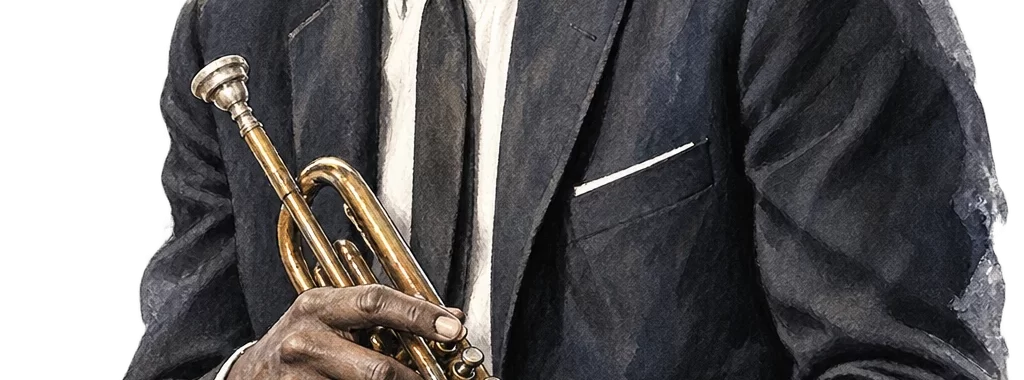
Miles Davis mit Trompete, redaktionelle Zeichnung im Stil der späten fünfziger Jahre.

Miles Davis: A History in Records

The artist dossier · Jazz

Miles Davis:
A History in Records

From the interplay of the first great quintet to the electric years: how Miles Davis kept rethinking his music, through the records and the musicians who made them.

Editorial drawing of Miles Davis holding a trumpet, in late-1950s clothing.
Miles Davis · Trumpet, around 1959. Illustration.

I want to begin with the records. With a trumpet that does not need to spell out every detail of a melody. With a bass holding a band together while the music above it changes. The individual ideas of his fellow musicians help determine what a recording becomes.

The starting points are the Miles Davis editions in my shop. Bags’ Groove and the first quintet’s recordings on Cookin’, Relaxin’, Workin’ and Steamin’ were made for Prestige. The 1958 recordings collected on Birth of the Blue, along with Kind of Blue, Someday My Prince Will Come and Seven Steps to Heaven, come from his work for Columbia. The current shop editions discussed here are released by Analogue Productions. From there, the story reaches Gil Evans, the second great quintet and the electric music. These records illuminate one another. Knowing Kind of Blue means knowing a central moment in Miles’s career. It still leaves much of his musical imagination to discover.

01 · A sound finds its direction

From bebop to a musical vision of his own

Born in 1926, Miles Davis was recording with Charlie Parker in the 1940s, at the heart of bebop’s transformation of jazz. Angular themes, rapidly changing harmony and tightly packed musical situations demanded quick responses. Within that language, Miles developed his own way of placing tension: a phrase could end with a single carefully positioned note, leaving the silence after it to change the meaning of what had just been played.

The nonet recordings of 1949 and 1950, later collected as Birth of the Cool, extended that thinking from the solo to the sound of an ensemble. French horn and tuba were among the instruments that joined trumpet and saxophones. Arrangements by Gerry Mulligan, Gil Evans, John Lewis and John Carisi turned nine instruments into a flexible fabric of voices. Low instruments carried melodies; one timbre could merge into another. For Miles, Gil Evans became much more than an orchestral arranger he would work with later. He was a partner in imagining how an individual sound might belong within something larger.1

Those early recordings provide historical context here. The shop selection checked for this article begins elsewhere. One distinction is particularly important: Birth of the Cool and Birth of the Blue are entirely different projects.

02 · Recorded in 1954 / released in 1957

Bags’ Groove: two groups, two kinds of tension

Illustration of Milt Jackson with two mallets at a vibraphone, around 1954.
Milt Jackson · Vibraphone. A participant in the December Bags’ Groove session. Illustration.

Bags’ Groove makes a good case for keeping recording dates separate from release dates. The Prestige LP appeared in 1957, but its music comes from two sessions in 1954. Rudy Van Gelder recorded both at his original studio in Hackensack. The title piece was recorded on December 24 by Miles, vibraphonist Milt Jackson, Thelonious Monk, Percy Heath and Kenny Clarke. The other pieces date from June 29, with Sonny Rollins and Horace Silver in place of Jackson and Monk.2

The vibraphone alone changes the texture. Jackson’s notes begin with a defined attack and continue to ring, while Miles shapes his lines through breath and silence. The blues does not need an elaborate structure to contain a great deal of musical activity. What matters is how long an idea is allowed to stand, and how the next musician answers it. Monk’s own solo introduces a different, more angular sense of time.

Elsewhere, Rollins’s “Airegin,” “Oleo” and “Doxy” put a tenor saxophone beside the trumpet. The two horns can sharpen a line together, then pursue quite different paths in their solos. Silver’s approach to the harmonic foundation differs from Monk’s. Heath and Clarke connect the two sessions. The album therefore documents several ways of working with the blues and the contemporary jazz repertoire, rather than one settled band on a single afternoon.

For AP edition APRJ 7109, the manufacturer credits Kevin Gray with mastering and Quality Record Pressings with manufacture. The mono recording retains a shared sound field: instruments are distinguished by timbre, articulation and musical placement, rather than an invented left-to-right stereo layout. Van Gelder’s original recording and Gray’s later work for the reissue are separate stages of production.29

Cover of the shop edition: Bags’ Groove
Bags’ Groove1 LP · 33⅓ RPM · Mono

In the shop: Bags’ Groove, Analogue Productions, mono LP.

03 · The first great quintet · 1955–1956

Five musicians making room for one another

John Coltrane, Red Garland, Paul Chambers and Philly Joe Jones formed the band whose interplay runs through the Prestige albums. Individuality here did not require everyone to remain in the foreground. Garland’s chords could provide a supple, springing foundation. Chambers kept the direction of movement clear in his bass lines. Philly Joe Jones punctuated phrases, answered them and drove the group forward. Above that rhythm section, Miles’s concise trumpet lines and Coltrane’s denser tenor playing were immediately distinct.

Editorial ensemble drawing of the Miles Davis quintet with Garland, Chambers, Davis, Coltrane and Philly Joe Jones.
The first great quintet, around 1956. Left to right: Red Garland (piano), Paul Chambers (bass), Miles Davis (trumpet), John Coltrane (tenor saxophone), Philly Joe Jones (drums). Illustration.

On May 11 and October 26, 1956, the quintet recorded enough material at Van Gelder’s studio for four albums released over the following years: Cookin’, Relaxin’, Workin’ and Steamin’. Miles’s move from Prestige to Columbia was part of the reason. His remaining commitments to Bob Weinstock’s label were fulfilled with a repertoire the musicians knew through their work together. That business context explains the concentrated recording schedule; it does not reduce the performances to contractual routine.3

Cookin’: the ballad and the fast-moving band

Cookin’, released in 1957, comes entirely from the October session. “My Funny Valentine” opens with Miles and the rhythm section; Coltrane sits out. That changes the focus. The trumpet’s breath, Garland’s responses and the quiet movement beneath the melody take on particular weight. “Airegin” poses a different challenge. Its theme calls for precision, its solos need agility, and the rhythm section must provide cohesion and propulsion at the same time.

That range is a key to the band. A ballad still moves; a fast piece still depends on choices about space. In both settings, the musicians have to decide how they will share the time. The Cookin’ mono LP and the hybrid SACD offer the same album history in different formats.4

Cover of the shop edition: Cookin’
Cookin’1 LP · 33⅓ RPM · Mono
Cover of the shop edition: Relaxin’
Relaxin’1 LP · 33⅓ RPM · Mono

For the current Cookin’ LP, APRJ 7094, Analogue Productions likewise credits Kevin Gray with cutting from analogue masters and QRP with pressing. The hybrid SACD is a separate edition. A lacquer-cutting credit cannot simply be repurposed as a technical description of an SACD; an independently supported mastering credit for that particular disc remains unresolved in this research.29

Relaxin’: ease is something a band creates

On Relaxin’, released in 1958, “If I Were a Bell” takes us straight into the group’s communication. The brief piano introduction establishes a character before the trumpet states the theme. “You’re My Everything” even retains a false start and a short exchange in the studio. Such moments bring us close to the session without making the work behind its apparent ease disappear. Garland’s accompaniment, Chambers’s bass and the drummer’s accents create the conditions in which the soloists can develop their differences.5

From my listening comparison: In my video of May 17, 2022, I compared the Analogue Productions mono edition I owned with Craft’s Small Batch release. I found the AP softer and warmer, the Craft more analytical and immediate. I described its trumpet entry as particularly forceful. I did not name an outright winner. Both had strengths, and my preference could depend on the presentation I wanted to hear that day. Those were impressions of the copies compared at the time, not a blanket judgment on every subsequent pressing.V1

The edition details give that comparison a precise reference: AP identifies Kevin Gray and manufacture at QRP for APRJ 7129. That establishes which release is being discussed. Hearing its presentation as warmer is a listening observation, which is where my own assessment begins.29

The current shop selection includes Relaxin’ on an Analogue Productions mono LP. That earlier comparison is part of my engagement with the record; the edition offered today is identified separately in the overview below.

Steamin’, Workin’ and the connection between the four albums

Steamin’ appeared in 1961, five years after the sessions. It places the expansive melody of “Surrey with the Fringe on Top” alongside the very different energy of “Salt Peanuts.” “When I Fall in Love” again shows how much a restrained trumpet line can carry. The four album titles do not describe four neatly separated musical moods. They present different selections from the same band’s work on the same two recording dates.6

Workin’ adds “It Never Entered My Mind” and “Ahmad’s Blues,” among other pieces. On the latter, Garland, Chambers and Jones perform as a trio. That moment reveals the rhythm section as a musical unit in its own right. Listening to it without trumpet and tenor helps explain how the quintet works when all five musicians return.7

Steamin’ is available as an individual shop listing. The Great Prestige Recordings combines the four familiar albums with The New Miles Davis Quintet, recorded in 1955. The current AP box contains five LPs at 33⅓ RPM. In the selection checked for this article, the box provides access to Workin’ and the earlier quintet album; no separate shop listing was found for either title.3

Steamin’, APRJ 7200, also belongs to the Kevin Gray-cut AP Prestige series pressed at QRP. For the current five-album box, AAPJ 035, AP specifies Gray at Cohearent Audio, original analogue tapes and QRP. Those details apply to this reissue of the box, rather than automatically describing every earlier version of the collection.329

Cover of the shop edition: Steamin’
Steamin’1 LP · 33⅓ RPM · Mono
Cover of the shop edition: The Great Prestige Recordings
The Great Prestige Recordings5 LPs · 33⅓ RPM · Mono

04 · Columbia · May 26, 1958

Birth of the Blue: the band before Kind of Blue

The move to a sextet first changes the front line. Cannonball Adderley’s alto saxophone adds another unmistakably individual voice beside Coltrane’s tenor. On Milestones, recorded in February and March 1958, Red Garland and Philly Joe Jones are still present. The title piece already explores a more modal organisation: longer passages in which the musicians can investigate a scale and its possibilities instead of following a rapidly changing sequence of chords.8

Milestones provides historical context here; no current main-shop listing was found for it.

The May 26 session starts from a different balance. Bill Evans is now at the piano, Jimmy Cobb at the drums. With Miles, Adderley, Coltrane and Chambers, this is the six-piece group that will shape much of Kind of Blue. They record at Columbia’s 30th Street studio in New York. The four selections are “On Green Dolphin Street,” “Fran-Dance,” “Stella by Starlight” and “Love for Sale.”9

Illustration of the six Birth of the Blue musicians in period suits with their instruments.
The sextet of the May 26, 1958 session. Left to right: Bill Evans (piano), Paul Chambers (bass), Miles Davis (trumpet), Cannonball Adderley (alto saxophone), John Coltrane (tenor saxophone), Jimmy Cobb (drums). Adderley sits out Stella by Starlight. Illustration.

This music was not unknown until 2024. Some of it appeared on Jazz Track, and listeners encountered the recordings in later collections as well. Birth of the Blue gives the material a new frame as an album in its own right. That distinction matters: it is not the rediscovery of a lost album originally issued under this title in 1958.10

“On Green Dolphin Street” makes the move between suspended accompaniment and clearly articulated swing part of its narrative. Evans can distribute chords in a way that leaves air between them. Cobb keeps the music mobile without giving every moment an emphatic accent. Miles therefore finds himself in a different setting from the one Garland and Philly Joe Jones provided. Adderley and Coltrane retain their own approaches: the alto often speaks with a strongly blues-oriented inflection, while the tenor pursues the implications of a harmonic idea.

The standards have not disappeared. They remain the shared ground on which a new balance of sound, time and accompaniment is taking shape. Hearing this record only as a waiting room for Kind of Blue would sell it short. It shows what a changed band can do with familiar material.

The production path for the 33⅓-RPM edition, AAPJ 172, is documented in some detail. According to AP, Vic Anesini at Battery Studios created a new analogue stereo master from the original three-track tapes. Matthew Lutthans then cut the lacquers at The Mastering Lab using Doug Sax’s tube-based system; QRP handled plating and pressing. For the hybrid SACD, CAPJ 172 SA, AP credits Lutthans with mastering that stereo tape to DSD. These are distinct routes from the same musical source to the finished medium. The 45-RPM release is a QRP double LP; an unambiguous engineer credit for that cut remains to be confirmed.30

From my video: On December 25, 2024, I discussed the 33⅓-RPM edition of Birth of the Blue. I particularly highlighted its dynamics, punch, clarity and detail, as well as the impact of the solos. Those were my impressions of that LP. The subsequent 45-RPM edition and the SACD were not part of that listening assessment.V2

Cover of the shop edition: Birth of the Blue
Birth of the Blue1 LP · 33⅓ RPM · Stereo

Birth of the Blue in the shop: 33⅓-RPM LP · 2 LPs at 45 RPM · hybrid SACD.

05 · Columbia · Recorded March/April 1959 · released August 17, 1959

Kind of Blue: fewer changes, more possibilities

Kind of Blue was recorded for Columbia Records and released on that label in 1959. Columbia producer Irving Townsend oversaw the sessions. The sessions of March 2 and April 22 at Columbia’s 30th Street Studio in New York alter the relationship between a framework and the freedom within it. In modal music, the next bar is not necessarily defined by a new chord. The musicians can spend longer within one tonal area. That does not relieve them of making decisions. It shifts those decisions towards melody, rhythm, tone and the tension within a phrase.11

In “So What,” the theme itself becomes a conversation between bass and ensemble. The material is concise and the harmonic design readily grasped. Yet there is no reason for two soloists to tell the same story with it. Miles offers a few clearly shaped thoughts. Coltrane builds density differently; Adderley brings another articulation and blues inflection. The group turns a limited stock of material into a broad musical field.

Bill Evans: the colour of the piano

Bill Evans is a central voice in this musical world. He plays on four of the original album’s five pieces: “So What,” “Blue in Green,” “All Blues” and “Flamenco Sketches.” His contribution reaches beyond his solos to the way he spaces the notes of a chord, shapes an accompanying figure and supports the horns with a few carefully placed sounds.1233

The introduction to “So What” draws attention to piano and bass before the familiar theme begins. In “Blue in Green,” the piano sounds between the trumpet and saxophone lines; the notes’ decay and the pauses are part of their musical effect. Evans shows how accompaniment can do more than identify the underlying harmony. It helps shape the arrival of a phrase and the way it resonates through the ensemble.

Illustration of pianist Wynton Kelly at a grand piano, around 1959.
Wynton Kelly · Piano on Freddie Freeloader. Illustration.

Wynton Kelly takes over the piano for “Freddie Freeloader.” His rhythmic, blues-rooted mobility gives that piece its own character. Having two pianists on the same record is therefore more than a footnote to the personnel list: it belongs to the album’s specific conception of sound. On “Blue in Green,” Adderley sits out, and the smaller group changes the weight of each remaining voice.12

The five pieces cannot be reduced to a single formula either. “All Blues” combines a blues structure with a triple-time feel and recurring accompaniment figures. “Flamenco Sketches” charts a course through several modal areas. “Blue in Green” follows a closer, more circular harmonic movement. The album feels coherent because of the musicians’ shared attentiveness, not because every piece uses the same construction. The familiar story that everything was simply recorded in one uninterrupted first attempt is too tidy: preliminary attempts, false starts and a complete alternate take also belong to the surviving session record.1112

What I said about the UHQR editions

In my September 2, 2022 comparison, I put the 45-RPM UHQR alongside the earlier 33⅓-RPM UHQR and the MoFi at 45 RPM. Compared with the MoFi, I found the 45-RPM UHQR more natural. With the 45-RPM UHQR, I particularly described the ease of the drums and Miles’s entrance, the spatial separation and the way the music held together. At the same time, I placed the difference between the two UHQR versions on a smaller scale than the difference from the MoFi. The more convenient side lengths of the 33⅓-RPM version were part of that decision too.V3

That is the comparison I made then. It is not a new verdict on the standard Corrected Speed edition now also offered in the shop. That standard release is not the earlier 33⅓-RPM UHQR featured in the video.

Cover of the shop edition: Kind of Blue – Corrected Speed
Kind of Blue – Corrected Speed2 LPs · 33⅓ / 45 RPM · Stereo
Cover of the shop edition: Kind of Blue – UHQR
Kind of Blue – UHQR2 LPs · 45 RPM · Stereo

Two current editions with different designs

Kind of Blue – Corrected Speed, AAPJ 8163 presents the album on its first two sides at 33⅓ RPM. Side three repeats the tracks from the original album’s first side at their original released speed, also cut for 33⅓ RPM playback. Only side four, containing the alternate take of “Flamenco Sketches,” plays at 45 RPM. Describing the whole release as a 45-RPM double LP would therefore be incorrect.13

A tape machine ran at an incorrect speed during the first recording session in 1959, so the first three pieces were originally released with altered pitch and tempo. This edition allows that historical difference to be explored. The UHQR, AUHQR 0004-45, distributes the album across two LPs playing at 45 RPM. Tape-source and manufacturing claims always belong to the specific reissue concerned and should be kept separate from the history of the music itself.13

For the standard edition, AP specifies Classic Records metal parts from Bernie Grundman’s mastering and pressing at QRP. The 45-RPM UHQR is described with Grundman’s mastering from the original three-track tapes, QRP manufacture and 200-gram Clarity Vinyl. The engineer is specifically identified; this does not in itself establish that a new cut was made in the reissue’s release year.1332

What my conversation with Chad Kassem adds

On May 5, 2021, I spoke with Chad Kassem about the then-new 33⅓-RPM Kind of Blue UHQR. He explained the work involved in its manufacture at the time, individual inspection and hand-assembled packaging. We also discussed Bernie Grundman’s work for Classic Records in the 1990s. That gives the edition’s history identifiable people and processes. I do not automatically extend Kassem’s description of the original 33⅓-RPM UHQR to the later 45-RPM manufacturing process. My 2022 listening comparison addresses another question: how the editions relate to one another in my listening room.V4

06 · A parallel path · 1957–1960

Gil Evans: the orchestra as a musical partner

Illustration of Gil Evans at a piano, around 1959.
Gil Evans · Arranger and conductor. Orchestral ideas alongside the small groups. Illustration.

The work with Gil Evans does not interrupt the development of the small groups. It runs alongside it, addressing related questions with different resources. On Miles Ahead, recorded in May 1957, Miles plays flugelhorn. Evans links the pieces into a larger sequence. The woodwinds and brass supply far more than a general backdrop: a counterline can catch the melody, a low sonority can redirect it, and a brighter instrumental grouping can change the character of a single note.14

Porgy and Bess was recorded in the summer of 1958 and released in 1959. Gershwin’s music becomes more than a set of tunes on which to take solos. Evans works with the tension between individual lines and the sound of the ensemble. Miles carries the vocal melody without words while the orchestra shapes the space around it. The relationship between arrangement and improvisation becomes as significant as the identity of the musician currently in the foreground.15

On Sketches of Spain, recorded between November 1959 and March 1960 and released that July, the process expands further. Rodrigo’s “Concierto de Aranjuez,” music by Manuel de Falla and Spanish traditional sources offer distinct starting points. In the adaptation of the “Concierto” slow movement, Miles carries a long melodic line while the instrumental colours around him change. “Saeta” and “Solea” explore other forms of call, tension and rhythmic persistence.16

These are carefully developed orchestral recordings. Their power grows out of a different working process from the concentrated Prestige dates. Placed beside one another, the projects show that Miles did not prescribe a single method. He could rely on a working band’s shared repertoire, or spend a long time developing an orchestral form with Evans. These three albums extend the story here; a current listing for them in the main shop has not been established.

07 · 1961–1963

Someday My Prince Will Come and Seven Steps to Heaven

Kind of Blue did not turn everything that followed into a new modal orthodoxy. Someday My Prince Will Come, recorded in March 1961 and released that December, again works with standards, blues and original compositions. Hank Mobley is the regular tenor saxophonist; Wynton Kelly, Paul Chambers and Jimmy Cobb form the rhythm section. John Coltrane returns for the title piece and “Teo.”17

The title track gives a seemingly familiar waltz a different way of breathing. The recurring introduction, the way the triple metre begins to move, and Miles’s phrasing open the song up for conversation. Mobley’s rounder, more relaxed tenor profile shares the recording with Coltrane’s more intense continuation. A band’s history therefore need not consist entirely of definitive departures. Former collaborators can return when a particular musical idea calls for them.

The shop edition numbered AAPJ 8456 is a single LP playing at 33⅓ RPM. It should not be confused with the separate 45-RPM edition discussed in some older descriptive material.18

For this single LP, Analogue Productions specifies Ryan K. Smith at Sterling Sound and the original analogue tape. That is a specific mastering credit distinct from those associated with some older 45-RPM releases. Edition descriptions should preserve such distinctions rather than treating every AP version of an album as interchangeable.

Cover of the shop edition: Someday My Prince Will Come
Someday My Prince Will Come1 LP · 33⅓ RPM · Stereo
Cover of the shop edition: Seven Steps to Heaven
Seven Steps to Heaven1 LP · 33⅓ RPM · Stereo

Seven Steps to Heaven takes shape in 1963, in the middle of another change. In April, Miles works in Los Angeles with Victor Feldman on piano, Frank Butler on drums and Ron Carter on bass. George Coleman belongs to the horn line-up at this point, although he sits out the slow pieces used on the original album. In May, the faster material is recorded in New York with Herbie Hancock and the seventeen-year-old Tony Williams. Carter plays in both groups. Coleman participated at both session locations but is heard only on the New York performances on the original album.19

The album lets us hear the transition. “Basin Street Blues” and “I Fall in Love Too Easily” concentrate on Miles’s shaping of melody and tone. In the title piece and “Joshua,” the rhythmic breaks become opportunities for the group to gather itself differently. Williams is more than an exceptionally fast young drummer: he can introduce an impulse that makes the whole group respond in a new way. Hancock and Carter listen and move with him.

Three members of the later second great quintet are now together, but that line-up is not complete. Wayne Shorter will not join until 1964. That makes Seven Steps to Heaven an especially revealing transitional record. The shop lists a single LP at 33⅓ RPM and a double LP at 45 RPM.19

The mastering credits differ here too. The manufacturer assigns the single LP, AAPJ 8851, to Ryan K. Smith at Sterling Sound, with QRP handling plating and pressing. The 45-RPM edition, AAPJ 8851-45, credits George Marino at Sterling Sound. The same album title and reissue label therefore do not necessarily mean the same cut.31

08 · The second great quintet · 1964–1968

A band that changes the rules while playing

With Shorter, Hancock, Carter and Williams, more than the personnel changes. The division of musical responsibilities becomes flexible. The bass need not explicitly mark every harmonic step, the piano need not fill every opening with a chord, and the drums need not maintain a single interpretation of the pulse throughout. All five musicians can shape the course of a performance without losing their collective direction.

Editorial drawing of the second Miles Davis quintet with Hancock, Carter, Davis, Shorter and Williams.
The second great quintet, around 1965. Left to right: Herbie Hancock (piano), Ron Carter (bass), Miles Davis (trumpet), Wayne Shorter (tenor saxophone), Tony Williams (drums). Illustration.

E.S.P., recorded in January 1965 and released in August, takes the band’s own compositions as its starting point. Shorter’s themes do not settle comfortably into the next expected turn. Hancock and Carter contribute material of their own. The question becomes less simply who will take the next solo, and more what the group will do with the present moment.20

Miles Smiles, recorded in October 1966 and released in 1967, makes that flexibility still more apparent. In “Footprints,” a recognisable bass figure remains while the rhythmic emphasis above it shifts. The foundation is still there; the players reveal different ways of feeling it. On several tracks Hancock reduces the familiar chordal accompaniment. The other voices must then suggest the harmonic relationship differently.21

This openness is sometimes mistaken for arbitrariness. In practice, it demands acute attention. An unexpected silence functions as a musical decision only if the others hear it. A rhythmic displacement matters because some shared sense of form remains in the band’s memory. The second quintet also prepares the ground for the electric music: a piece can develop through changing relationships between its elements.

E.S.P. and Miles Smiles extend the story; no current main-shop listing was found for either.

09 · 1968–1975

Electric sound, repetition and the studio as an instrument

Miles in the Sky, released in 1968, does not represent a sudden beginning from nothing. “Stuff” brings electric keyboard and electric bass into the music; “Paraphernalia” features George Benson on guitar. The new sources of sound change how a note can occupy space. An electric tone can sustain differently; a repeated pattern can establish a different kind of connection from a sequence of chords beneath a solo.22

For In a Silent Way, Miles assembles a larger group on February 18, 1969: Wayne Shorter, Herbie Hancock, Chick Corea, Joe Zawinul, John McLaughlin, Dave Holland and Tony Williams. Shorter plays soprano saxophone. The three keyboard players, McLaughlin’s guitar and the restrained rhythmic movement create an environment in which a brief trumpet statement can resonate for a long time. Released in July 1969, the album also takes shape through editing: Teo Macero assembles and repeats sections of the recorded material.23

This changes what interplay can mean on a record. The musicians generate events in the studio; subsequent editing helps determine the relationship between those events on the finished album. A return can be produced by playing a section again, or by reusing the same recorded passage. Improvised material becomes a composed listening sequence.

Bitches Brew carries that idea into a denser, more unsettled world. The original double album was recorded from August 19 to 21, 1969, and released in March 1970. McLaughlin’s guitar, Bennie Maupin’s bass clarinet, electric pianos, basses, drums and additional percussion can overlap. The personnel vary between pieces. It would be misleading to treat everyone credited on a later expanded CD edition as a participant on all six original album tracks.24

Illustrated montage of John McLaughlin, Miles Davis and Joe Zawinul with guitar, trumpet and electric piano.
Three musicians from the 1969 Bitches Brew sessions: John McLaughlin (guitar), Miles Davis (trumpet), Joe Zawinul (electric piano). A selection from the larger ensemble. Illustration.

The pulse becomes more physical and the forms often longer. The trumpet does not have to stay out front. It can signal a change, respond to an accumulation of sound or disappear into the overall movement. Rock, funk and electric studio practice become partners in the music. A connection to the earlier bands remains: Miles brings together musicians with strongly individual voices and looks for situations in which something can emerge that could not be fully written down beforehand.

On 1971’s A Tribute to Jack Johnson, guitar, bass and a more direct rhythmic attack establish another balance. The reference to the Black heavyweight boxing champion also gives the project social weight: self-determination and freedom are part of its subject. On the Corner, from 1972, works more extensively with overlapping patterns, repetition and layers of sound. Paul Buckmaster’s suggestions and Miles’s engagement with Stockhausen belong to this context. By the 1975 concert recordings Agharta and Pangaea, groove, density and collective energy can sustain musical form over long stretches.2526

These records broaden the musical story. No current main-shop listing was found for them in this check.

10 · New ways of making records

The voice remains; its surroundings change

Miles returns in 1981 after several years away. His collaboration with Marcus Miller becomes particularly significant during the 1980s. Tutu, released in 1986, sets the trumpet within a precisely constructed environment of bass, programmed rhythms, synthesizers and other instruments. Miller builds that environment around Miles’s voice. It is a different kind of collaboration from the first quintet’s immediate exchange, but it again seeks the right relationship between the trumpet and the music surrounding it.27

Even near the end of his career, that relationship remains open. On Doo-Bop, Miles works with hip-hop producer Easy Mo Bee. He dies on September 28, 1991, before the project is finished; the album appears in 1992. Its combination of trumpet, samples and beats offers no reassuring full stop to a completed body of work. It shows a musician still interested in working with the present.28

Tutu and Doo-Bop likewise provide historical context outside the verified main-shop selection.

A path through the records

The sequence of this dossier follows the changes in the music. The focus shifts from record to record: the contrasting accompanists on Bags’ Groove; the communication of an established band on the Prestige albums; the new balance of the sextet on Birth of the Blue. Kind of Blue reveals what a more open harmonic framework can make possible. Someday My Prince Will Come and Seven Steps to Heaven then show how little of this development can be contained within one style.

From there, Gil Evans, the second quintet and the electric recordings open further perspectives. The constant is not a particular line-up, recording technique or unchanging sound. It is the continuing effort to place the trumpet in a different musical situation. That is why following Miles Davis across several records is so rewarding.

Continue with the videos

Miles Davis on 45 RPM Audiophile

These four videos bring together my listening comparisons and my conversation with Chad Kassem. The Relaxin’ comparison weighs two distinct presentations; the Birth of the Blue video concerns the 2024 single LP. The Kind of Blue comparison dates from 2022, while Kassem discusses the earlier UHQR manufacturing process in our 2021 conversation. The dates and editions matter when placing these observations beside today’s shop selection.

These links start at the relevant passages. Listening impressions refer to the editions discussed in each original video.

The shop editions discussed

Which edition is which?

Shop check: September 6, 2026. Fourteen editions: eleven in stock and three available to order. See each product page for current prices, availability and delivery information.

Cover: Bags’ Groove

Bags’ Groove

1 LP · 33⅓ RPM · Mono
Recordings: Prestige
Edition: Analogue Productions · APRJ 7109

Mastering: Kevin Gray

In our own warehouse

58,00 €incl. VATView edition →
Cover: Cookin’

Cookin’

1 LP · 33⅓ RPM · Mono
Recordings: Prestige
Edition: Analogue Productions · APRJ 7094

Mastering: Kevin Gray

Special order · see product page for delivery information

58,00 €incl. VATView edition →
Cover: Cookin’

Cookin’

Hybrid SACD · Mono
Recordings: Prestige
Edition: Analogue Productions · CPRJ 7094 SA

Mastering: Credit to be confirmed

Special order · see product page for delivery information

44,00 €incl. VATView edition →
Cover: Relaxin’

Relaxin’

1 LP · 33⅓ RPM · Mono
Recordings: Prestige
Edition: Analogue Productions · APRJ 7129

Mastering: Kevin Gray

In our own warehouse

58,00 €incl. VATView edition →
Cover: Steamin’

Steamin’

1 LP · 33⅓ RPM · Mono
Recordings: Prestige
Edition: Analogue Productions · APRJ 7200

Mastering: Kevin Gray

In our own warehouse

58,00 €incl. VATView edition →
Cover: Birth of the Blue

Birth of the Blue

1 LP · 33⅓ RPM · Stereo
Recordings: Columbia Records
Edition: Analogue Productions · AAPJ 172

Mastering: Matthew Lutthans · The Mastering Lab

In our own warehouse

54,00 €incl. VATView edition →
Cover: Birth of the Blue

Birth of the Blue

2 LPs · 45 RPM · Stereo
Recordings: Columbia Records
Edition: Analogue Productions · AAPJ 172-45

Mastering: Credit to be confirmed

In our own warehouse

82,00 €incl. VATView edition →
Cover: Birth of the Blue

Birth of the Blue

Hybrid SACD · Stereo
Recordings: Columbia Records
Edition: Analogue Productions · CAPJ 172 SA

Mastering: Matthew Lutthans · The Mastering Lab

In our own warehouse

44,00 €incl. VATView edition →
Cover: Kind of Blue – Corrected Speed

Kind of Blue – Corrected Speed

2 LPs · 33⅓ / 45 RPM · Stereo
Recordings: Columbia Records
Edition: Analogue Productions · AAPJ 8163

Mastering: Bernie Grundman · Classic Records parts

In our own warehouse

82,00 €incl. VATView edition →
Cover: Kind of Blue – UHQR

Kind of Blue – UHQR

2 LPs · 45 RPM · Stereo
Recordings: Columbia Records
Edition: Analogue Productions · AUHQR 0004-45

Mastering: Bernie Grundman

In our own warehouse

198,00 €incl. VATView edition →
Cover: Someday My Prince Will Come

Someday My Prince Will Come

1 LP · 33⅓ RPM · Stereo
Recordings: Columbia Records
Edition: Analogue Productions · AAPJ 8456

Mastering: Ryan K. Smith · Sterling Sound

Special order · see product page for delivery information

58,00 €incl. VATView edition →
Cover: Seven Steps to Heaven

Seven Steps to Heaven

1 LP · 33⅓ RPM · Stereo
Recordings: Columbia Records
Edition: Analogue Productions · AAPJ 8851

Mastering: Ryan K. Smith · Sterling Sound

In our own warehouse

58,00 €incl. VATView edition →
Cover: Seven Steps to Heaven

Seven Steps to Heaven

2 LPs · 45 RPM · Stereo
Recordings: Columbia Records
Edition: Analogue Productions · AAPJ 8851-45

Mastering: George Marino · Sterling Sound

In our own warehouse

82,00 €incl. VATView edition →

The covers are unchanged files from the shop media library. Where details within a product page conflicted, the format was checked against the manufacturer; unresolved credits have not been filled in.

Sources and video references

The article is independently written. The sources below support the factual checks; manufacturer claims are identified as such. Checked September 2, 2026.

  1. Birth of the Cool · Universal Music; Blue Note history; sessions: Source 1 · Source 2 · Source 3
  2. Bags’ Groove · Album / Session discography: Source 1 · Source 2 · Source 3
  3. The Great Prestige Recordings · AAPJ 035: Edition in our shop
  4. Cookin’ · Miles Davis archive: Source 1
  5. Relaxin’ · Miles Davis archive: Source 1
  6. Steamin’ · Miles Davis archive: Source 1
  7. Workin’ · Miles Davis archive: Source 1
  8. Milestones · Miles Davis archive: Source 1
  9. May 26, 1958 · Session discography: Source 1
  10. Birth of the Blue · WRTI, Nate Chinen, 13.11.2024: Source 1
  11. Kind of Blue · Original album / Legacy sessions / Irving Townsend: Source 1 · Source 2 · Source 3
  12. Kind of Blue · Session personnel / takes: Source 1
  13. Kind of Blue – Corrected Speed · AAPJ 8163: Edition in our shop
  14. Miles Ahead · Miles Davis archive: Source 1
  15. Porgy and Bess · Miles Davis archive: Source 1
  16. Sketches of Spain · Miles Davis archive: Source 1
  17. Someday My Prince Will Come · Miles Davis archive: Source 1
  18. Someday My Prince Will Come · AAPJ 8456: Edition in our shop
  19. Seven Steps to Heaven · Album / Session discography / Tony Williams: Source 1 · Source 2 · Source 3
  20. E.S.P. · Miles Davis archive: Source 1
  21. Miles Smiles · Miles Davis archive: Source 1
  22. Miles in the Sky · Miles Davis archive: Source 1
  23. In a Silent Way · Miles Davis archive / Session discography: Source 1 · Source 2
  24. Bitches Brew · Original album / Session discography: Source 1 · Source 2
  25. A Tribute to Jack Johnson · Miles Davis archive: Source 1
  26. On the Corner; Agharta; Pangaea · Miles Davis archive: Source 1 · Source 2 · Source 3 · Source 4 · Source 5
  27. Return in 1981 / Tutu · Miles Davis archive: Source 1 · Source 2
  28. Doo-Bop · Miles Davis archive: Source 1
  29. AP Prestige Mono Series · Edition credits: Edition in our shop · Edition in our shop · Edition reference · Edition reference
  30. Birth of the Blue · LP / SACD / 45 RPM credits: Edition in our shop · Edition in our shop · Edition in our shop
  31. Seven Steps to Heaven · 33⅓ / 45 RPM credits: Edition in our shop · Edition in our shop
  32. Kind of Blue · AUHQR 0004-45: Edition in our shop
  33. Bill Evans · Miles Davis archive: Source 1
Michael im Hörraum mit seinen sieben ausgewählten Platten

When Rock Broke Its Boundaries: Seven European Albums from Psychedelia to Zeuhl

From the Listening Room · European Rock · 1968–1975

When Rock Broke Its Boundaries

Seven records, seven routes from psychedelia through Krautrock and jazz rock to Magma’s Zeuhl — and the story of a continent that found musical languages of its own.

Michael in his listening room with the seven selected records
Seven records from my listening room. The images come from the English video.
19686970717273741975

Seven years were enough for the familiar rock song to change almost beyond recognition in Europe. The journey runs from a Saarland school band through London’s underground and The Hague to Berlin’s Quartier Latin and the Taverne de l’Olympia in Paris. It ends not in a genre box, but in seven very different answers to one question: how far can rock travel without losing its inner force?

In the video, I present the exact copies that were in my listening room. In this article, I place my personal impressions inside their wider historical context. The sound judgements are my own observations; dates, line-ups and production details have been researched separately.

Watch the English video

A definitive first pressing cannot be identified from the cover alone. Where complete label and runout photographs are missing, the exact variant deliberately remains open.

01 · 1968 · Saarland, Germany

The Blackbirds
No Destination

Editorial cut-out illustration of the Blackbirds as a four-piece with Hammond organ, bass, guitar and drums
The Blackbirds — an editorial band illustration in the spirit of the late 1960s.
Michael presents the Blackbirds’ No Destination
The Saga copy shown in the video.

The journey begins in Püttlingen. The Blackbirds grew out of a school band and recorded No Destination in 1968 at Horst Jankowski’s studio in Stuttgart. That constellation says much about the period: a young regional group was moving beyond beat and rhythm & blues, yet initially found no suitable home for its debut in Germany. The LP appeared on the British Saga label — an unusual bridge between the Saarland scene and the British record market.

Cut-out illustration of tape machines, a mixing desk and the Blackbirds’ route from Püttlingen to Stuttgart
From Püttlingen to Stuttgart — a regional origin and an unusual British release.

Musically, No Destination still has one foot in compact songcraft. Yet Hammond organ, hovering harmonies and abrupt shifts of atmosphere repeatedly pull the music beyond beat. This is not yet the expansive Krautrock of the early 1970s. It is the moment immediately before it: a pop song can suddenly tilt, shimmer, unsettle and open into a different state of mind.

The high voices can initially sound oddly sweet. That contrast is precisely what makes the record interesting. Darker, more searching music works beneath the surface; the Hammond is not merely colour but gives many passages their real identity.

My Listening Impression

For me, this record was “a genuine revelation”. My starting points are the title track and Something Different. What matters is not the retrospective Krautrock label, but the audible movement towards that language — and my astonishment that the album is not far better known.

Pressing note: The British Saga copy, catalogue number FID 2113, is consistent in date and design with the debut. Definitive identification requires both labels and the complete runouts.

02 · 1969 · London Underground

Edgar Broughton Band
Wasa Wasa

Editorial cut-out illustration of the Edgar Broughton Band as a forceful stage trio
Edgar Broughton Band — the raw energy of a trio under extreme voltage.
Michael presents the Edgar Broughton Band’s Wasa Wasa
An early German Harvest copy in the listening room.

One year later, freedom no longer sounds weightless but physical. Wasa Wasa is electric blues placed under excessive voltage: heavy riffs, a tugging bass, drums with no polite distance and Edgar Broughton’s rough voice working through the music.

The band had moved from Warwick to Notting Hill, directly into London’s underground milieu. Through Blackhill Enterprises, the organisation around the early Pink Floyd, they reached EMI’s new Harvest label. Evil / Death of an Electric Citizen became the label’s first single in 1969. Producer Peter Jenner gave the band unusual freedom by their own account. You can hear it: this debut does not introduce itself cautiously; it immediately tests the limits of the amplifiers and the conventional song form.

On side two, Dawn Crept Away stretches to almost fourteen minutes. Its length is not progressive-rock ornament but a consequence. A riff needs time to bite; tension grows from repetition and the feeling that the music might disintegrate at any moment.

My Listening Impression

What I hear is “psychedelic blues rock at its very best”. I love how a strong central idea develops across a long span. Broughton’s untamed voice and the trio’s physical force make this an absolute hammer of a record for me.

Victor Unitt leads directly from here to the Pretty Things. Europe’s underground did not consist of seven isolated islands, but of a mobile network of musicians, producers and labels.

Pressing note: The video shows the early German Harvest edition 1C 062-04 083. Whether it is precisely the first German variant must be established from label details and runouts.

03 · 1969/70 · The Studio as Laboratory

Clark-Hutchinson
A=MH²

Editorial cut-out illustration of Andy Clark and Mick Hutchinson with organ, guitar, flute and sitar
Clark-Hutchinson — two multi-instrumentalists between British blues and Indian scales.
Michael presents Clark-Hutchinson’s A=MH²
The 1975 German Nova reissue.

With Clark-Hutchinson, the conventional rock band almost disappears. Andy Clark and Mick Hutchinson played most of the instruments themselves. According to the documented band history, they had only two twelve-hour studio sessions for A=MH². From that concentration came a highly individual meeting of blues, jazz and non-European scales.

Cut-out illustration with flute, organ, Indian percussion and tape machine for Clark-Hutchinson
Flute, organ and Indian percussion: the studio becomes a musical laboratory.

The titles already point the way: Improvisation on a Modal Scale and Improvisation on an Indian Scale. Guitar, organ, flute, sitar and percussion are not exotic decoration added to a rock framework. They determine how the music moves. Motifs are circled; a tonal centre may matter more than a chorus.

Despite its open forms, the album is not formless. The improvisation has direction and tension. Clark and Hutchinson allow passages to grow, compress them, withdraw energy and open new spaces. The personnel story also continues: both had previously played in Vamp, the short-lived group formed by former Pretty Things drummer Viv Prince.

My Listening Impression

I experience A=MH² as an “instrumental psychedelic journey” that is almost impossible to compare with any other record. Indian influences, freely evolving structures and two multi-instrumentalists effectively replacing an entire band: for me, it is unique.

Pressing note: The album was recorded in 1969 and appeared around the turn of 1969/70. My copy is the 1975 German Nova reissue, probably 6.22426 AO or 6.22426 AJ — not a British first pressing. The suffix remains open.

04 · 1970 · City and Country

The Pretty Things
Parachute

Editorial cut-out illustration of the Pretty Things as a five-piece with Phil May at the centre
The Pretty Things — the line-up around Phil May during the Parachute period.
Michael presents the Pretty Things’ Parachute
The German Harvest edition from the year of release.

Parachute is an album about carrying on. After S.F. Sorrow — later celebrated as a landmark but not the success the band had hoped for at the time — and Dick Taylor’s departure, the Pretty Things could have collapsed. Instead, Phil May and Wally Waller continued writing. Norman Smith returned as producer, and Victor Unitt arrived from the Edgar Broughton Band circle.

The record does not tell a linear story, but it has a clear internal drama. Waller described side one as a view of the city; side two circles around someone unable to decide between city and country. “Escape to the country” is therefore too simple. Parachute is about tension, not a completed decision.

Cut-out illustration of the contrast between the nocturnal city and open country in Parachute
City and country remain opposites — and parts of the same record.

On side one, hard guitars, urban anxiety and darker images become compressed. On side two, the horizon widens. Harmonies and pastoral moments open the music without resolving its uncertainty. The close voices may recall the Beatles, yet the Pretty Things sound less flawless and therefore more vulnerable.

My Listening Impression

I experience side one as darker, more aggressive and immediate, while side two feels more beautiful, open and free. That contrast makes Parachute a major discovery for me. My points of entry are Cries from the Midnight Circus, Grass and the title track.

Pressing note: The German Harvest copy shown, 1C 062-04 406, dates from the year of release. Identifying the exact early variant requires complete label and runout information.

05 · 1970 · The Hague

Earth and Fire
Earth and Fire

Editorial cut-out illustration of Earth and Fire with Jerney Kaagman at the centre
Earth and Fire — Jerney Kaagman at the centre of a band between pop melody and progressive rock.
Michael presents Earth and Fire
Polydor 2441 011 in its elaborate matchbook sleeve.

In the same year, a different route opened in the Netherlands. Earth and Fire did not begin with extended improvisation but with the song. Their debut combines memorable singles with psychedelic colour and the first signs of progressive form. Here, progressive music does not emerge because every piece becomes longer and more difficult. It grows out of exceptionally good pop.

Cut-out illustration with matchbook, flame, keyboard and colourful forms for Earth and Fire
The matchbook sleeve becomes the starting point for an album full of pop colour.

Producer Freddy Haayen recorded the album at G.T.B. Studios in The Hague; it was released in September 1970. Seasons, written by Golden Earring’s George Kooymans, had already been a success. Ruby Is the One and Wild and Exciting show how confidently the band connects melody, organ, guitars and dynamic changes.

Jerney Kaagman stands at the centre. Her voice is clear, powerful and melodic, but never bland. It can shine above the arrangement and then lead directly into more dramatic passages. The object tells part of the story too: Ron Seubert designed the early Dutch edition as a matchbook, with photography by Leo van der Noort. Other countries received different sleeves, including a Roger Dean cover in Britain.

My Listening Impression

For me, this debut is “fantastic”: extremely melodic, dynamic, exciting and beautiful at the same time. I recommend not just one track but the entire album, precisely because short and accessible moments open so naturally into larger dramatic arcs.

Jerney Kaagman died on 31 July 2026 at the age of 79. Her debut with Earth and Fire remains powerful evidence of how decisively one voice can shape the identity of an entire band.

Pressing note: The matchbook sleeve and Polydor catalogue number 2441 011 are consistent with an early Dutch edition from 1970. The runouts remain decisive for final identification.

06 · 1975 · Berlin

Kraan
Live

Editorial cut-out illustration of Kraan with bass, guitar, saxophone and drums
Kraan — four musicians operating as one mobile system.
Michael presents Kraan Live
The British Gull edition of the double album.

Five years later, the cautious opening of the song has become a complete collective. On Live, Kraan need no fixed hierarchy between soloist and accompaniment. Hellmut Hattler’s bass can lead a piece; Peter Wolbrandt’s guitar can move into texture; Johannes Pappert’s saxophone can tear open a new direction, while Jan Fride keeps the rhythm mobile.

The performances were recorded in October 1974 at Berlin’s Quartier Latin and released as a double album in 1975. Conny Plank captured the concerts. His work preserves the band’s mobility: the instruments occupy the room clearly enough for their individual lines to be followed, yet the recording never domesticates the risk of the moment.

Cut-out illustration of the live recording equipment at Berlin’s Quartier Latin for Kraan Live
Quartier Latin, Berlin: stage and recording technology become part of the music.

Kraan combine jazz, rock, funk and Asian influences without turning them into an academic demonstration. Nam Nam drives, Holiday am Marterhorn shimmers and branches out, while Kraan Arabia creates a pull in which groove and melodic imagination do not work against one another. The long sides are the form this band requires.

My Listening Impression

I hear jazz rock, fusion and Krautrock in a state of complete joy in playing. My high point is Kraan Arabia: the bass tells its own story, while guitar, saxophone and drums respond like a single organism. For me, this double album is simply magnificent.

Pressing note: The video shows the 1975 British Gull edition GUD 2001/2. The album first appeared in Germany on Spiegelei; Gull issued the British edition. Calling it a “British first pressing” would go too far without comparing labels and runouts.

07 · 1975 · Paris

Magma
Magma Live / Hhaï

Editorial cut-out illustration of Magma as a large live ensemble with Christian Vander on drums
Magma — Christian Vander’s large Zeuhl ensemble as rhythmic and vocal architecture.
Michael presents Magma Live
The 1975 French Utopia double LP.

At the end stands music that resists the usual language of progressive rock. Christian Vander conceived Magma not simply as a band but as a world of its own. That world includes the invented Kobaïan language and Zeuhl — Vander’s name for music understood as a vibrating spiritual force.

Zeuhl is neither a branch of Krautrock nor free improvisation with a choir. Its forms are composed and often tightly organised. Repeating bass and drum figures build pressure; voices appear as a collective; themes return in altered form. Improvised eruptions exist, but within an architecture of repetition, escalation and physical impact.

Cut-out illustration of a Paris stage with microphones, tape machine and violin for Magma Live
Paris 1975: choir, violin and rhythm transform the concert hall into a world of its own.

After the major line-up upheaval of 1974, Vander assembled a new formation. Magma’s first live album was recorded at the Taverne de l’Olympia in Paris from 1 to 5 June 1975. Older pieces received new arrangements; Hhaï and Lïhns were introduced. Didier Lockwood’s violin cuts through the dense rhythms, answers the voices and gives the line-up a nervous, luminous energy.

My Listening Impression

I hear a rhythm-driven, dense and — in the best sense — chaotic total experience. What fascinates me is that the recording never collapses, even at its most intense. Anyone looking for an entry point can begin with Hhaï; anyone wanting to understand Magma should follow the complete arc.

Pressing note: The French Utopia double LP CYL2-1245 is consistent with an early 1975 edition. The exact variant remains open without complete runout documentation.

1975 · The Stage Becomes an Instrument

Two Live Albums. Two Answers.

Kraan and Magma released double live albums because, for both bands, the stage was more than a place to reproduce finished studio pieces. It was where the music found its actual form.

Kraan sound elastic: a bass line opens a door, the guitar walks through it, the saxophone turns away, the drums shift the ground. Magma sound inevitable: rhythmic cells return, voices become architecture, escalation becomes ritual.

In 1968, a Hammond organ could tip a beat song in a new direction. By 1975, conventional ideas of the song were barely sufficient to describe Kraan’s collective groove or Magma’s Zeuhl.

The Answer

Not Seven Islands, but a European Network of Sound

Conventional rock history likes to sort by country: British underground here, Dutch progressive rock there, German Krautrock and French Zeuhl in separate drawers. These seven records tell a more vivid story.

Labels such as Harvest created space for music that had little room in normal pop programming. Producers including Peter Jenner, Norman Smith, Freddy Haayen and Conny Plank captured very different ideas of freedom on tape. Musicians moved between groups: Victor Unitt connects the Edgar Broughton Band with the Pretty Things; Viv Prince leads from their earlier history to Vamp and Clark-Hutchinson. George Kooymans and Freddy Haayen connect Earth and Fire to the Dutch network around Golden Earring.

The connection is therefore not a genre term but an attitude: rock may change as long as the music retains its inner necessity. With the Blackbirds, a psychedelic crack opens inside beat. With Edgar Broughton, blues is pushed into overload. With Clark-Hutchinson, the studio becomes a laboratory. With the Pretty Things, it is the tension between city and country. With Earth and Fire, pop opens outward. With Kraan, the collective becomes equal. With Magma, an entirely new musical world appears.

These albums are not seven curiosities at the edge of history. They are seven pieces of evidence that European rock between 1968 and 1975 discovered its own rules, its own colours — and finally even its own languages.

More stories about music, pressings and listening can be found in the English shop magazine, From the Listening Room.

Continue listening with me in the video

Collector’s note: Catalogue number, country and cover can help narrow down an edition. A definitive first-pressing identification also requires both record labels as well as the matrix and complete runouts. Prices on dealer cards or old stickers are not reliable indications of current market value.

Sources and Further Reading

Michael 45 und die Frage: Besser als die Originale?

The Who at 45 RPM: My Generation and Live at Leeds Compared

Magazine · From the Listening Room · Pressing Comparison

The Who at 45 RPM:
My Generation and Live at Leeds Compared

Two albums. Two entirely different kinds of gain.

Analogue Productions has cut My Generation and Live at Leeds at 45 RPM. With My Generation it feels as though a heavy curtain were torn out of the room. Live at Leeds changes less radically, but it audibly gains width, depth and the atmosphere of the concert hall.

Michael 45 holding both 45 RPM editions beside the question whether they beat the originals
Two 45 RPM editions in one listening session: a studio debut from 1965 and a live milestone from 1970.

Five years apart, The Who built two completely different sound worlds. My Generation arrives compact, mono and confrontational – a clenched blow from the centre. Live at Leeds lives from the stage, from air, depth and movement. That is exactly why the new 45 RPM cut changes the two albums in such different ways.

“Not just as if a curtain were drawn back. As if a huge, thick curtain were pulled away.”Michael on My Generation

A simple verdict like “better than the original” therefore falls short. One album gains above all in immediate impact – in pressure, contour and forward drive. The other gains the room around the band, and with it a stronger sense of the evening itself.

How two sound worlds came about

The difference begins long before the groove. My Generation was made in 1965 in three concentrated studio stints in London: a young quartet, tightly bundled in mono, with all its energy pointing forward. Five years later Live at Leeds captured an experienced band in a concert hall – not as a clean studio picture, but as an event with scale, air and physical movement.

On-screen caption: My Generation, the British debut of December 1965On-screen caption: three recording stints in 1965On-screen caption: Mod becomes a movement
My Generation in three stages: the British debut, the three recording blocks at IBC and the four-piece line-up.

My Generation: When mono lands the way it should

The Who in 1965: Roger Daltrey, Pete Townshend, John Entwistle and Keith Moon
The young quartet of 1965: Daltrey, Townshend, Entwistle and Moon.

My Generation was released in the United Kingdom on 3 December 1965. It was the debut album by The Who, issued by Brunswick under the catalogue number LAT 8616, and it reached number five in the British charts. Shel Talmy produced, Glyn Johns was the engineer, Nicky Hopkins played piano.

The recordings did not come out of one continuous session. The band returned to IBC Studios in London in April, October and November 1965. Those three stints explain part of the album’s restless energy: it feels urgent rather than polished.

The format matters just as much. The songs did not appear in stereo until 2002. Mono is therefore not a nostalgic extra here, but the form in which this album was made. The later American edition The Who Sings My Generation also changed the cover and the running order. Analogue Productions follows the British album.

The new 45 RPM cut was made by Chris Bellman at Bernie Grundman Mastering. His task was not to turn a 1965 recording into a modern high-gloss production, but to release its energy without smoothing the raw mono core.

What I heard with My Generation

I compared the 45 RPM edition of My Generation with a German first pressing and an early German reissue from 1981. I do not own a British first pressing – an important limitation, because the new pressing is based on that edition.

Despite that limitation the result was astonishing. The German first pressing sounded as though heavy fabric lay between the band and the listener. The 45 RPM cut pulls that fabric away. The mono image stays closed, but it now steps out of the centre with greater contour and force. Dynamic accents shoot forward more directly; the music feels less restrained, more physical and more determined.

Michael 45 during the My Generation listening comparison
During the listening comparison the change was anything but subtle. The 1981 German reissue moved closer, but stayed clearly behind the 45 RPM edition.

The title track shows particularly well what this is about. John Entwistle’s bass solo has the attack it needs and a clearer contour; it does not sit softly in the room, it asserts itself. And yet the recording remains unmistakably rock and rhythm & blues from 1965. This is not “audiophile” in the sense of a spacious old jazz recording – and it is not meant to be. The achievement of the new cut is to give the original recording more breath and more power without smoothing its raw core.

The same comparison also exists as a video on my channel 45 RPM Audiophile: The Who at 45 RPM: My Generation and Live at Leeds compared on video. What follows here stays with the second album.

On-screen caption: Live at Leeds, the concert of 14 February 1970On-screen caption: one concert, six tracksOn-screen caption: Leeds was the backup recording
Live at Leeds in three stages: the evening in Leeds, the original LP condensed to six tracks, and the tape fault that made Leeds the album.

Live at Leeds: Further into the room

The Who on stage around 1970
The Who around 1970 – rougher, louder and built for the stage.

Live at Leeds was recorded on 14 February 1970 in the Refectory of the University of Leeds and released in May. The original LP condensed a far longer concert into six tracks: Young Man Blues, Substitute, Summertime Blues, Shakin’ All Over, My Generation and Magic Bus.

The packaging was meant to look like a bootleg. The plain cardboard sleeve carried block lettering; inside lay twelve facsimiles – among them photographs, lyrics, a receipt for a smoke bomb, a rejection letter from EMI and the Woodstock contract.

That was exactly my first question after the Analogue Productions edition was announced: would a regular reissue really include all those inserts? It does. The documents come together in a small bag. That matters, because they are not decoration but part of this album’s identity.

What I heard with Live at Leeds

This comparison was harder. I put the 45 RPM edition of Live at Leeds against a British and a German first pressing. The British original already sounds better and more coherent than the German one – so the new edition faced strong competition.

“The difference is smaller than with My Generation. In soundstage and depth it stays clear all the same.”Michael on Live at Leeds

Here the improvement feels less like a curtain suddenly pulled away. Instead the room becomes more believable. The band does not simply stand larger in front of the listener; it gains depth behind it. Air opens up between the concentrated energy of the musicians and the hall. The stage layers itself from front to back, the dynamics let the performance breathe more freely, and a very good live recording turns more strongly into the feeling of actually sitting in the room. My personal highlight is the 14-minute-46-second My Generation, which now gets a side of its own.

Michael holding the Live at Leeds sleeve in its bootleg style
The deliberately plain bootleg-style sleeve. The Analogue Productions edition keeps the facsimile inserts too.

Why Leeds became the album

Leeds was not the first choice. The band also recorded a concert in Hull, and Hull was the one meant for release. But John Entwistle’s bass was missing from the first reel. The problem could not be repaired at the time, so the safety recording from Leeds became the album. Hull was finally issued in 2012; the missing bass was patched in from the Leeds tapes.

The open question about Tommy can be answered.

That evening the band played the whole of Tommy, although none of it appeared on the original six-track LP. The complete Tommy performance was released in 2001 on the two-disc deluxe edition, where it fills the second disc.

Which reissue changes the listening more?

My Generation delivers the far more dramatic transformation. Against the German pressings available to me, the new cut changes the physical effect of the record: clearer, more direct and considerably more powerful. The music remains a compact mono block – only now that block stands in the room without a veil.

Live at Leeds starts from an already strong British first pressing, so the gain in sound is less spectacular. Small it is not. Its value lies in scale, in depth and in the feeling of stepping into the concert. One 45 RPM edition frees the energy of a studio recording, the other opens the room of a stage – which is exactly why both belong in one comparison.

The editions from this comparison

If you would like to follow the comparison yourself, here are the two editions discussed.

The Who – My Generation

Analogue Productions · APP 249-45 · 45 RPM · Mono · in stock

The Who – Live at Leeds

Analogue Productions · APP 253-45 · 45 RPM · in stock

More The Who UHQR editions in the shop

Tommy UHQRAUHQR 0028 · 33 1/3 RPM · 198 € · limited to 3,500 copies · sold out

Who’s Next UHQRAUHQR 0029 · 33 1/3 RPM · 172 € · limited to 7,500 copies · pre-order

Which The Who edition from Analogue Productions is right for you – including Tommy and Who’s Next as limited UHQR editions – is covered in our customer question The Who on Analogue Productions: which edition?

Bob Marley – Burnin’ und Natty Dread als UHQR im Hörvergleich

Bob Marley: Burnin’ and Natty Dread on UHQR


Magazine · Reggae · From the listening room

Bob Marley: Burnin’ and Natty Dread on UHQR

The sound of a turning point.

Two albums released barely a year apart, yet an entire band history lies between them. These two UHQR editions reveal how the classic Wailers trio became a new musical formation.

Burnin’ is the final major studio statement by the classic Wailers trio: Bob Marley, Peter Tosh and Bunny Wailer. Tosh and Bunny are gone by Natty Dread. The name on the cover changes, new voices arrive, and Bob Marley moves unmistakably to the center.

Only the deep pulse of Aston and Carlton Barrett holds the two worlds together.

That is precisely why these UHQR editions are more than two lavishly pressed reggae classics. They let us hear a group becoming a new formation without surrendering its roots.

Bob Marley during the transition from Burnin’ to Natty Dread

1973: One band speaking in three voices

The story begins long before the international breakthrough. In 1963, singer and mentor Joe Higgs brought Bob Marley and Bunny Livingston—later Bunny Wailer—together with Peter McIntosh, the future Peter Tosh, in Trench Town. American soul groups such as Curtis Mayfield and the Impressions shaped their early harmonies. From that schooling came a language of their own: Jamaican offbeat, tightly interlocked voices and lyrics that did not merely observe life in Kingston but spoke from within it.

Lee Scratch Perry at the mixing desk, producer of the pivotal Wailers sessions around 1970
Lee “Scratch” PerryProducer of the pivotal Wailers sessions around 1970 and the link to the Barrett brothers.

A second decisive element arrived in 1970. Producer Lee “Scratch” Perry brought the Wailers together with Aston “Family Man” Barrett on bass and Carlton “Carly” Barrett on drums. From then on, the music had its center of gravity. The bass does not simply march beneath the songs; it pulls them downward, gives them weight and still leaves air between the beats. Carlton’s drums answer with a spring-loaded precision that can sound forceful and relaxed at the same time.

Bob Marley and The Wailers – Burnin’ UHQR, AUHQR 0025
Burnin’ · UHQRThe classic Wailers trio’s final great studio statement.

After Catch a Fire, the Wailers recorded their second Island album in 1973. The basic tracks for Burnin’ were laid down at Harry J’s studio in Kingston, then mixed and augmented in London, partly between tour dates. It sounds like a band that has grown together over years and is still under tension.

“Get Up, Stand Up” opens not like a pop song but like a collective call. The voices support and challenge one another until they become a position. “I Shot the Sheriff” carries its world-famous melody over an arrangement far less straightforward than the chorus suggests: the guitar stays spare, the bass insistent, the story morally unsettled. “Burnin’ and Lootin’” slows the pace and darkens the room. Every beat feels heavier because so little is wasted.

The group’s past is present throughout the album. “Put It On,” “Small Axe” and “Duppy Conqueror” revisit earlier Wailers songs. Bunny Wailer’s “Pass It On” reaches back even further, to before the Wailers were formed. Burnin’ is therefore no tidy new beginning for a Western rock audience. It is a concentration of more than ten years of shared musical experience, pressed into ten tracks.

Three voices, two chapters

Peter Tosh, co-founder and singer of the classic Wailers trio
Peter ToshCo-founder, singer and guitarist
Bob Marley, singer and principal songwriter of the classic Wailers trio
Bob MarleyCo-founder, singer, guitarist and principal songwriter
Bunny Wailer, co-founder and singer of the classic Wailers trio
Bunny WailerCo-founder, singer and percussionist

On Burnin’, their voices still interlock. Marley often leads the song, Tosh brings edge and resistance, while Bunny Wailer supplies a more agile, brighter color. This is no anonymous backing choir. These are three personalities audibly rooted in the same history—and already strong enough to tell stories of their own.

The departures were no footnote

The split cannot honestly be reduced to a single dispute. What is certain is that Bunny Wailer declined to join the US leg of the Catch a Fire tour, with Joe Higgs taking his place. Tensions within the group grew during the making of Burnin’. Peter Tosh and Bunny Wailer increasingly saw their songs and their place in the trio eclipsed by the international marketing of Bob Marley. Both left in 1974 and began solo careers.

The change is visible on the next cover. “The Wailers” becomes “Bob Marley & The Wailers.” What looks like a minor typographic shift actually names a new musical order.

Peter Tosh and Bunny Wailer did not disappear from reggae history. Quite the opposite: their later solo albums reveal how much individuality was already contained in the old trio. To hear Burnin’ only as a Bob Marley album is to miss a crucial part of its inner tension.

1974: New voices, the same deep pulse

Bob Marley and The Wailers – Natty Dread UHQR, AUHQR 0026
Natty Dread · UHQRThe first studio album without Tosh and Bunny, and the first with the I-Threes.

Natty Dread is the first studio album without Tosh and Bunny and the first with the I-Threes: Rita Marley, Marcia Griffiths and Judy Mowatt. Their voices do not replace the old trio. They alter the architecture of the music. Where Tosh and Bunny stood beside Marley as equal characters, the I-Threes form a wider, brighter and more fluid space around his voice. Bob Marley moves forward—not only on the cover, but across the entire soundstage.

The I-Threes change the architecture

The I-Threes—Rita Marley, Marcia Griffiths and Judy Mowatt—during the Natty Dread era
Rita MarleyMarcia GriffithsJudy Mowatt
The I-Threes · the new vocal architecture of Natty Dread

Rita Marley, Marcia Griffiths and Judy Mowatt do not enter as substitutes for Peter Tosh and Bunny Wailer. They respond to Marley differently: less like additional front figures and more like a mobile vocal space. Their distinct timbres can catch a line, widen it or carry it like an echo into the next bar. Backing vocals become part of the drama.

This also changes Bob Marley’s position. Tosh and Bunny challenge his voice on Burnin’; on Natty Dread, it stands more clearly in front. The I-Threes provide commentary, answers and harmonic width. The music does not become more polite. It gains a new tension between Marley’s direct address and a chorus that turns the personal line into shared experience.

Beneath it all, the crucial continuity remains. Aston Barrett’s bass and Carlton Barrett’s drums also carry Natty Dread. Al Anderson adds new accents on lead guitar, Tyrone Downie and other keyboard players bring additional color, and Alvin “Seeco” Patterson expands the rhythmic motion on percussion.

“Lively Up Yourself” opens the album with a groove that never rushes yet refuses to let the body sit still. The studio version of “No Woman, No Cry” is more intimate and less monumental than the famous live recording that later became a global success. That is precisely its attraction: the memory of Trench Town feels less like a grand anthem than something passed around a small circle.

“Them Belly Full (But We Hungry)” sets social inequality against a rhythm that moves the body. The music does not soften the reality of hunger, but neither does it allow hunger to paralyze it. “Rebel Music (3 O’Clock Roadblock)” tightens the tension; bass and drums keep the story on course while the guitar claims only the space it needs.

Natty Dread is therefore no softer continuation of Burnin’. Its balance is different: less friction between three lead voices, more concentration on Marley, yet still carried by a band sound born in Kingston and unwilling to shed its history.

What the UHQR editions actually promise

Both editions were mastered by Frank Arkwright and Ryan K. Smith at Abbey Road Studios from the original master tape. Each is a 33⅓ RPM LP pressed on 200-gram Clarity Vinyl, limited to 4,500 copies and housed in the familiar UHQR box with a substantial gatefold and booklet.

Those are verifiable production details, not yet a judgment on sound. Neither 200 grams nor transparent vinyl automatically guarantees a better record. What matters is what the mastering, cutting and pressing reveal in the tapes. These recordings present an additional challenge: greater clarity would be worthless if it polished away the roughness, political urgency and communal character of the music.

That was the question in the listening room, explored here and in the accompanying English 45 RPM Audiophile video about Burnin’ and Natty Dread on UHQR.

How the comparison was heard

The two UHQRs were not compared with some generic idea of “the original,” but with three specific records from the listening room: Burnin’ against a Jamaican pressing and a UK copy from 1977, and Natty Dread against the German first pressing from DJ Socki’s collection. The records were heard after cleaning on the Klaudio. Every conclusion belongs only to these direct comparisons and cannot automatically be transferred to other pressings.

The different form of the two verdicts is deliberate. The 10 out of 10 applies only to Michael’s comparison of Burnin’ with those two copies. The judgment on Natty Dread remains qualitative: less spectacular than the difference on Burnin’, but spatially unmistakable. No convenient number has been invented after the fact.

Burnin’ in the listening room: More order without extinguishing the fire

For Burnin’, the UHQR was heard alongside a Jamaican pressing and a UK copy from 1977. The Jamaican record comes out of the speakers with immediate energy. It is dynamic, explosive and physically direct in a way that should not be confused with mere cleanliness. When the bass enters, it does not seem to construct a room first—it is simply there.

The UHQR takes none of that force away, but organizes it more precisely. Voices and instruments stand more securely. Small movements left or right are easier to follow instead of making the stage feel restless. The bass gains clearer contours without becoming thinner. Hand percussion, guitar attacks and the rough edges of the voices separate more readily, yet remain part of the same groove.

The point is not that one can suddenly count as many details as possible. This is the opposite of a demonstration record. The additional information draws the listener further into the recording. It becomes easier to hear how closely the three singers react to one another, how the bass sustains the tension and how much expression lives in the spaces between the beats. The greater transparency does not put a glass wall in front of the music; it makes the original energy more tangible.

The 1977 UK pressing also sounds very good. This comparison does not diminish it. The UHQR, however, opens a deeper view into the recording and holds the stage together with greater assurance.

Michael’s verdict on this 33⅓ RPM edition: 10 out of 10.Burnin’ · heard against a Jamaican pressing and a 1977 UK copy

That result makes the announced 45 RPM edition of Burnin’ especially intriguing. Not because 45 RPM wins automatically, but because an excellent cut could give this music still more room for bass, dynamics and fine transients. That remains an open listening question, not a prediction.

Natty Dread in the listening room: When the band locks into place

Natty Dread was compared with a German first pressing from DJ Socki’s collection. That early German copy has charm and sounds musically coherent. Its most noticeable difference from the UHQR is spatial stability. The stage occasionally shifts even though the music gives it no reason to move. Voices and instruments briefly appear to lose their positions.

On the UHQR, the ensemble locks into place. The I-Threes are not a soft veil behind Marley but three recognizable voices with individual textures. The bass gains weight and depth, while the guitar can glow above it without turning sharp. On “Them Belly Full,” the tension between the heavy subject and the mobile groove becomes clearer. “Rebel Music” gains inner order: the long pulse carries the track as small rhythmic accents appear and disappear without bleaching the recording’s darker color.

“Lively Up Yourself” shows how much movement can come from precise placement. The bass does not merely push forward; it anchors the room while guitar and percussion place their brief answers above it. The three women’s voices remain distinguishable and still join into one movement. Nothing sounds dismantled—the band simply stands more firmly in place.

The studio version of “No Woman, No Cry” demonstrates this especially well. The UHQR does not turn its intimacy into a showpiece. Marley’s voice remains close and human while the I-Threes gently open the memory around him. The German first pressing tells the scene convincingly; the UHQR gives it more air, steadier depth and the quiet spatial order in which even a soft entrance carries meaning.

The sonic gain is less spectacular here than on Burnin’, but it is unmistakable. The German first pressing presents the album convincingly. The UHQR places the musicians more securely in the room and makes the new lineup easier to recognize as an ensemble.

The difference is less spectacular than on Burnin’—but spatially unmistakable.Natty Dread · heard against the German first pressing from DJ Socki’s collection

The silence between the beats

Both copies played exceptionally quietly after cleaning on the Klaudio. It is impossible to separate cleanly what comes from the Clarity Vinyl and what comes from the cleaning. That is exactly why one quiet specimen should not become a general theory about materials.

In the listening room, the practical effect is what matters. The less groove noise intrudes on the quiet rhythmic details, the clearer the subtle percussion entrances, the decay of the guitar and the layered placement of the voices become. In reggae, that quiet is not merely a luxury. Empty space belongs to the music. When it remains free, the groove gains tension.

Two albums, one audible turning point

Burnin’ is the final great concentration of the old trio. Bob Marley, Peter Tosh and Bunny Wailer are not merely singing together; they challenge, support and lead one another. Natty Dread begins a new chapter: Marley stands at the center, the I-Threes change the vocal color, and the Barrett brothers keep the deep Wailers pulse alive.

These two UHQR editions make that transition unusually easy to follow. Burnin’ gains substantial stability, depth and transparency without losing its roughness. Natty Dread feels spatially more secure and brings the new formation into clearer focus. None of the early comparison pressings becomes irrelevant. But both UHQRs show how much remains in these recordings when careful mastering resists turning reggae into a polished demonstration.

Anyone asking only for “more detail” is therefore asking the smaller question. The larger one is: Do these editions bring us closer to the idea, history and inner pulse of the music? With these two records, the answer is yes.

The editions from the comparison

To explore the comparison for yourself, here are the two editions discussed above. Both links lead directly to the English product pages.

Product cover of Bob Marley and The Wailers Burnin’ UHQR, AUHQR 0025

Bob Marley and The Wailers – Burnin’

AUHQR 0025 · 33⅓ RPM · 200-gram Clarity Vinyl

178 €
View Burnin’

Product cover of Bob Marley and The Wailers Natty Dread UHQR, AUHQR 0026

Bob Marley and The Wailers – Natty Dread

AUHQR 0026 · 33⅓ RPM · 200-gram Clarity Vinyl

178 €
View Natty Dread

0