
Muddy Waters and the effect of a smaller group
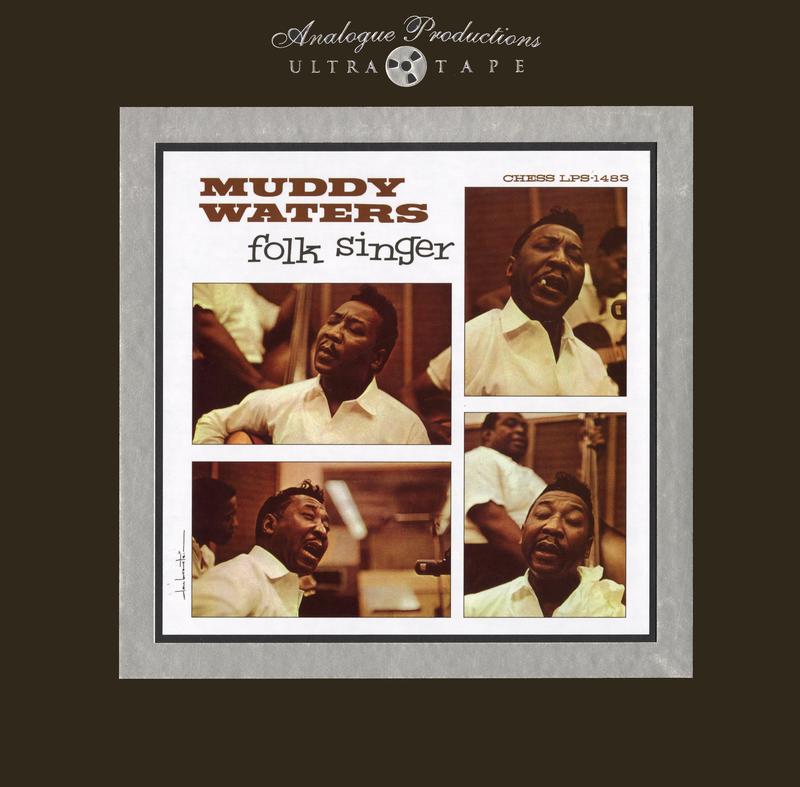
The title Folk Singer can suggest a misleading change of identity. Muddy Waters does not become a different musician here or leave his established language behind. Instead, the recordings place his voice and guitars in another setting. The predominantly acoustic approach exposes relationships distributed differently in a denser blues band: an answer between two guitars, the ending of a sung line, or a pause left unfilled by another instrument. Blues remains the underlying language, while the scale and composition of the group change how it is presented.
The original album sessions took place in September 1963 at the Chess studios in Chicago, also referred to as Ter Mar or Tel Mar. Folk Singer was released in 1964. The original nine tracks remain the core of its recording history. For this tape edition, however, the frequently reproduced nine-song listing is incomplete: two later recordings are also included. Anyone looking for a particular version should therefore consider the programme actually supplied, rather than assuming that the familiar album title guarantees an identical sequence across every edition.

Buddy Guy, accompanists and a solo performance
Buddy Guy plays guitar on eight of the nine original album tracks. The exception is “Feel Like Going Home”, which Waters performs alone. Willie Dixon and Clifton James also belong to the documented album credits, although the sources do not consistently agree about their participation on individual selections. Four familiar names should not be turned into a claim that a fixed quartet plays throughout. The changing configurations are part of the album and deserve the same attention as the songs they perform.
The exchange between Waters and Guy provides a particularly useful point of entry. Listen to the guitars as conversational partners: where does one answer the other, where does it hold back, and when does the singing move between them? This does not require every note to be assigned confidently to a particular player. The first question is how the relationship between voice and accompaniment changes. On “Feel Like Going Home”, the second guitarist is absent too. The solo setting reveals both what a musical partner contributes elsewhere and what one voice with one instrument can carry alone.

Nine album tracks and two significant additions
“My Home in the Delta” opens the original programme; “Long Distance”, “My Captain” and “Good Morning School Girl” lead into different situations. The second half includes “Cold Weather Blues” and “Country Boy” before “Feel Like Going Home” supplies the original conclusion. It is worth hearing these nine selections first as a complete sequence. Changes in the density of the group belong to its shape. Not every song asks for the same rhythmic support, and pauses do not receive an identical response throughout the record.
The Ultra Tape additionally includes “The Same Thing” and “You Can't Lose What You Ain't Never Had”. These recordings belong to a 1964 Chess single rather than the original September 1963 album session. Otis Spann is documented on piano. Some other individual credits for the additional tracks remain disputed and should not be presented as certain personnel. For the listener, the distinction is straightforward: the original album is followed by another view of Waters in a different recording setting. The extension can be identified precisely and should not disappear beneath an abbreviated track listing.
This edition of Folk Singer
RRAP 0016 identifies the Analogue Productions Ultra Tape. It uses quarter-inch tape at 15 ips in two-track, or half-track, format with IEC equalisation. The playback machine must support those parameters. Eleven tracks are documented for the tape edition even though the publisher's page lists only the original nine-song programme. Evidence specific to the tape establishes the additional sequence; simply copying the shorter general album listing would therefore omit information about what this version contains.
The publisher describes real-time duplication on an ATR-modified Ampex machine, with a copy of the original analogue master tape as the source. That does not establish an exact sequence of generations, nor does it make mastering credits from other editions applicable to this tape. The musical emphasis remains the original acoustic album, supplemented by the two later recordings. This version consequently offers both the concentrated encounter with voices and guitars and a clearly identifiable extension, retaining the personnel distinctions that belong to the recording's actual history rather than treating every track as the product of one unchanging session.
You order from Michael 45 in Germany. We arrange the US import and dispatch from Hilden. Editions not currently in stock are dispatched after the goods arrive.
Also on mono vinyl: Folk Singer
More by Muddy Waters: The Best Of Muddy Waters · The Real Folk Blues
Customer question: Buying Analogue Productions records in Europe
Musicians
Documented participants in this recording. Publisher-only credits are identified; track references correspond to the tracklist.
| Name | Instrument / role | Participation |
|---|---|---|
| Muddy Waters | vocals, guitar | Album personnel |
| Buddy Guy | guitar | A1, A2, A3, A4, A5, B1, B2, B3 |
| Otis Spann | piano | B5, B6 |
Willie Dixon (double bass) and Clifton James (drums) appear in album credits, but track assignments are disputed. “Feel Like Going Home” (B4): Waters alone. B5/B6 are additional 1964 recordings with Otis Spann. Other bonus-track personnel remain unresolved.

Reviews
There are no reviews yet.