
Harry Belafonte between blues, song and storytelling
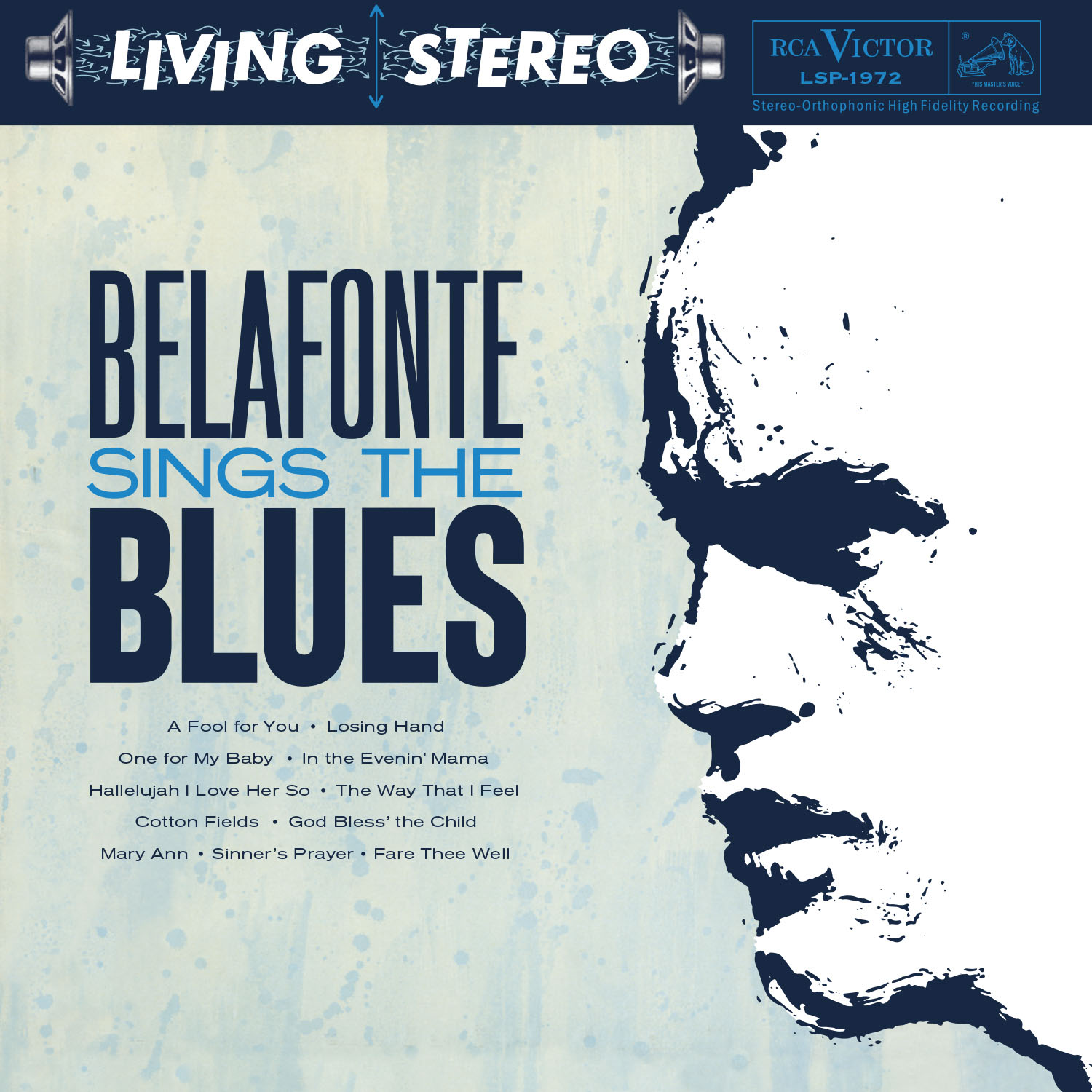
Belafonte Sings the Blues offers a distinctive perspective on Harry Belafonte. Released by RCA Victor in 1958, the album brings together eleven selections connecting blues, rhythm and blues, popular song and other American song traditions. Its title establishes an artistic point of departure rather than prescribing a single musical form. Belafonte approaches the material as a singer and storyteller. The central interest is how a narrative can develop through the weight given to words, the movement of a melody and the distance between one phrase and the next.
The album also has a notable place in his recording history. The publisher describes it as Belafonte’s first album originally recorded in stereo. Sessions took place in New York in January and March 1958 and in Hollywood that June. The production therefore extends across several dates and locations, with Ed Welker credited as producer. The finished programme brings those recording circumstances together around a shared idea: Belafonte’s encounter with repertoire whose expressive possibilities extend beyond any narrowly defined genre label.
Listeners who primarily associate him with Caribbean repertoire will find a different emphasis here. The selection makes connections with Ray Charles, Billie Holiday, and Harold Arlen and Johnny Mercer, among others. These names represent different musical environments and approaches to telling a story. Their proximity is part of the album’s attraction. The useful question is how one recognisable singer gives the programme continuity while allowing the individual songs to retain their separate characters.
The verbal dimension deserves particular attention. A refrain, an apparently casual expression or a repeated sentence can acquire another meaning through its position within a performance. Belafonte’s treatment of a song can therefore be explored through language and form as well as melody. The album offers familiar titles from another interpretive perspective and broadens the picture of an artist whose discography establishes relationships between several American and Caribbean traditions. It is a specific chapter within that larger career, with a repertoire and production history of its own.

Four sessions and three musical directors
The documented recording dates are January 29 and March 29, 1958, in New York, followed by June 5 and 7, 1958, in Hollywood. Conducting credits name Alan Greene, Bob Corman and Dennis Farnon: Greene for January, Corman for March, and Farnon for the two June sessions. Those details reveal several production stages behind the unified album title. They do not, without further evidence, establish a complete song-by-song assignment for every instrumentalist involved.
Belafonte supplies the voice connecting those stages. An interesting question for the listener is how a singer maintains an individual conception across different arrangements and accompanying settings. Which responsibilities belong to the vocal line itself, and which are prepared or continued by the instruments? A recurring thought within a song can gain a different emphasis through its timing and accompaniment. Following that process creates an approach extending beyond simple recognition of a famous title or melody.
A complete, securely documented list of individual instrumentalists is not available for this edition. The musician section therefore retains the verified names and conducting roles, while identifying the remaining accompaniment at ensemble level. Importing familiar studio musicians from other Belafonte recordings would make the account less accurate. The established details are sufficient to describe the production’s structure, and their limits remain visible. A collector can distinguish between what the documentation identifies and what still needs stronger evidence.
The album-specific studio vignette evokes the recording world of the late 1950s. It does not reconstruct a particular microphone setup or claim to depict an established equipment chain. The historical performance remains the subject, without an invented studio anecdote being added to explain it. With a reissue whose mastering is clearly identified, it is useful to keep the original sessions, their documented participants and the later manufacturing process as connected but distinct aspects of the record’s history.

From Ray Charles to “God Bless the Child”
Side one begins with Ray Charles’ “A Fool for You.” It continues with “Losing Hand,” written by Jesse Stone under the name Charles Calhoun, and Harold Arlen and Johnny Mercer’s “One for My Baby.” That opening already connects different kinds of vocal narrative. A relationship with the blues may be carried by language, attitude or musical ancestry without requiring each selection to share the same structure. The programme’s breadth gives Belafonte room to approach the particular needs of each song.
“In the Evenin’ Mama,” “Hallelujah I Love Her So” and “The Way That I Feel” complete the first side. “Hallelujah I Love Her So” returns to Ray Charles’ work. The selection moves between different emotional positions and narrative approaches. Following the transitions from one song to another offers a way of hearing the side as a sequence. Its character depends both on variety within the repertoire and on the continuity supplied by the singer at its centre.
“Cotton Fields” opens side two, followed by “God Bless the Child,” written by Billie Holiday and Arthur Herzog Jr. “Mary Ann” provides the album’s third Ray Charles composition. “Sinners Prayer” and “Fare Thee Well” conclude the eleven-track programme. The mixture makes the record an interesting meeting point within a collection: several songwriting traditions and authors share space while retaining their different histories. The album can prompt further exploration of those connections without needing to become a survey of every tradition it touches.
Historical authorship credits do not always agree across editions. For “Cotton Fields” and “In the Evenin’ Mama,” documented pressing credits and the wider histories of the songs leave discrepancies that should not be silently removed. The complete research notes preserve those distinctions. A particular interpretation remains the immediate musical subject, while careful collecting also involves recognising that a credit printed on one edition does not necessarily settle every question about a work’s authorship.
Ryan K. Smith mastering for Analogue Productions
This Analogue Productions edition carries catalogue number AAPF 1972. It presents the album as a 200-gram stereo LP at 33⅓ RPM, pressed at Quality Record Pressings. Ryan K. Smith at Sterling Sound handled the mastering, and Stoughton Printing supplied the traditional tip-on jacket. Those specifications identify this AP release. Mastering credits belonging to other reissues of the same album should not be transferred to it simply because they share a title or artwork.
The programme remains on one LP, with six selections on the first side and five on the second. For listeners who enjoy an album sequence in longer stretches, the 33⅓ RPM arrangement is a practical attraction: a single side change divides the eleven songs. Choosing the format is a decision about a particular edition and its handling. Neither rotational speed nor vinyl weight alone provides a universal statement about how a record will sound on an individual system.
The production information is valuable because it makes the reissue identifiable and comparable. It need not replace the reasons for spending time with the music itself. The original recording’s place in Belafonte’s stereo discography, the different sessions brought together in one programme and the links among its songwriters supply a substantial historical setting. Within that setting, the listener can concentrate on the singer’s handling of language and on the individual movement of each song.
Belafonte Sings the Blues joins an unmistakable voice with a carefully selected, stylistically open programme. It adds a concentrated encounter with blues and American song to the more familiar image of Belafonte. You order from Michael 45 in Germany. We handle the US import and ship from Hilden. For collectors, this documented reissue offers a clearly identified edition of a distinctive 1958 RCA production; for music lovers, its eleven stories invite attention through words, melodies and the choices made in interpreting them.
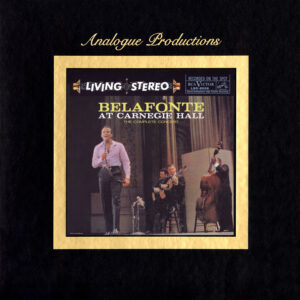
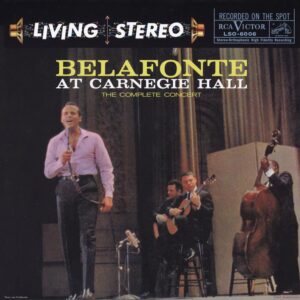
More by Harry Belafonte: Belafonte At Carnegie Hall
Customer question: Buying Analogue Productions records in Europe
Musicians
Participants and documented credit status. Track references correspond to the tracklist.
- Harry Belafonteportrait reference 1963vocalsParticipation: All tracks
- Alan GreeneconductingParticipation: New York, January 29, 1958; tracks not fully assigned
- Bob CormanconductingParticipation: New York, March 29, 1958; tracks not fully assigned
- Dennis FarnonconductingParticipation: Hollywood, June 5/7, 1958; tracks not fully assigned
- Studioorchester / studio orchestrasEnsembles; individual players not fully documentedParticipation: Changing personnel, not a single invented band

Eleven tracks; recorded in New York January/March and Hollywood June 1958. Produced by Ed Welker. Three separate conducting credits, no complete list of individual players. Historical authorship credits for Cotton Fields/In the Evenin’ Mama conflict; pressing credits retained and explained in editorial notes.

Reviews
There are no reviews yet.