

Stockholm rather than Hackensack: a pianist steps forward
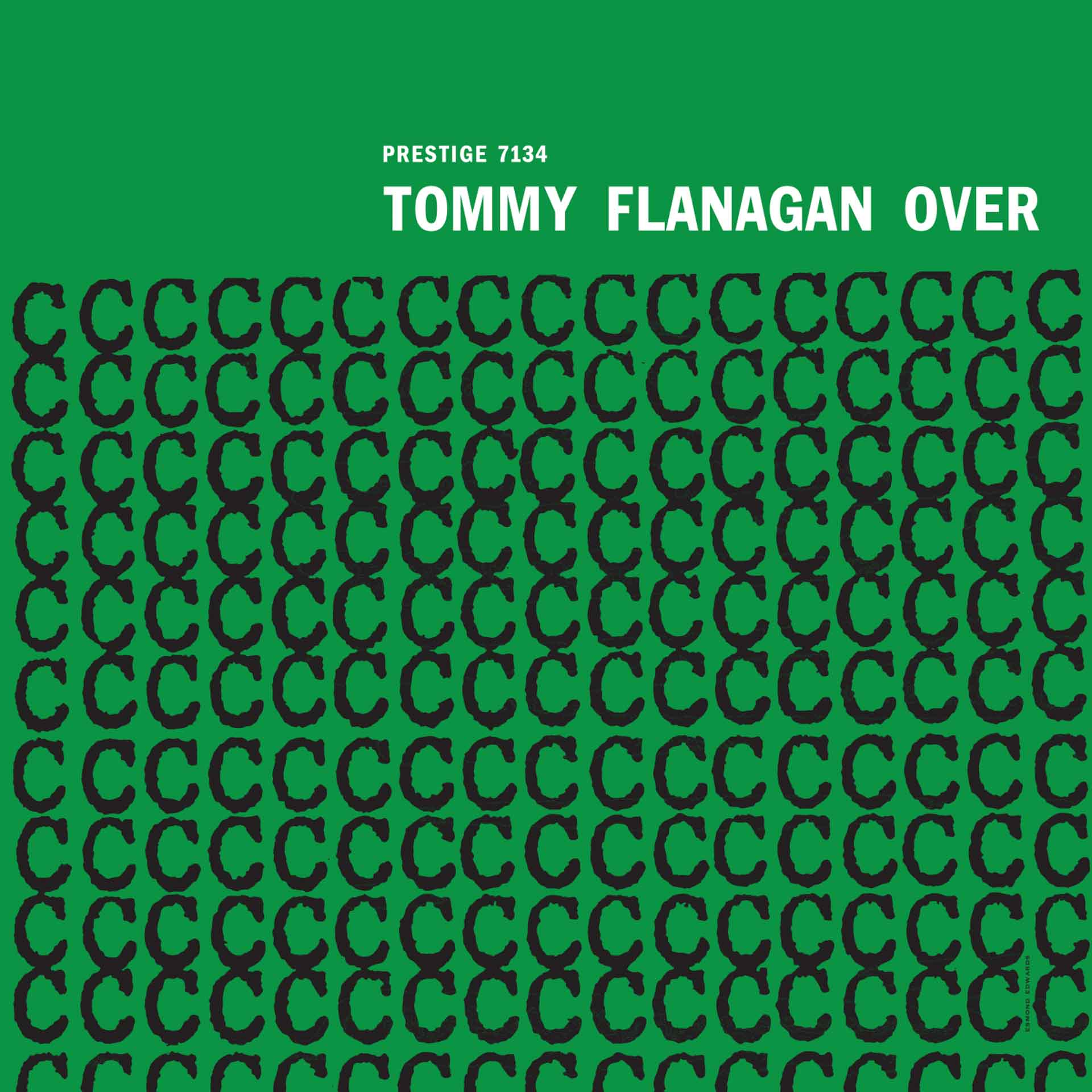
Tommy Flanagan’s name appears in the personnel of many significant jazz records from the 1950s. Overseas changes the perspective. Here the pianist is the leader, and the story takes us away from Rudy Van Gelder’s New Jersey studio to Stockholm. On 15 August 1957, Flanagan records at Metronome Studio with bassist Wilbur Little and drummer Elvin Jones. Gösta Wiholm engineers the session. A European tour with J. J. Johnson’s band provides the circumstances in which this early project under Flanagan’s own name becomes possible.
The title is therefore more than an atmospheric reference to a distant place. Three American musicians make use of an opportunity across the Atlantic to put a trio at the centre of attention. Flanagan is twenty-seven and has already contributed to Sonny Rollins’ Saxophone Colossus. On Overseas, he can do more than respond to a horn player: the choice of material and the position of the piano become part of his own statement. Regarded as his debut as a leader, the album reveals a composer with a substantial store of ideas behind the dependable accompanist.
Six of the nine selections are Flanagan originals. The remaining three connect the programme with Charlie Parker, Billy Strayhorn and Ann Ronell. That mixture is central to the record’s identity. It is neither a programme devoted entirely to standards nor a collection consisting only of new compositions. Flanagan places his music beside material bringing different melodic and harmonic demands. Little and Jones remain his partners on all nine selections, giving the album a clear continuity of personnel even as the musical perspective changes from piece to piece.

Nine pieces between familiar melodies and original ideas
Charlie Parker’s Relaxin’ At Camarillo opens the programme, introducing a language in which agility and precise form belong together. Billy Strayhorn’s Chelsea Bridge then provides a very different melodic point of reference. Rather than expecting both pieces to adopt the same attitude, listen for the demands each makes: how Flanagan carries a line, how he weights his chords, and how much room he leaves for bass and drums between the piano statements. The trio setting makes those decisions particularly accessible because every contribution helps determine the balance.
Eclypso begins the sequence of six originals, followed by Beat’s Up, Skål Brothers, Little Rock, Verdandi and Dalarna. The titles retain something of the project’s Scandinavian surroundings without requiring an invented story of composition for each one. Musically, the contrast between concise pieces and more extended forms is especially interesting. A selection need not be long to establish an individual character, while a longer performance has to be sustained by ideas and interaction. Flanagan’s own material supplies the substantial central portion of the album rather than a token original or two among familiar tunes.
Ann Ronell’s Willow Weep For Me closes the sequence. After the six originals, the programme returns to a known composition, giving the record a readily understandable shape: two established pieces at the beginning, a broad original core and a standard at the end. This SACD contains the nine album selections. Familiarity with later releases called The Complete Overseas should not lead to an assumption that additional performances are included in this edition. The focus here is the original album programme, not an expanded assembly of all surviving material from the session.

Wilbur Little and Elvin Jones: more than accompaniment
It is easy to describe a piano trio entirely through its pianist and thereby omit two-thirds of its personality. Wilbur Little is present throughout Overseas. His double bass connects a rhythmic foundation with the possibility of an independent melodic line. Listen specifically to that part and follow the way it carries Flanagan’s phrases while helping to shape the transitions. With no horn in the group, the relationship between piano and bass moves closer to the centre: harmonic direction and forward movement are worked out directly between these instruments.
Elvin Jones is already an individual musical presence here, several years before the John Coltrane recordings many listeners first associate with his name. It would be reductive to treat this Stockholm session simply as a preliminary chapter in a later story of fame. Jones has a particular task in Flanagan’s trio, responding to this album’s material and to these two partners. Attention can shift from the underlying pulse to the accents within a phrase. The drums become audible as a shaping voice without every gesture having to be described as a spectacular eruption.
For collectors who know Flanagan from other musicians’ records, Overseas offers an especially rewarding change of perspective. The pianist who can secure the coherence of a larger group occupies the centre here and introduces six compositions of his own. The album connects his place in the musical community of the period with an early personal statement. Its recording history also has a distinct identity: Stockholm, Metronome Studio and a Swedish engineer belong to this music. It should not be relocated to Hackensack merely because Prestige and Rudy Van Gelder appear later in the American release history.
The mono SACD and its separate production roles
The edition offered here is CPRJ 7134 SA, an Analogue Productions hybrid mono SACD from the Prestige Mono Series. Kevin Gray at Cohearent Audio is credited with mastering this edition. Rudy Van Gelder’s name, by contrast, belongs to the mastering of the historical American LP release. Gösta Wiholm engineered the original Stockholm recording. Those responsibilities belong to different stages of production and should not be combined into a single recording credit. Keeping them distinct preserves the specific history of this unusually well-travelled trio session.
The edition identifies the original analogue mono masters as its source. This is the documented provenance statement for the reissue, not a claim of entirely analogue SACD playback. The hybrid disc contains a CD layer for conventional CD players and an SACD layer for compatible equipment. The programme is presented in mono, and the packaging is a small LP-style cardboard gatefold sleeve. There is one optical disc; vinyl weight, turntable speed and an LP pressing plant are consequently not specifications of this offer.
The precise edition is as useful to a collection as the session history. The nine-track trio programme, Kevin Gray mastering and catalogue number CPRJ 7134 SA provide a clear identification. The tracklist uses Dalarna, the title found in the documented editions. Such details have a practical purpose: they allow the recording to be presented for what it is, Flanagan’s focused statement with Little and Jones on one Stockholm recording date. You order from Michael 45 in Germany. We arrange the US import and dispatch from Hilden.
Also on mono vinyl: Overseas
Customer question: Buying Analogue Productions records in Europe
Musicians
Participants and documented credit status. Track references correspond to the tracklist.
- Tommy FlanaganpianoParticipation: All 9 tracks
- Wilbur Littledouble bassParticipation: All 9 tracks
- Elvin JonesdrumsParticipation: All 9 tracks


Track numbers and side references correspond to this edition’s tracklist.

Reviews
There are no reviews yet.