A debut that already knows its people
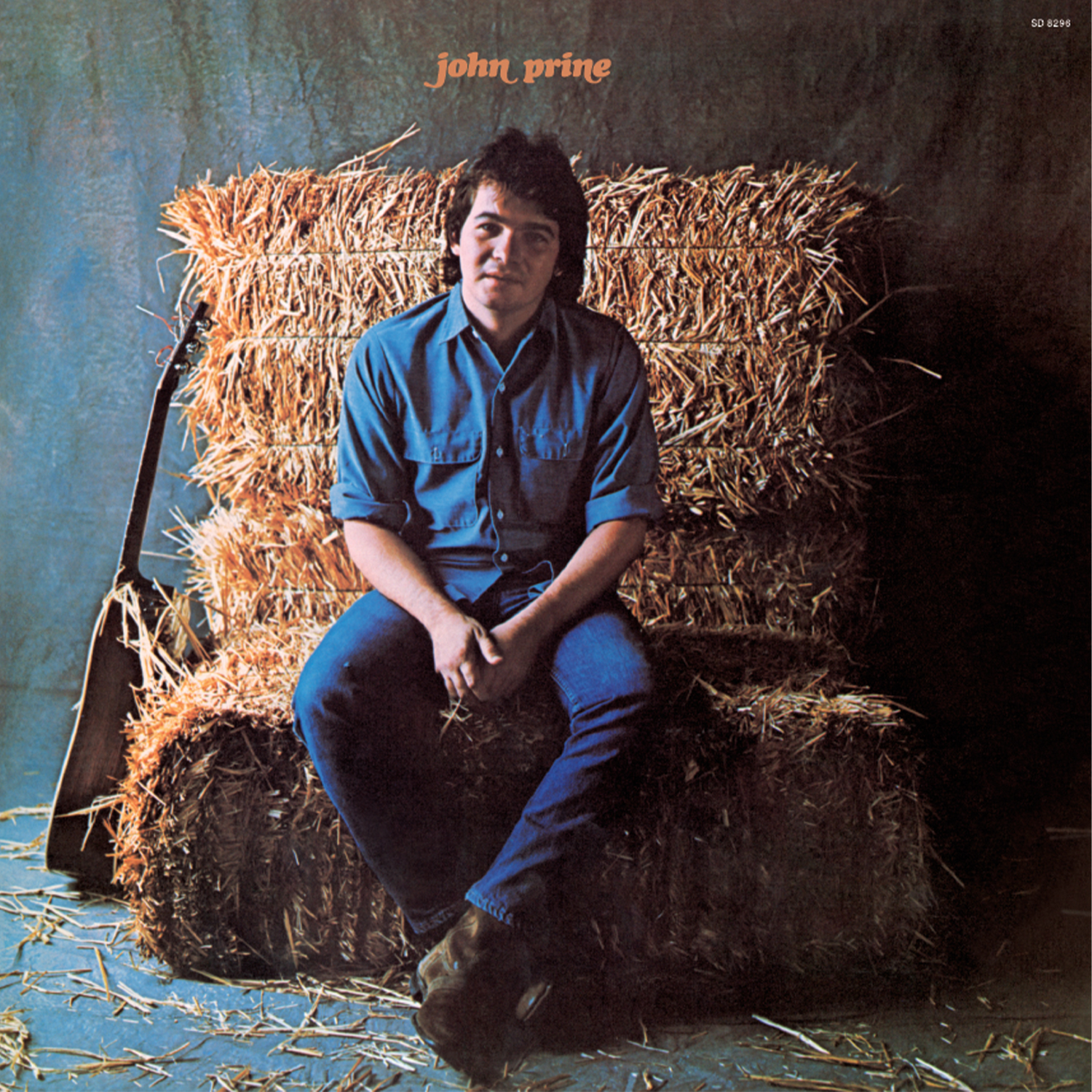
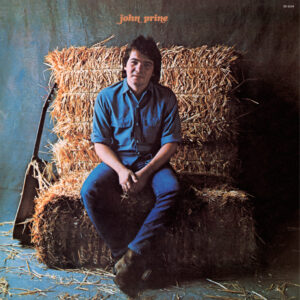
John Prine is in his mid-twenties when his first album appears on Atlantic in 1971. Yet these songs hardly suggest a collection of tentative first attempts. They encounter people whose lives have already taken their own detours: a returning soldier, older people, lovers, solitary figures and characters who preserve their humour when there seems little reason to do so. Prine writes thirteen songs of his own without placing a grand explanation in front of them. He trusts a precise observation to carry more than an explicitly announced message. That gives this debut its particular closeness: it allows its characters room before passing judgement on them.
A friendship forms part of the album’s origin and leaves a trace in the finished recordings. Steve Goodman draws Kris Kristofferson’s attention to the young Chicago songwriter. A subsequent New York appearance in Kristofferson’s orbit leads to Atlantic and Jerry Wexler. It is easy to tell this as a story of talent being discovered, but what happens next matters just as much to the record. Arif Mardin produces Prine’s songs with musicians who provide a dependable setting for their individual language. The voice does not have to be polished smooth or pushed into someone else’s character.
Most of the album is recorded at American Sound Studios in Memphis. The exception is Paradise, made at A&R Studios in New York. That second location also brings a different small group into the picture. The album was therefore not simply recorded with one identical backing band throughout. Behind its apparently effortless sequence are different answers to the needs of different stories. For a collection, this is a debut that rewards attention to the writing, the voices and the participating musicians in equal measure.

Thirteen songs between compassion and dry wit
Illegal Smile and Spanish Pipedream open the programme with a taste for individuality that belongs alongside Prine’s more serious concerns. Humour does not become an alternative to compassion. A person can be funny and retain their dignity; a small turn of thought can reveal an entire attitude to life. The third song, Hello In There, turns towards ageing and towards people who are easily overlooked in everyday encounters. Its perspective matters because it does not proceed from the safe distance of a general proposition about the world.
Tracks four to six are Sam Stone, Paradise and Pretty Good. Sam Stone introduces a war veteran and the consequences of his return; Paradise connects the memory of a place with its transformation. Prine does not need a monumental musical backdrop to give these subjects weight. Listen to the way voice and accompaniment support the narrative, and to how much meaning an apparently casual phrase can carry. Moving into the next song does not simply cancel the sympathy that has been established. These different temperaments remain parts of the same human world.
Your Flag Decal Won’t Get You Into Heaven Anymore follows as track seven, followed by Far From Me and Angel From Montgomery. Political sharpness, relationship experience and a view of an unfulfilled life sit close together. The final four tracks are Quiet Man, Donald And Lydia, Six O’Clock News and Flashback Blues. The album consequently does not resolve into a single large subject. Its strength lies in the reach of a voice that takes very different people seriously. All thirteen songs were written by Prine; familiar later interpretations do not diminish the coherence of his own original sequence.

Memphis, Paradise and Steve Goodman’s second role
On eleven tracks, Prine’s acoustic guitar and singing are joined by a larger studio ensemble. Reggie Young plays lead guitar, John Christopher rhythm guitar and Leo LeBlanc pedal steel. Bobby Emmons on organ and Bobby Wood on piano expand the harmonic colours. Mike Leech, Gene Chrisman and Hayward Bishop provide the rhythmic foundation through bass, drums and percussion. These names are more than an appendix. They help explain how the record combines the directness of folk songwriting with the flexibility of experienced studio players without making the arrangements overwhelm the songs.
Paradise uses a clearly distinct group. Alongside John Prine are Steve Goodman on acoustic guitar and harmony vocals, Dave Prine on fiddle and Neil Rosengarden on bass. Goodman is therefore more than the friend who helped arrange an important encounter. He becomes part of the album’s musical story. That connection makes the recording personal without requiring an imagined studio anecdote: friendship, introduction and playing together really are linked here. The credits allow that relationship to emerge from the people who took part rather than from a decorative legend added afterwards.
Flashback Blues has its own personnel too. Goodman returns on acoustic guitar, with Noel Gilbert on fiddle. Mike Leech remains on bass; Hayward Bishop moves to drums while Gene Chrisman plays tambourine. An undifferentiated list would hide this small but meaningful exchange of roles. On another listening pass, comparing these two exceptions with the larger Memphis group offers a rewarding route into the arrangements. Not every colour needs to be named before it can be noticed. Precise personnel simply provide another way into songs that remain immediately approachable without any specialist background.
The debut on Atlantic 75 hybrid SACD
The edition offered here is CAPA 004 SA, an Analogue Productions stereo hybrid SACD in the Atlantic 75 Series. Ryan K. Smith at Sterling Sound in Nashville is identified as the mastering engineer. According to the publisher, the original master tape was transferred directly to DSD. This is the documented source description for this release; it does not establish a particular DSD sampling rate or an unspecified converter. Vinyl weight, lacquer cutting and record-pressing specifications likewise do not describe this disc.
The hybrid SACD presents all thirteen songs in their regular album sequence. The SACD layer requires a suitable SACD player; the additional CD layer can be played on a conventional CD player. For a collection, this provides a clearly identified digital edition with two playback options. The music proceeds from Illegal Smile to Flashback Blues without the side changes of the separately offered double LP. Personnel references here use track numbers: Paradise is track five and Flashback Blues track thirteen. The distinction between the principal ensemble and the two differently staffed recordings therefore remains visible in this format as well.
The release is presented in a Super Jewel Box. The documented Discogs entry for this edition names Sonopress for manufacture and Sony DADC for glass mastering. These production details help identify the disc; they do not replace the mastering credit or constitute a judgement about the music. The essential point is that this particular SACD is credited to Ryan K. Smith. A conflicting general mastering entry in a shop field should not override that edition-specific information.
Prine’s debut is an album that individual famous songs can lead you towards, while its less frequently mentioned pieces complete the relationship between them. Hearing the uninterrupted sequence allows humour, compassion and the different small ensembles to coexist. This SACD supplies the complete original programme in a precisely identified edition, with the supporting musicians retained in the credits rather than disappearing behind the singer’s name. You order from Michael 45 in Germany. We arrange the US import and dispatch from Hilden.
Also on 45 RPM vinyl: John Prine
Customer question: Buying Analogue Productions records in Europe
Musicians
Participants and documented credit status. Track references correspond to the tracklist.
- John Prineacoustic guitar, vocalsParticipation: All 13 tracks
- Reggie Younglead guitarParticipation: 1, 2, 3, 4, 6, 7, 8, 9, 10, 11, 12
- Leo LeBlancpedal steel guitarParticipation: 1, 2, 3, 4, 6, 7, 8, 9, 10, 11, 12
- John Christopherrhythm guitarParticipation: 1, 2, 3, 4, 6, 7, 8, 9, 10, 11, 12
- Bobby EmmonsorganParticipation: 1, 2, 3, 4, 6, 7, 8, 9, 10, 11, 12
- Bobby WoodpianoParticipation: 1, 2, 3, 4, 6, 7, 8, 9, 10, 11, 12
- Mike LeechbassParticipation: 1, 2, 3, 4, 6, 7, 8, 9, 10, 11, 12, 13
- Gene Chrismandrums; tambourineParticipation: drums: 1, 2, 3, 4, 6, 7, 8, 9, 10, 11, 12; tambourine: 13
- Hayward Bishoppercussion; drumsParticipation: percussion: 1, 2, 3, 4, 6, 7, 8, 9, 10, 11, 12; drums: 13
- Steve Goodmanharmony vocals, acoustic guitar; acoustic guitarParticipation: harmony vocals, acoustic guitar: 5; acoustic guitar: 13
- Dave PrinefiddleParticipation: 5
- Neil RosengardenbassParticipation: 5
- Noel GilbertfiddleParticipation: 13


Track numbers and side references correspond to this edition. Album credits do not mean every instrument appears on every track.

Reviews
There are no reviews yet.