




Eight songs, a different kind of tension
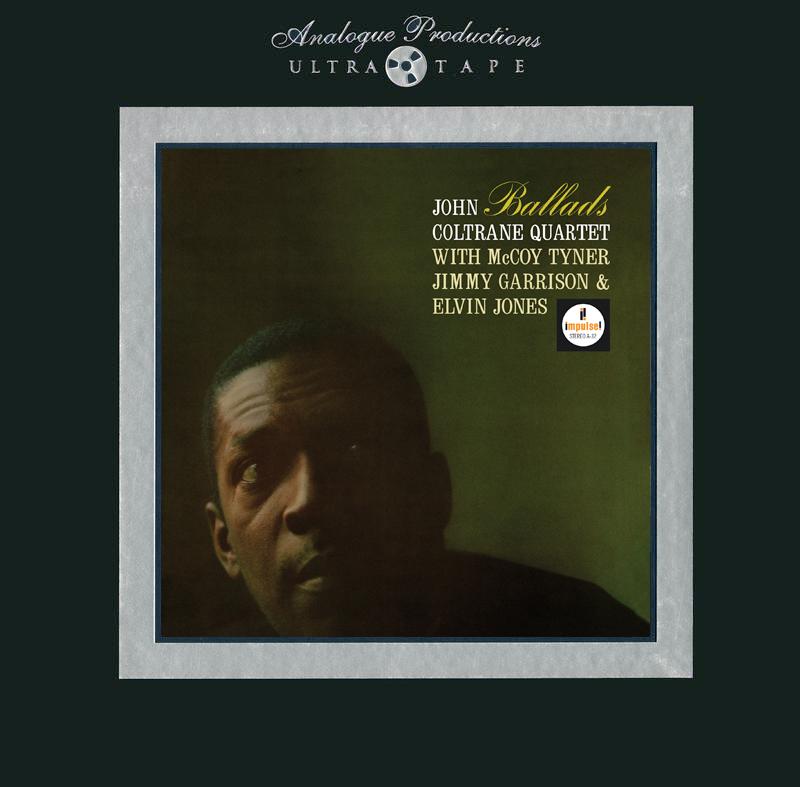
John Coltrane's Ballads rests on a decision that was far from inevitable in his music: eight familiar songs are given room without becoming extended chains of solos. The tenor saxophone stays close to the melodies, making small changes unusually significant. A sustained note, a brief hesitation or a differently coloured repetition can alter the direction of an entire phrase. If you know Coltrane mainly through the expansive structures of his later recordings, this album offers another way in. It reveals how much expression can exist inside a clearly defined song form.
The programme was not recorded during one relaxed afternoon. Its sessions took place at Rudy Van Gelder's studio in Englewood Cliffs in December 1961, September 1962 and November 1962. Those recordings were assembled into the album released in 1963. Its consistent character is therefore a musical achievement rather than the automatic result of a single recording date. “Say It (Over and Over Again)” establishes the setting; “Nancy (With the Laughing Face)” brings it to a close. Between them, differences of tempo and phrasing keep familiar melodies from settling into a single emotional register.

A quartet with one important exception
McCoy Tyner, Elvin Jones and Coltrane appear on all eight tracks. The bass chair, however, changes in a way that the celebrated quartet name can obscure. Reggie Workman plays on “It's Easy to Remember”, recorded at the earliest session on December 21, 1961. Jimmy Garrison appears on the other seven selections. Ballads consequently also records a transition towards the personnel later identified as Coltrane's classic quartet. Workman's contribution belongs to the original published album: it is neither bonus material nor an alternative performance added by a later reissue.
Tyner and Jones do not have to abandon their musical identities to accommodate these songs. Listen to the ways the piano supports a melody harmonically and the drums create movement without continually pushing the foreground. The relationship between accompaniment and saxophone becomes particularly rewarding: when does Tyner open out a chord, when does Coltrane leave a space, and how does Jones carry the music across it? These are more revealing questions than treating the record as a merely gentle interlude. Its individual voices remain distinct while responding to a shared sense of proportion.

Standards become personal language
“You Don't Know What Love Is”, “What's New?” and “All or Nothing at All” arrive with histories of their own. Coltrane does not treat them as interchangeable templates. Each melody provides a recognisable reference against which a departure can register. With a familiar standard, it becomes possible to follow exactly which notes are allowed to linger and where the line begins to gather density. The repertoire makes the music approachable without restricting the entire album to one mood. There is more variety between these eight performances than the modest title might initially suggest.
The Ultra Tape follows the original eight-track programme. Additional takes included on expanded editions do not form part of this release. That distinction matters to its shape: the concise sequence remains intact rather than being extended by repeated visits to the same songs. Try following the transitions between melodies from the opening track to the last. Ballads then becomes more than a collection of attractive individual themes. It creates a deliberately bounded musical setting in which Coltrane's tenor repeatedly finds a fresh relationship with material the listener may already know.
The Ultra Tape edition
Catalogue number RRAP 0028 identifies this Analogue Productions Ultra Tape. Its format is quarter-inch tape running at 15 ips, with two-track stereo, also described as half-track. Playback requires a machine configured for that format; a conventional quarter-track arrangement is not equivalent. Specifications from a parallel LP or SACD cannot simply be transferred to this edition. In particular, a mastering engineer credited on another format does not automatically become the documented engineer responsible for this tape version.
The publisher describes real-time duplication on an ATR-modified Ampex machine and refers in its explanatory text to a copy of the original analogue master tape as the source. That wording does not establish a fully documented sequence of tape generations. The appeal here lies in a specific combination: Coltrane's original album programme presented in the stated tape format. Listeners returning to Ballads are not being offered a new group or an expanded sequence, but the same eight encounters with familiar songs through another analogue playback medium.
You order from Michael 45 in Germany. We arrange the US import and dispatch from Hilden. Editions not currently in stock are dispatched after the goods arrive.
More by John Coltrane Quartet: The John Coltrane Quartet Plays
Artist page: All titles by John Coltrane
Customer question: Buying Analogue Productions records in Europe
Musicians
Documented participants in this recording. Publisher-only credits are identified; track references correspond to the tracklist.
| Name | Instrument / role | Participation |
|---|---|---|
| John Coltrane | tenor saxophone | Album personnel |
| McCoy Tyner | piano | Album personnel |
| Elvin Jones | drums | Album personnel |
| Jimmy Garrison | bass | A1, A2, A3, A4, B1, B2, B4 |
| Reggie Workman | bass | B3 |
Reggie Workman plays on “It’s Easy to Remember” (B3); Jimmy Garrison on the other seven tracks.


Reviews
There are no reviews yet.