

Four movements conceived as a whole
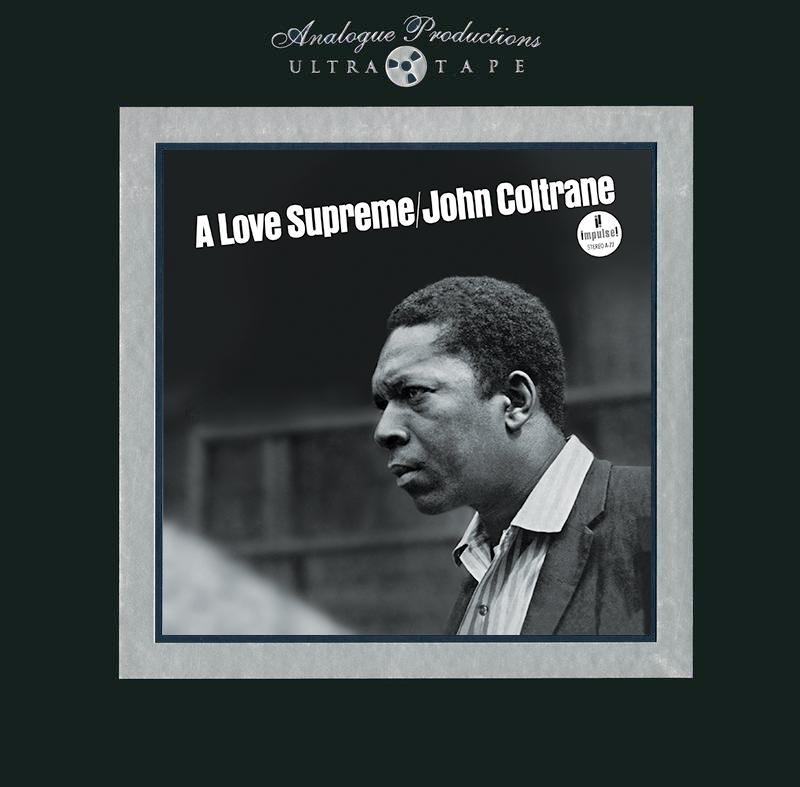
A Love Supreme is a suite whose four parts belong together: “Acknowledgement”, “Resolution”, “Pursuance” and “Psalm”. John Coltrane planned the work in September 1964. In Alice Coltrane's account, he withdrew for several days to the upper floor of their family home in Dix Hills while developing it. That recollection belongs to a record conceived as more than a loose gathering of separate numbers. Its design linked a musical progression with a spiritual idea and a text of Coltrane's own.
The released quartet version was recorded on 9 December 1964 at Rudy Van Gelder's studio in Englewood Cliffs, with Bob Thiele producing. Coltrane worked with McCoy Tyner, Jimmy Garrison and Elvin Jones, the ensemble now widely identified as his classic quartet. Their shared experience entered a carefully prepared structure. Released by Impulse! early in 1965, the original album also brought music, a letter to listeners and a devotional poem together within its presentation. The written material formed part of the project from the outset.

A small motif and four distinct contributions
Gong and cymbals introduce the opening, before Garrison's bass establishes the four-note motif that underpins “Acknowledgement”. Near the end it becomes the chanted album title. Coltrane added the vocal contribution by overdubbing, with session documentation identifying the corresponding attempts. Music historian Lewis Porter also drew attention to the saxophonist's movement of the motif through all twelve keys. A very small musical cell becomes the subject of an extended exploration while remaining recognisable to the listener.
Tyner's piano and Jones' drums are not simply scenery around the tenor. Follow the transitions between movements, then return to the changing responsibilities of bass, piano and drums within one section. The suite offers several ways of organising the quartet's shared movement. Its unity does not depend on treating every passage alike. The relationship between a recurring idea and changing musical tasks is one reason to hear the four movements as a connected work, rather than reducing the album to its best-known opening figure.

A psalm spoken through the saxophone
Coltrane's poem provides a key to “Psalm”. The saxophone follows its text syllable by syllable without speaking the words aloud, a procedure Coltrane described as musical narration. Following poem and performance together reveals a different relationship between language and instrument from the vocal chant in the first movement. The writing participates in the shape of the music; it is not merely an explanation added afterwards to fill space inside the record sleeve.
The following day brought further attempts with Archie Shepp on a second tenor saxophone and Art Davis adding another bass. Coltrane selected the previous day's quartet version for release. Those expanded performances later became available as additional material, but they are not part of this tape's programme. Its musician information therefore identifies Coltrane, Tyner, Garrison and Jones. Knowing about the alternatives clarifies the artistic choice without combining players from separate versions into a misleading composite personnel list.
The Van Gelder copy that went to Britain
Analogue Productions' Ultra Tape RRAP 0027 uses quarter-inch tape at 15 ips in two-track stereo. The publisher allocates “Acknowledgement” and “Resolution” to reel one, and “Pursuance” and “Psalm” to reel two. IEC equalisation is specified for the series rather than in a separate title-specific statement. The product information also identifies an ATR-modified Ampex machine with Flux Magnetics heads and a custom slipcase. A compatible tape machine is therefore essential to using this particular edition.
The source history is especially important. Analogue Productions explains that the original master is no longer in ideal condition. Its stated starting point is a flat copy made by Rudy Van Gelder and used for British cutting in 1965, subsequently preserved at Abbey Road for many years. In a discussion of the process, Chad Kassem described another working copy and counted the customer tape as fourth generation. That is his account of the copying chain. Calling this a direct copy from the original master would consequently be inaccurate: the surviving British tape copy is central to the story of this release.
You order from Michael 45 in Germany. We arrange the US import and dispatch from Hilden. Editions not currently in stock are dispatched after the goods arrive.
Also on SACD: A Love Supreme
Also on 45 RPM vinyl: A Love Supreme
More by John Coltrane: Ballads · Giant Steps
Artist page: All titles by John Coltrane
Customer question: Buying Analogue Productions records in Europe
Musicians
Personnel for this album version are documented. Track-specific participation is shown in the final column.
| Name | Instrument / role | Participation |
|---|---|---|
| John Coltrane | tenor saxophone, vocals, bandleader | Tenor: all parts · vocals: Part I |
| McCoy Tyner | piano | Album personnel |
| Jimmy Garrison | double bass | Album personnel |
| Elvin Jones | drums, gong, timpani | Drums: all parts · gong: Part I · timpani: track unspecified |
The quartet version recorded on December 9, 1964. Archie Shepp and Art Davis appear on subsequently issued alternate recordings, not this album programme.


Reviews
There are no reviews yet.